Annual Checkups Yet Diagnosed with Late-Stage Cancer! Avoid These Cancer Screening Mistakes
In recent years, due to the high incidence of cancer and the rising mortality rate, more and more people have begun to "fear cancer"! Taking advantage of this fear, various health examination institutions launch all kinds of examination packages every year. Many companies and enterprises, concerned about the health of their employees, also organize regular physical check-ups.
Yet, in clinical settings, there is a group of patients who still get diagnosed with advanced-stage cancer despite undergoing annual health exams. So the question arises: aren't physical exams supposed to provide a comprehensive understanding of one's health to prevent diseases? Why is cancer only detected in its advanced stages despite annual check-ups? What screenings should one undergo to catch cancer early?
1. Why do many people "undergo annual check-ups but still get diagnosed with advanced-stage cancer"?

1. The health check-up items lack specificity
Most people undergo annual health check-ups arranged by their companies, which are routine examinations and cannot provide precise cancer screening. Even an insider from a major medical examination institution revealed: "Some check-up institutions just go through the motions. After all the tests, it’s just for psychological comfort—it’s all a charade!"
2. Ignoring the Check-up Results
Some people don’t take their check-up results seriously, even when issues requiring further examination—such as lung nodules or abnormal Helicobacter pylori levels—are detected. Because they don’t experience any noticeable symptoms, they delay intervention, allowing the condition to worsen. Some even pass away just months after diagnosis.
3. Technical Limitations
Taking lung cancer as an example, many regions in China still use X-rays for examination, yet its cancer detection rate is only 0–15%. Typically, lung cancer detected through X-rays is already in the mid-to-late stages. However, experts actually recommend the correct method for detecting lung cancer: low-dose spiral CT combined with tumor markers, which can achieve a detection rate of over 90%!
II. What cancer screening tests should be done?

1. Lung cancer screening: Always remember to use CT scans.
Most health check-up centers use X-rays to examine the lungs, but due to their low resolution, the detection rate is relatively low. If a chest X-ray diagnoses lung cancer, it usually indicates the disease is already in an advanced stage. It can be said that using X-rays to screen for lung cancer is essentially pretending to prevent cancer.
Experts recommend using high-resolution CT scans for lung cancer detection. Due to its high resolution, lung cancer tumors can be detected when they are as small as 1 centimeter or even 0.8 centimeters. Particularly, low-dose spiral CT has become a standard test in professional cancer screening institutions. When combined with several tumor-related biomarkers, the detection rate can exceed 90%.
2. Breast Cancer Screening: Always Remember to Use Mammography
Since CT scans are effective, can they also be used for breast examinations? In fact, when CT scans are used for breast cancer detection, they have the disadvantages of low sensitivity and weak specificity for breast tissue. Additionally, some places still use infrared detection for breast examinations, but this method is not recommended. Infrared detection does not meet international standards, the equipment is poor in performance and sensitivity, has significant error margins, and relies heavily on the subjective judgment of doctors. Major hospitals no longer use this method for examinations. For early breast cancer screening, mammography is the first recommended diagnostic tool.
3. Cervical cancer screening: Always remember to use TCT.
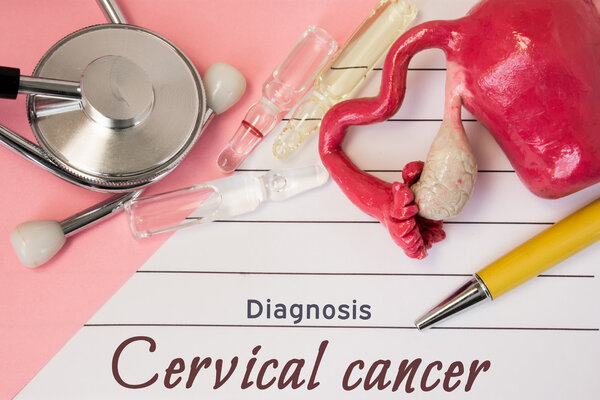
HPV testing is commonly used by general physical examination institutions, but in fact, HPV testing is an examination of the cause. The truly effective test for cervical cancer is the TCT test. TCT, or ThinPrep Cytologic Test, can detect cervical cancer cells with an accuracy rate of over 90%, while also identifying precancerous lesions and microbial infections such as mold, trichomoniasis, and chlamydia.
4. Prostate Cancer Screening: Always Remember PSA Screening
Most medical examination institutions employ abdominal ultrasound, which in fact cannot detect early-stage prostate cancer and doesn't even serve a diagnostic role. The best examination for screening prostate cancer is the PSA (Prostate-Specific Antigen) test!
5. Esophageal Cancer Screening: Always Remember Endoscopy
For individuals at high risk of esophageal cancer who also exhibit symptoms, the best method is to undergo endoscopy.
6. Stomach Cancer Screening: Remember to Get a Gastroscopy
The primary method for stomach cancer screening is gastroscopy, as other methods have very low detection rates.
7. Colorectal Cancer Screening: Remember to Get a Colonoscopy
The most effective method for colorectal cancer screening is colonoscopy. Many people are reluctant to undergo colonoscopy during health check-ups, finding it uncomfortable. In reality, professional screening institutions use advanced equipment, and painless colonoscopy procedures cause virtually no discomfort afterward.
8. Liver cancer screening: Remember to combine AFP testing with ultrasound.
Many people opt for an abdominal ultrasound during check-ups, believing it can detect liver issues, but it often leads to missed diagnoses. High-risk groups should undergo regular screenings combining alpha-fetoprotein (AFP) testing and liver ultrasound. If abnormalities are found, further CT or MRI scans should be considered.