Chinese Cancer Families: The Greatest Suffering Doesn't Belong to the Patients, but to Their Loved Ones!
"Doctor, let my father go. Don't torment him anymore." Li Anjie looked at his father, Li Guolan, lying on the hospital bed, emaciated and covered with tubes of all sizes. A man who never lost his composure in front of others broke down in tears, covering his face.
Li Guolan underwent hemorrhoid surgery at the end of November last year, yet he still couldn’t defecate afterward. Every hour, he would squat on the toilet, but to no avail. He thought it was just a side effect of the surgery. After enduring this for over a month, Li Anjie forced his father to get an MRI scan—the results revealed it was rectal cancer, and it was in its late stages.
The family refused to believe it and went to another hospital for further examinations. After undergoing a series of tests including colonoscopy, MRI, and CT scans, the results remained the same. Li Guolan asked his son, "What do we do now?" Holding his father’s arm, Li Anjie replied, "We’ll fight it. Even if it means going bankrupt, we’ll treat it!"
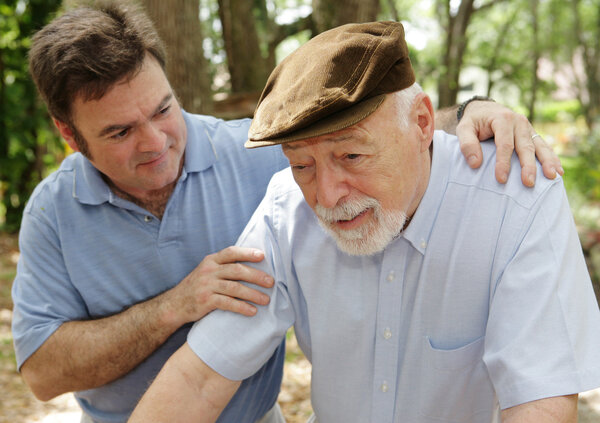
In 2019, Li Guolan began his treatment under the doctor’s guidance, with Li Anjie and his mother constantly by his side in the hospital.
Originally, Li Anjie was a person with a slight sense of cleanliness, but during the days his father was hospitalized, he could curl up on a bench outside the ward to sleep through the night, or eat a boxed meal in the hallway while keeping an eye on his father’s condition in the room. In this silent war against rectal cancer, Li Anjie’s weight dropped from 153 pounds to 119 pounds. A man standing 178 cm tall now looked more like a patient himself.
On July 2, 2019, after finishing chemotherapy, Li Guolan went to the restroom and saw himself in the mirror—a skeletal figure devoid of any vitality. For the first time, he felt he couldn’t hold on any longer. He told his son he wanted to die. But in traditional Chinese beliefs, giving up treatment is seen as unfilial. Besides, having persevered this far, how could he quit now? Li Anjie comforted his father, saying, "Just hold on a little longer. If we persist, maybe there will be a good outcome."
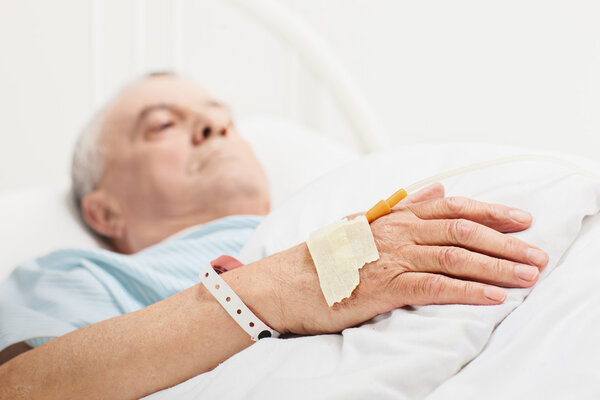
On August 24, 2019, Li Guolan developed resistance to targeted drugs, forcing them to restart examinations and repeatedly change medications. Yet, the pain from his illness only intensified. Every time Li Guolan screamed in agony, struggling violently, Li Anjie couldn’t bear to stay in the room. He would call the nurses and hide outside the ward, unable to watch, only hearing his father’s desperate cries again and again: "It hurts! It hurts so much!"
At night, Li Guolan called his son over, held his hand, and with a pleading look in his eyes, said, "Anjie, Dad is in too much pain, I can’t take it anymore. Look at me—do I even look human anymore? Please help me, okay?" With tears welling in his eyes, Li Anjie soothed his father to sleep. Then, alone on the bench, he began to waver, wondering if he was being selfish. But he didn’t speak to anyone about it—his mother was already worn down beyond recognition, and his friends could only offer simple, repetitive words of comfort. The decision was his alone to make.
A week later, Li Guolan suddenly fell into a coma. The doctor asked Li Anjie whether they should still attempt to save him. Li Anjie responded, “And what comes after saving him?” The doctor replied, “Surgery, inserting tubes—perhaps he could hold on for a few more weeks.” This time, Li Anjie didn’t hesitate: “Let my father go. Don’t torment him anymore.”
Behind every cancer patient lies a burdened family.
According to the latest cancer statistics released by the National Cancer Center in January 2019, the incidence and mortality rates of malignant tumors have shown a continuous upward trend over the past decade, with deaths from malignant tumors accounting for 23.91% of all causes of death among residents. Currently, approximately 3.929 million people in China are diagnosed with malignant tumors each year, with about 2.338 million deaths. On average, more than 10,000 people are diagnosed with cancer every day, and 7.5 individuals are confirmed to have cancer every minute.
These frightening numbers reflect the heavy burden placed on families behind each cancer patient, a toll that often goes uncounted.
"Dad immediately quit his job and moved into the hospital when he heard about Mom's illness. Grandma is 76 this year, and whenever she has time, she takes my little brother to the temple to pray. She even consulted a fortune teller who said Mom would pull through. Also, my uncle is currently searching for some miracle herb in his friend’s hometown mountains, rumored to cure cancer. But it's too far—a train ride of over ten hours—so Uncle isn’t taking me..." Zhao Lin, a 37-year-old diagnosed with late-stage breast cancer mid-year, has seen one person's illness reshape the entire family's trajectory. Her 15-year-old daughter, whenever she talks about her mom's cancer, always tells others how hard their relatives are trying.
Zhang Xiaohui from Heilongjiang passed away due to breast cancer. After handling the funeral arrangements, her husband Liu Liang entrusted their 11-year-old son to his younger brother and locked himself at home. Exactly 23 days later, family members broke in to find the entire house filled with cigarette butts and beer cans, while Liu Liang lay on the ground clutching his wedding photo with his wife...
When cancer strikes, the patient walks on eggshells while family members "soft-pedal" the reality. Yet everyone carries an internal death alarm, and the fear of losing a loved one constantly ticks like a time bomb in the family's hearts. Studies show that among those who have lost close relatives, 82% struggle to recover. They suffer from insomnia, numbness, and uncontrollable weeping for prolonged periods, with some even experiencing physical deterioration that disrupts normal life. A portion of them even develop suicidal thoughts, wishing to "follow the departed."

Zhang Tao in Wuhan received a WeChat message from his mother while making hospital rounds: "Son, can you help mom reserve a hospital bed? The doctor says it's mid-to-late-stage cervical cancer."
As early as when his mother mentioned her frequent abdominal pain and abnormal discharge, Zhang Tao had urged her to get checked at the hospital. Perhaps due to the slight awkwardness of gynecological issues, the mother and son didn’t delve deeper into the discussion. After the National Day holiday this year, when his mother brought it up again, Zhang Tao felt it couldn't be delayed any longer and scheduled a gynecological exam for her, reminding her to go. Ultimately, his uneasy premonition was confirmed.
Zhang Tao is a doctor—he has seen cirrhosis patients painfully vomiting blood, thyroid cancer patients losing half a bed's worth of blood during surgery... As a doctor, he is battle-hardened; but as a son, he feels powerless. This young doctor balances his duty at work with filial piety at his mother’s sickbed, knowing this will be a long and grueling battle.
In Chinese families, there's a saying that values "a house full of children and grandchildren," comparing the family structure to a pyramid—the wider the base, the more solid the "home." But now, the "pyramid" of many families has been inverted—the further down you go, the fewer family members there are, sometimes even just one. This makes the structure unstable, and that sole individual becomes the backbone, the only one holding the family up. Cancer patients' families like Zhang Tao's, where the only child bears the burden, are not uncommon. For the first generation of only children, cancer is just one of the potential crises they may face in caring for their aging parents.
I am the family member; it's not me who has cancer, but I also need help
A family member of a cancer patient once confided to Xiao Ai: "I never thought I would need help too. After all, I'm not the one who's sick—my loved one is fighting cancer, and they're the one who should be helped. How dare I ask for more attention? But I also suffer, I'm also afraid, and I don't know who to talk to."
Xiao Ai reviewed a vast amount of data and found very little literature on how to care for the families of cancer patients. Meanwhile, questions like "Should family members inform a terminal cancer patient of their condition?" or "How should family members provide care for a cancer patient?" are more widely discussed. These discussions teach families how to better fulfill their responsibilities and how to love and support the patients more effectively.
Indeed, cancer patients require substantial care and support from us. We continuously advance medical technology, improve healthcare facilities, and provide them with essential psychological counseling. Yet, for the families of cancer patients, there is no scalpel to excise the fear in their hearts, no medication to alleviate their physical exhaustion. All we can do is repeat the same two words over and over again: "Stay strong."
The Overlooked Group in "Humanistic Care"
Academician Zhong Nanshan once said: "Humanistic spirit is the core value of medicine. Medical humanism can effectively motivate patients, making it an important component of treatment itself; the core embodiment of medical humanistic spirit is not 'good attitude,' but 'striving to cure and prevent diseases.'" Xiao Ai believes that this applies not only to cancer patients but also to their families.
Comprehensive humanistic care requires support from various aspects. Medical staff can provide necessary health education to family members, including disease-related knowledge, helping them fully understand the illness and relax their mindset. Additionally, nursing support should be offered to prevent them from feeling overwhelmed or disoriented. During hospitalization, providing family members with complete daily necessities for caregiving and maintaining the cleanliness and comfort of the ward can alleviate their fatigue from bedside care.
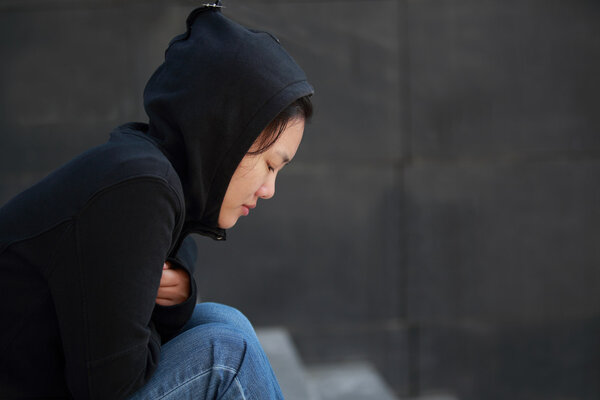
Providing emotional support. "Unable to find an outlet" is a common issue faced by many family members of cancer patients. Establishing dedicated emotional venting spaces can help them release long-suppressed feelings of despair, loneliness, fear, and other emotions, followed by specialized psychological comfort and counseling.
Social workers can serve as a bridge between family members and the hospital, helping to alleviate negative emotions and lending a listening ear to their concerns, letting them know that "someone hears you; you're not alone."
In the final stages of a cancer patient's life, "death education" becomes particularly crucial. Family members face the anguish of losing a loved one, and prolonged suppression may erupt at any moment. Some relatives may struggle to emerge from grief for an extended period, prolonging the family's atmosphere of sorrow. Therefore, professional intervention is needed to help them overcome the pain of bereavement as soon as possible.
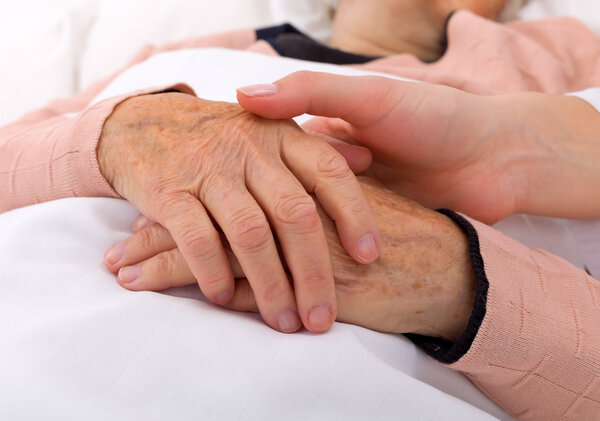
Family members should also avoid "confining themselves"—communicate more with other families in the same ward, share meals or walks, and don’t trap themselves in the hospital room. Going out more and maintaining external connections can help immerse them in a positive social environment, stabilize their emotional state, and bring immense benefits both to the patients and themselves.
Cancer delivers a devastating psychological impact on patients and their families, along with enormous financial burdens and mental stress. Every emotional fluctuation experienced by the patient is deeply felt by their relatives. Beyond that, family members also bear other risks. In today's world that advocates for humanistic care, we believe they shouldn't be overlooked as a vulnerable group.