Reduced hyperopia reserve, increased myopia risk! Protecting children’s visual development "savings jar" this way
September 2025 is the 11th National Myopia Prevention and Control Publicity and Education Month, with the theme "Protect children's hyperopia reserve, prevent and reduce the occurrence of myopia."
Hyperopia reserve "only decreases, never increases"
Don't deplete it too quickly
For children around age 3, having a certain amount of hyperopia reserve is like fitting their vision with a "protective shield" and is an important sign of healthy eye development. So, what is hyperopia reserve?
Simply put, it's the "savings account" for visual development that a child is born with. A newborn's eyes are usually in a hyperopic state; as they grow, the eyeball develops and the axial length gradually increases, and the degree of hyperopia slowly decreases. This process is called emmetropization.
Hyperopia reserve is the physiological hyperopic power remaining in the eye before emmetropization is complete. It helps children cope with the visual load from future near work (such as looking at picture books or using electronic devices) and effectively delays the onset of myopia.
A 3-year-old child typically has about 300 degrees of hyperopia reserve, but parents should note that this visual development "savings account" only decreases and does not replenish, so conserving it is very important.
Under normal circumstances, a child's hyperopia reserve is naturally consumed at a rate of about 25 degrees per year. This is part of the eye's normal development, but if the consumption is too fast— for example, if at age 6 a child’s hyperopia reserve is less than 75 degrees— it means the risk of developing myopia in the future is significantly increased. Medically, this is defined as a "pre-myopia" stage, which parents should take very seriously and intervene in promptly.
Refraction and axial length measurement
An important step in monitoring vision
So how can you accurately understand a child's hyperopia reserve?
Scientifically assessing a child's hyperopia reserve is not done by looking at a single metric; it requires a comprehensive judgment that combines visual acuity, refractive error, axial length, and other factors. Cycloplegic refraction and axial length measurement are the core bases and can help parents grasp the child's true visual status.
School screenings usually use autorefractors to monitor changes in a child's vision and help parents understand the child's refractive status and its changes. When a screening indicates a possible refractive error, parents should promptly take the child to a professional medical facility for a detailed examination.
Autorefractors often underestimate the amount of hyperopia reserve. Visiting a professional medical institution for cycloplegic refraction in a timely manner can accurately and objectively assess the hyperopia reserve. Some parents worry that cycloplegia will harm their child's eyes, but this is unnecessary: the pupil dilation and increased light sensitivity outdoors after cycloplegia are temporary and will not have long-term effects on vision.

With the baseline data provided by cycloplegic refraction, subsequent vision monitoring relies on axial length measurement. Axial length measurement can assess the degree and rate of myopia progression and can also be used to evaluate whether the hyperopic reserve is being depleted too quickly. Some parents may be puzzled—what does axial length have to do with hyperopic reserve?
In simple terms, the decrease in hyperopic reserve and the onset and progression of myopia both stem from changes in the eye's refractive structures, and axial elongation is the core reason. Axial length is like the eye's anteroposterior diameter; the younger the child, the faster the physiological growth of the axial length.
A newborn’s axial length is about 16.5 mm; it grows rapidly after birth, increasing by about 5 mm by age three, then the axial growth rate gradually slows. For children aged 6–10, the physiological annual axial growth is 0.1–0.2 mm, and it tends to stabilize around age 13, by which time the axial length is roughly 23 mm. Axial length growth is closely related to myopia progression: when axial length increases by 1 mm in a year, a child’s myopia progresses by about 150–250 diopters.
For example, in children aged 3–5 years, the median safe annual increase in axial length is 0.25 mm; growth at this stage usually does not deplete hyperopic reserve and is considered normal development. But between ages 6–12, axial growth should slow, with the median safe increase dropping to 0.18 mm. If axial change far exceeds this value at that time, it means the hyperopic reserve is being "rapidly consumed"—myopia may already be progressing and timely intervention is necessary.
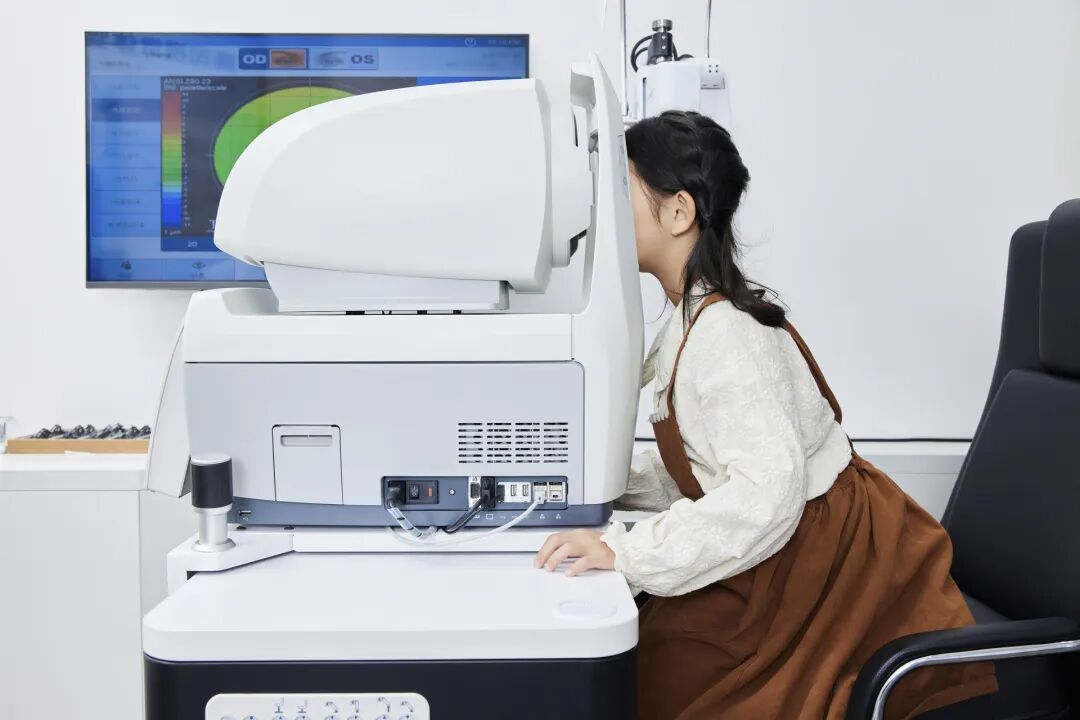
Once a child has baseline data from an initial cycloplegic refraction, subsequent visits do not always require cycloplegia; regular follow-ups every 3–6 months can accurately determine trends in hyperopic reserve. Axial length changes are typically largest in the two years before myopia onset and in the year myopia appears.
Therefore, regular monitoring of axial length can promptly determine trends in hyperopic reserve, warn of myopia risk, and precisely assess the effectiveness of myopia-control measures in children who are already myopic.
Achieve the "four goods"
Protecting a Clear Field of Vision
Now the amount of hyperopic reserve in two- to three-year-old children is not much different from that of children the same age decades ago, but today's children stay indoors too much and don't spend enough time running and playing outdoors. This hyperopic reserve — the "savings jar" for visual development — is being rapidly depleted, making myopia more likely to appear. Protecting hyperopic reserve needs to start from early childhood and from daily behavior and habits.
1. Play well
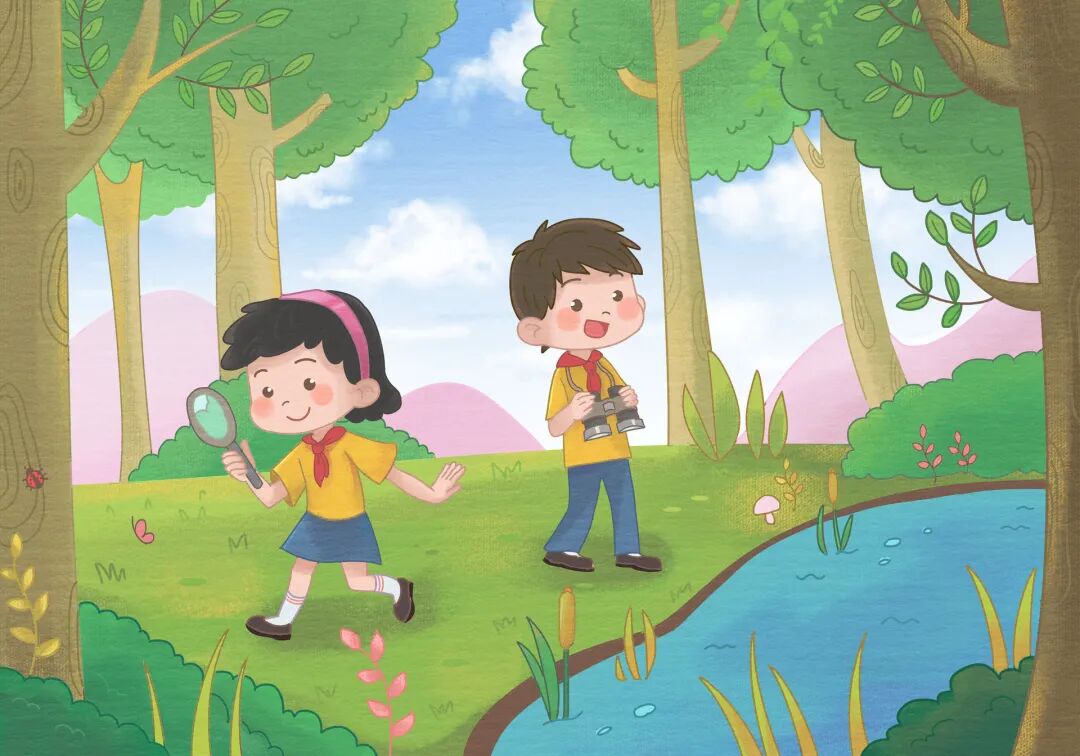
Many parents may not have realized that outdoor play is a key factor in protecting vision and preventing myopia. Data show that adding one more hour of outdoor activity per day can reduce the risk of developing myopia by nearly 45%. Studies from 20 years ago indicated that more than 2 hours per day of effective daytime outdoor activity in early childhood, or a weekly total of 14 hours, can prevent the onset of myopia.
At present, children face more near-vision demands. To better preserve hyperopic reserve, it is recommended that daily outdoor activity time reach at least 3 hours whenever possible.

Outdoor activities can be done anywhere and anytime. Walking, running, cycling, playing soccer, swinging, etc., in natural daylight are all outdoor activities. If they involve a certain level of physical exertion, the effects are even better. Children can go outdoors several times a day, each time for about half an hour.
It should be noted that the core of outdoor activity is "natural daylight." Whether it is sunny, cloudy, or rainy, as long as it is daytime after sunrise and before sunset, outdoor natural brightness is much higher than indoors. Of course, outdoor activities should avoid the hot, intense sun of the afternoon to reduce exposure to ultraviolet radiation.
Children who leave the classroom during every recess (10 minutes) gain an extra 80 minutes of outdoor time each day; compared with children who stay in class during recess, these children show significantly lower rates of myopia and less myopia progression. Therefore, in kindergarten and primary school, try to have children leave the classroom during every recess to walk in the hallway or on the playground and "bathe" their eyes in sunlight.
2. Read properly
During the preschool years, reading should be minimized and delayed as much as possible; this is also key to preserving hyperopia reserve. If reading is necessary, balance work and rest, prioritize printed books, and limit use of electronic devices. Maintain proper posture and follow the "one foot-one fist-one inch" rule: eyes one foot (about 33 cm) from the book, chest one fist (about 6–7 cm) from the edge of the desk, and the fingers holding the pen one inch (about 3 cm) from the pen tip.
When reading or writing, ensure adequate lighting; if light is insufficient, turn on the room light and a desk lamp, and avoid reading, writing, or using electronic devices late at night as much as possible. Adopt the 20-20-20 eye-care rule: every 20 minutes of reading, writing, or looking at a phone up close, look up and gaze at something 20 feet (about 6 meters) away for at least 20 seconds.
3. Sleep well
Adequate sleep is not only very important for a child’s physical development, it also affects visual development. Less sleep often means prolonged nighttime reading, writing, or phone use, which more readily accelerates the depletion of hyperopia reserve and leads to the onset and progression of myopia. Therefore, go to bed early, get enough sleep, and sleep well. During preschool and primary school years, try to ensure 10 hours of sleep each night. In addition, it is recommended not to leave a night light on after the child falls asleep.

4. Eat well
Protecting vision and preventing myopia is mainly related to "seeing," but it is also related to "eating." Aim for a balanced diet and avoid picky eating. Fresh vegetables and fruits are rich in various substances beneficial to eye health; also increase intake of fish, soy products, eggs, and other high-quality proteins as well as foods rich in deep-sea fish oil. Have children eat less sweets, fried foods, and drink fewer sugary beverages; at the same time, avoid using electronic devices or reading and writing immediately after meals when possible.
Some parents may ask whether there are special glasses or medications that can protect hyperopia reserve. In recent years, certain special optical glasses, medications, and other medical devices have been explored for preventing and controlling markedly insufficient hyperopia reserve or the pre-myopic stage, but more and longer-term studies are needed to confirm this.
For children at the current stage, protecting hyperopic reserve fundamentally comes down to everyday habits like play, reading, sleep, and diet. May more children play and run outdoors and have bright, clear, healthy, and beautiful eyes.