Why doesn't my weight go down after exercising? How to adjust your workout plan if you feel fatigued?
Why has my weight not dropped despite exercising hard? What should you do if you feel burned out from sticking with exercise? Here are some solutions.
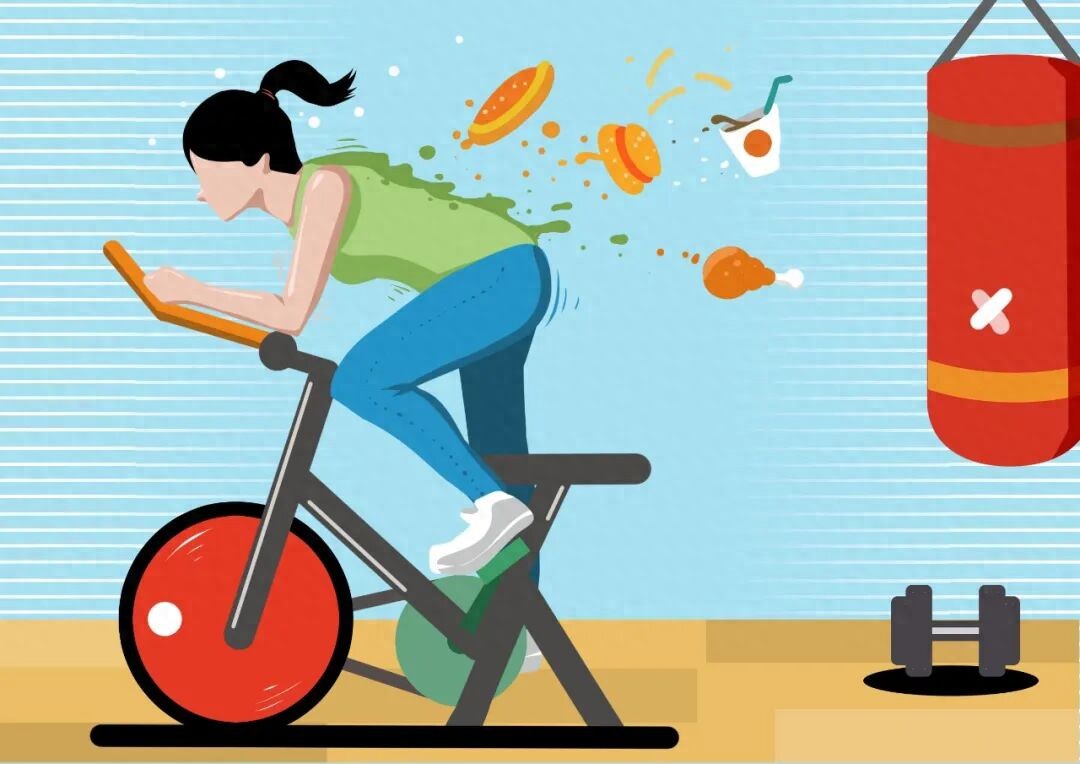
After exercising diligently for a while, your weight hasn't fallen at all — could it be that you haven't lost fat but instead have gained muscle first?
Building muscle is not as easy as many people think. We need to consume a large amount of energy first, and combine that with appropriately intense exercise stimulus; only then can muscles grow—both are indispensable.
Our experiments found that if you restrict dietary energy intake while using exercise to lose fat, some muscle loss will occur. So, the vast majority of people trying to lose fat don’t need to worry that they’ll build muscle first.
When evaluating fat loss, we can’t focus only on whether body weight decreases. Weight loss may not be fat—it could be muscle or water—and in those cases the weight loss is very likely to rebound in a short time. Many people skip dinner to lose weight; in that process most of what they lose may be muscle and only a small portion fat. Losing weight this way is like “defeating 800 enemies while harming yourself by 1,000.”
Therefore, during fat loss we should use a scale with body fat measurement to monitor whether what we’re losing is fat or muscle. If muscle is decreasing too quickly, adjust energy intake and protein intake to protect muscle as much as possible during the fat-loss process—this is true scientific fat loss.
How should you adjust your exercise plan when you hit a slump so you can stick with it better?
After exercising for a while, the body inevitably feels tired and wants to rest; this is actually an issue of exercise volume control. Exercise involves two important attributes: intensity and volume. Together they are called training load, which creates physiological stress on the body and leads to fatigue. We need to eliminate fatigue through nutrition, relaxation and stretching, and sleep.
For example, after completing daily training, athletes carry out many recovery activities that allow their abilities to exceed their previous level; this is called supercompensation. If after exercise we can achieve a supercompensation effect through appropriate means (nutrition, relaxation, sleep, etc.), the body will enter a virtuous cycle of performance improvement instead of accumulating fatigue and becoming burned out.
Burnout occurs when recovery cannot keep up with the generation of fatigue: training a lot but not recovering enough creates a vicious cycle, and people feel increasingly tired. When burnout accumulates to a certain degree, it can also affect the nervous and endocrine systems and have negative impacts on the body. For example, sleep disorders and decreased immunity may occur, and in severe cases it can even lead to osteoporosis.
If we feel tired before exercising, or even have a resistance to exercise, it is actually the body signaling a need for rest. At that point, if we do not recover in time and stubbornly continue to exercise, it is easy to cause sports injuries or a decline in immunity. Therefore, we do not encourage persisting in exercise when the body resists; this is not training willpower but an incorrect practice that goes against natural laws.
The correct approach is to rest well for a few days and exercise when you feel like it. Once you develop the habit of exercising, you will be pleasantly surprised to find yourself willing to take part proactively. This also reminds us to listen to the body's needs, reasonably arrange exercise load, and proactively learn methods to help the body recover, thereby achieving better exercise results.