Milk "Fat" Facts: How Should You Drink Milk When Losing Weight?
If you want to lose weight scientifically, in addition to exercise, dietary management is equally important, and reasonable nutritional supply is indispensable. Milk and dairy products are rich in nutrients and easy to digest and absorb; they can provide the body with high-quality protein, vitamin A, B vitamins, and calcium among other nutrients. Among them, the protein content in milk is about 3%. Fat content is 3%–4%, and these fats exist as microfat globules, which are more conducive to human digestion and absorption. The Chinese Dietary Guidelines (2022) recommend that adults consume 300–500 grams of milk and dairy products daily. Therefore, milk is an important source of high-quality protein and calcium for the human body and has many benefits for healthy weight management.
So, how to drink milk correctly becomes a very crucial question: should you choose whole milk or skim milk? Should you remove the skin that forms on hot milk? These seemingly everyday choices hide a lot of health knowledge. In addition, the Ministry of Agriculture and Rural Affairs recently issued new regulations requiring ambient-temperature milk to prohibit the use of reconstituted milk, a policy that makes the “purity” of the milk in our hands more assured. Therefore, it’s time to update our milk knowledge; the truth about milk fat in this article may give you a surprise.
I'm trying to lose weight — shouldn't I avoid it?
Drinking whole milk?
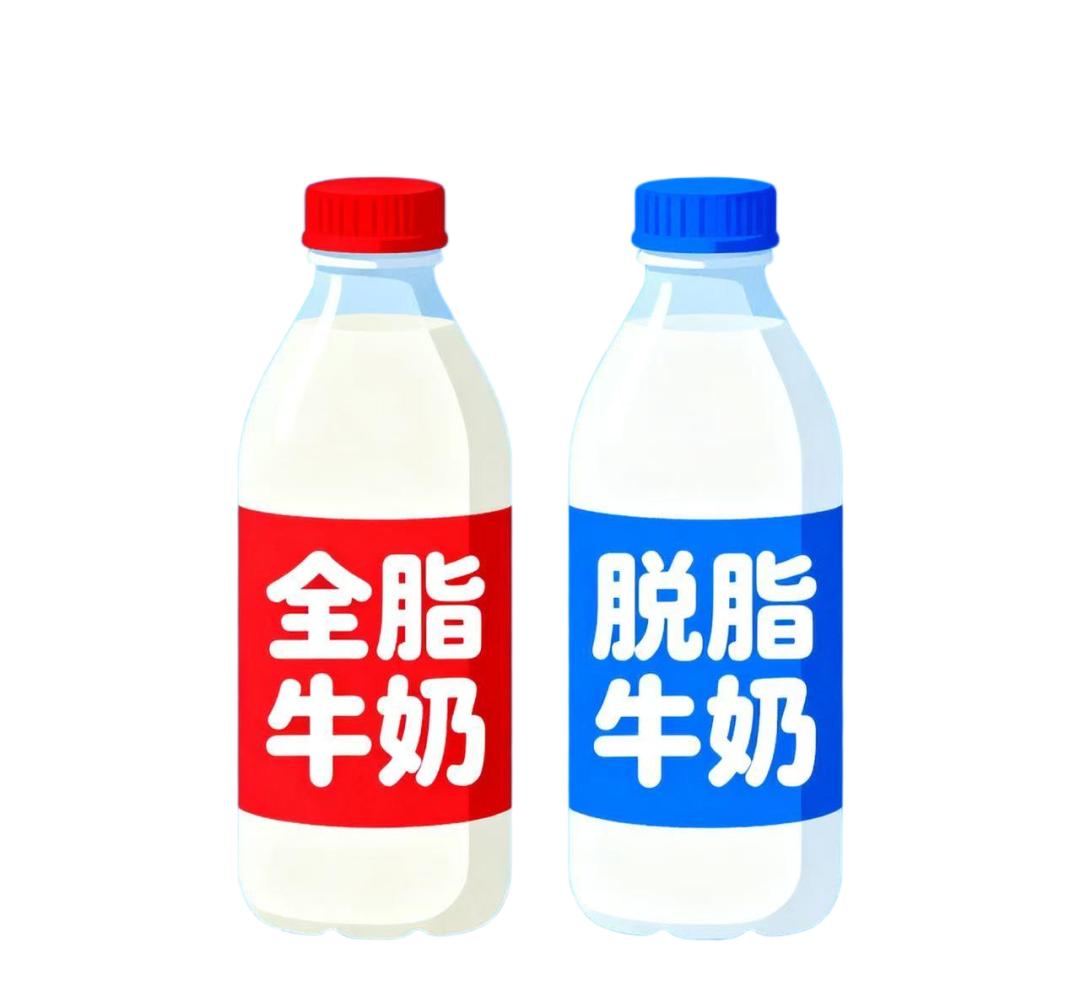
The protein and carbohydrate contents of whole, low-fat, and skim milk are similar; their differences mainly lie in fat content. The fat content of whole milk is about twice that of low-fat milk, while skim milk contains virtually no fat.
It should be noted that during the process of removing fat from milk, besides the reduction in fat content, the levels of fat-soluble vitamins that dissolve in fat (such as vitamins A, D, E, etc.) also decrease. Therefore, for people who are overweight or obese, it is preferable to choose low-fat or skim milk to reduce fat intake; for those without lactose intolerance and with a normal weight range, whole milk is recommended to obtain a more complete range of fat-soluble vitamins.
Should the skin on hot milk be removed?
When milk is heated and then cooled, a layer of skin often forms on the surface; its main component is fat. Many people remove the skin to avoid gaining weight, but this practice is not recommended—because while removing the skin does reduce fat intake, it also removes fat-soluble vitamins that dissolve in the fat. Therefore, unless there is a strict low-fat dietary requirement (for example, a doctor's explicit recommendation), deliberately removing the milk skin is generally not advised.
How can people trying to lose weight choose a healthy milk?
When choosing milk, the key is to look at the "ingredient list" on the food label. Different types of dairy products show clear differences in their ingredient lists.
Fresh milk/plain milk: the ingredient list only lists "raw milk" with no other added ingredients. Its nutrition is purer and it is the top choice for people trying to lose weight.

Reconstituted milk: the ingredient list starts with "raw milk," but then lists other food additives (such as sugar, thickeners, etc.). Pay attention to the amounts of these additional ingredients.
Milk-based beverages: if "water" is listed first on the ingredients list, "sugar" is usually second and "milk" or "milk powder" only third, meaning the milk content is low and the sugar content is high—so choose cautiously during weight loss.
So next time you stand in front of the dairy shelf, you can make a more confident choice: if you don't have special dietary requirements and are managing your weight healthily, a glass of rich whole milk may be a wiser choice than skim milk—it provides more complete nutrition and can help you move closer to your health goals. Also, don't forget the benefit from the Ministry of Agriculture and Rural Affairs' new regulation: choose shelf-stable milk labeled explicitly as "raw milk" for better quality assurance.
Starting today, try embracing milk's natural fat and enjoy the full flavor and nutrition it brings!