Can't sleep late and gain weight "go hand in hand"? After reading these, I dare not stay up late anymore
" Ding ding ding," the clock in the hall struck 10, Beijing time at exactly 10 o'clock, super accurate timekeeping..
.hzh {display: none; }
Mom's voice also hits the mark like a clock: "Girl, go to sleep early, staying up late will make you gain weight," and she's urging me to sleep again.
I mouthed an agreement: "Okay, I'll go to sleep right away." But in my heart, I knew Mom was using my biggest fear—being fat—to trick me.
Going to bed early isn't easy for me, because:
During school, I could go to sleep early after lights out every day. But the roommates in my dorm started all sorts of activities only after lights out—some were brushing their teeth, some were making phone calls, and when they called, it was for an hour straight. That way, I got used to staying up late.
After work, I finally don't have to stay up late for a long time, but I still do it occasionally, especially when I come across a good TV series—it can be addictive. The better the series, the more I want to keep watching, and I just can't stop! When I want to stop, I keep thinking, "What will happen in the next episode?" Keep going, keep going!
Alright, no TV series tonight. I'll scroll through my favorite Jay Chou's social media platform. Jay Chou posted two photos, and he's gained a bit of weight, but, it doesn't matter. I like his talent, so I'll leave a comment to express my admiration.
A comment from a netizen caught my attention. The netizen said to Jay Chou, "You gain weight from staying up late too," and Jay Chou replied, "No wonder I can't lose weight."

Image source/Network screenshot
The meaning of this sentence is so similar to what my mom said.
Is there really a relationship between sleep and obesity?
The international sleep authority journal *Sleep* published a study on the relationship between "sleep and weight"—the less sleep one gets at night, the more prone they are to gaining weight.[1]
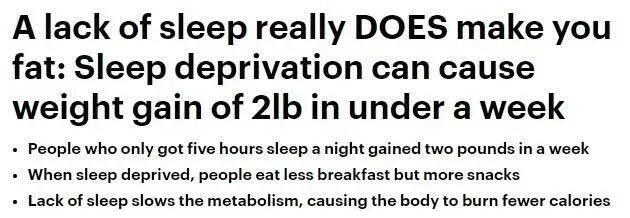
Image source/Study report screenshot
Research results show that people who sleep 6 hours a day gain more weight than those who sleep 7 hours, while those who only sleep 5 hours a day gain even more weight than those who sleep 6 hours. Calculate it, as long as you have insufficient sleep for 2 consecutive days, with sleep time reduced by more than 2 hours compared to usual, it can affect your weight.
Not only does sleeping less lead to weight gain, but another study on "sleep and weight" published in *Sleep* is even more concerning—it found that sleeping late also leads to weight gain, even with the same amount of sleep! [2]
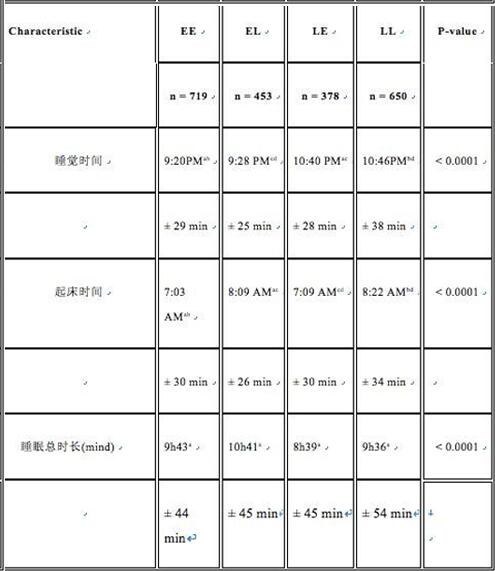
This study divided 2,200 adolescents aged 9 to 16 into four groups: early to bed and early to rise (EE), early to bed and late to rise (EL), late to bed and early to rise (LE), and late to bed and late to rise (LL).
By recording the weight before sleep and after waking up, as well as daily exercise routines, it was found in the end:
Individuals in the "stay-up-late, wake-up-late" group have a 1.5 times higher likelihood of obesity, a 1.8 times higher likelihood of insufficient physical activity, and a 2.9 times higher amount of time spent watching TV or using mobile devices compared to those in the "go-to-bed-early, wake-up-early" group.
For those who still take chances with their sleep, there's no need to question this any longer: numerous clinical studies have confirmed that the less sleep you get, the more weight you tend to gain.
Sleeping less makes you gain weight, staying up late also makes you gain weight, so is "once in a while" staying up late okay?
Uppsala University conducted an in-depth study on the so-called "once in a while" staying up late. The research team's findings indicate that just one night of sleep deprivation can trigger tissue-specific epigenetic, gene expression, and metabolic changes, which are associated with a decrease in muscle mass and an increase in fat.

Research shows that even short-term sleep deprivation can lead to people consuming more food and having a greater tendency to choose high-calorie foods. [3]
In reality, many people want to have excellent sleep quality, but simply can't achieve it. How can this be resolved?
1. Take a hot bath 1 hour before bed
Taking a hot bath raises body temperature. During the phase of body temperature dropping after it has risen, it induces a sense of sleepiness. Therefore, taking a hot bath before bed raises body temperature, and during the subsequent phase of temperature drop, it becomes easier to fall asleep.
2. Coffee and alcohol should not be consumed before bed
Coffee inhibits deep sleep from the very beginning. Thus, coffee will make you have longer periods of light sleep and shorter periods of deep sleep during the sleep process, preventing you from getting adequate rest.
While alcohol may help one fall asleep quickly, it keeps one in a state of light sleep throughout the first half of the night, preventing deep sleep. By the second half of the night, after alcohol is completely metabolized, a rebound effect occurs, causing even lighter sleep or even wakefulness in the latter half of the night.
3. Melatonin is important
At night, the secretion of melatonin helps us fall asleep. During the day, when sunlight enters the room, although our eyes are still closed, retinal cells begin to react to the light. They send signals to the brain's biological clock, reminding the pineal gland to reduce the secretion of sleep melatonin. As a result, the body becomes more alert and starts to wake up.
We can choose curtains with strong light-blocking properties to block sunlight from entering and ensure we don't wake up prematurely.
4. Food and Sleep
Foods rich in carbohydrates trigger a series of chain reactions that make us feel sleepy. When carbohydrates are digested in the stomach, they release insulin, which helps tryptophan enter the brain. Tryptophan is then converted into serotonin, a neurotransmitter that induces sleepiness.
Consuming protein produces the opposite effect to carbohydrates. Proteins are converted into amino acids, which block tryptophan from entering the brain. As a result, serotonin, the neurotransmitter that promotes sleepiness, will decrease accordingly, making people more alert.
Therefore, eating protein-rich foods at noon may eliminate your afternoon drowsiness; eating carbohydrate-rich foods for dinner can help your sleep, but it is best to eat four hours before bedtime.
Alright, I dare not stay up late anymore! I not only want to be a child who goes to bed early and wakes up early, but also a slim person who goes to bed early and wakes up early!