Increasing Number of Chinese People Suffering from "Hemorrhoids"—Finally Found the Reasons
Hemorrhoids, a ticking time bomb hidden in adults' "backdoor."
During peaceful times, coexistence is harmonious, and life seems tranquil. But when flare-ups occur, symptoms burst forth like blood spray, causing restlessness and sleepless nights—as if the anus were directly wired to the brain.
Both because of its commonality and private nature, hemorrhoids have become a "familiar yet unspoken" condition people are reluctant to mention.
To deal with it, some soak their chrysanthemums in hot water, while others use a hair dryer to dry their bottoms. This ordinary anorectal disease has been forced into a tearful saga of endless suffering.
One can't help but wonder: why are adults constantly experiencing "rear-end" distress?
Exaggeration Aside, 1 in 2 People Have Hemorrhoids
As the saying goes, "Every man has his piles." It seems no Chinese person can escape this fate.
While reality isn't quite as exaggerated, on average, 1 in 2 people in our country will experience hemorrhoid problems—a figure that still cannot be underestimated.
According to the "Survey and Analysis of the Relationship Between Chinese Residents' Lifestyles and Anorectal Diseases," the incidence rate of anorectal diseases among Chinese residents aged 18 and above is 50.1%, with hemorrhoid-related diseases far surpassing others, accounting for 98%.
Additionally, the prevalence rates of anorectal diseases among Chinese males and females are 51.43% and 50.80%, respectively, showing no statistically significant difference.
In other words, when it comes to developing hemorrhoids, gender does not play a role.
Although the probability of developing hemorrhoids is similar for both genders, the prevalence rates vary significantly among different regions in China.
According to the 2021 China Hemorrhoid Map, the highest prevalence of hemorrhoids among adults was found in Hunan, with 76.64% of surveyed individuals reporting they suffered from the condition. This was followed by Guangdong, known for its mild cuisine, where the prevalence reached as high as 67.42%. Shandong had the lowest rate at just 27.07%.
It's unsurprising that Hunan residents, who love spicy food, experience "fire in the mouth leading to fire in the rear." But how could Guangdong, famous for its boiled dishes, also have so many hemorrhoid sufferers?
The reasons behind this are far from simple...
An inescapable hemorrhoid plight
The occurrence and progression of hemorrhoids always leave identifiable traces. Avoiding high-risk causative factors can often help prevent hemorrhoids. But the problem is: in China, you can't avoid them.
Hemorrhoids, simply put, are "overused" anal cushions. The anal cushion is a ring-shaped vascular pad beneath the mucosal lining of the anal canal, whose function is to regulate the opening and closing of the anus through the contraction of its internal blood vessels.
After humans decided to walk upright, gravity placed a significant burden on the anal cushions, and the physiological structure of the human body established the "baseline" for developing hemorrhoids.
Subsequently, a series of poor lifestyle habits have driven the incidence of hemorrhoids ever higher, starting with "dietary mistakes."
In recent years, the Chinese stomach, when dissected, reveals a pungent atmosphere of spice. According to the latest "China Spicy Culture Report," over 60% of respondents nationwide enjoy spicy food, with 24.37% expressing a strong preference, while less than 10% explicitly dislike it.
While eating spicy food is a personal choice, the ingested chili inevitably causes direct irritation and pain to the anus. Moreover, the spiciness leads to congestion in the anal cushions. Once the swollen blood vessels are pushed outside the anus and fail to retract, they turn into protruding masses.
Besides consuming spicy food, modern diets—low in vegetables and water intake but high in meat—create digestive difficulties, often leading to constipation. Straining during bowel movements increases abdominal pressure, making venous return more difficult. Additionally, dry and hard stools compress blood vessels, obstructing blood flow. Over time, hemorrhoids inevitably develop.
The data speaks for itself. Epidemiological survey data on common anorectal diseases among Chinese adults show that, especially among those who consume beef, lamb, and seafood daily, the prevalence of anorectal diseases is up to 14.5% higher compared to those who rarely or never consume these foods.
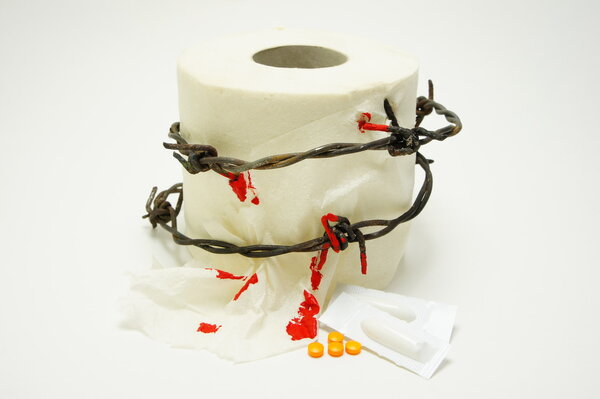
Compared to diet, more significant contributing factors often lie in certain behavioral patterns in daily life.
Various behaviors that directly exert pressure on the anus—such as prolonged standing, prolonged sitting, and prolonged squatting—most commonly manifest their colorectal consequences as hemorrhoids.
Data from the "Epidemiological Survey of Common Colorectal Diseases Among Chinese Adults" shows that individuals maintaining poor postures (like prolonged standing or sitting) for over 4 hours daily have a colorectal disease prevalence rate of 56.67%, whereas those maintaining poor postures for less than 1 hour have a rate of only 44.95%. The former group exhibits an 11.72% higher disease prevalence than the latter.
Work patterns involving prolonged standing or sitting don't just disrupt your life—they also jeopardize your vulnerable anal health.
In addition, poor bowel movement habits further exacerbate the occurrence of hemorrhoids. According to statistics from the "Epidemiological Survey of Common Anorectal Diseases in Chinese Adults," when toilet time exceeds 30 minutes, the prevalence of anorectal diseases increases by nearly 20% compared to normal levels, reaching 68.52%. However, if toilet time can be controlled within 5 minutes, this figure drops back to 44.41%.
The advent of smartphones has doubled the toilet time for adults. It's essentially difficult to use the bathroom without playing with phones nowadays.
Surveys show that correcting these poor habits can significantly reduce the risk of developing anorectal diseases, with the maximum reduction reaching as much as 30%.
Can those notorious hemorrhoids be completely cured?
Only those who have experienced it truly understand how painful hemorrhoids can be when they flare up.
Yazi said he has suffered from hemorrhoids for over a decade. On good days, blood just drips quietly during bowel movements. But when they flare up, no matter where or when, that lingering pain tugs at every minor nerve. You can't help but toss and turn, trying to find a position that might reduce or end the pain - but nothing works. The pain receptors keep plucking at your body like fine strings - not agony that makes you wish for death, but rather a slow, cruel torment.
The worst part is this soreness comes with a bloated, heavy feeling that makes you need to defecate. Clenching your teeth, you strain to pass stool, only to find the hemorrhoids prolapsing from your anus - sometimes requiring manual repositioning. The pain at this stage defies description.
Even after surgery, the suffering continues. Each bowel movement tears open the excision wounds anew, marking just the beginning of life's trials...
However, hemorrhoids are so painful, yet one-fourth of people in China choose to take no action and allow the condition to progress to the point where surgery is required, with the reason being "it doesn't seem like a big issue."
What hemorrhoid patients don't realize is that even opting for surgery in the end is no easy matter.
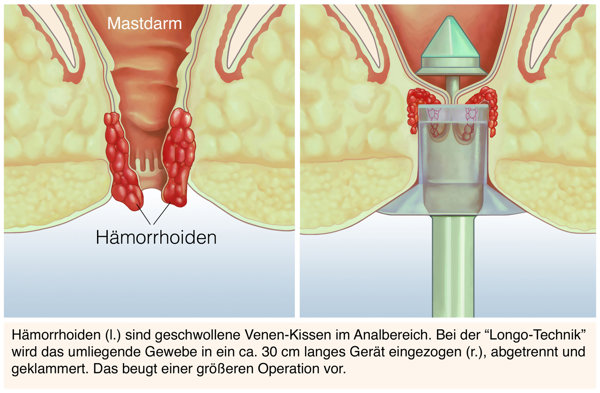
Wang Yanmei, Director of the Anorectal Center at China-Japan Friendship Hospital, stated in a media interview that the current "minimally invasive" hemorrhoid treatments represented by staplers on the market not only fail to provide significant benefits to patients but are actually inferior to traditional methods in many aspects.
In his view, minimally invasive hemorrhoid surgeries represented by stapler techniques, including Procedure for Prolapse and Hemorrhoids (PPH) and Tissue-Selecting Therapy Stapler (TST), do offer advantages such as reduced pain, shorter hospital stays and operative times, and quicker recovery. However, they are also closely associated with severe complications like massive hemorrhage, rectal stenosis, rectovaginal fistula, intestinal leakage, pelvic abscess, and sepsis. "Stapled hemorrhoidectomy carries a relatively high recurrence rate and prolapse risk. For elderly patients with anemia or long-term risk factors for hemorrhoids, stapled hemorrhoidectomy is even less recommended."
Regarding hemorrhoid treatment, the Chinese Guidelines for the Diagnosis and Treatment of Hemorrhoids (2020) clearly state that most hemorrhoid cases are not recommended for surgical treatment. Conservative treatments should be prioritized first. Even if conservative treatments fail, outpatient procedures like rubber band ligation or injection sclerotherapy can be attempted before considering surgical excision.
It should be noted that hoping to completely eliminate hemorrhoids through medication or surgery is probably wishful thinking.
Once hemorrhoids develop, there is no such thing as a permanent cure.
Therefore, if you're naturally predisposed, there's no other way but to start with daily habits.
In addition to correcting the above-mentioned bad behaviors that lead to hemorrhoids, daily Kegel exercises are considered to be a very effective way to prevent hemorrhoids.
Kegel exercises don't require much technique—just find the feeling of "pinching off poop," hold for a few seconds, relax for a few seconds, and repeat several times a day.
Friends, remember to do your Kegels and protect your "rosebud" when you see this.