The "razor throat" is back! Dry throat and soreness—could it be the COVID-19 KP.2 variant?
The COVID-19 virus hasn't disappeared, continuously mutating and trapping people in a repeated cycle of "infection—recovery—reinfection." Many feel that "their health has significantly declined," experiencing symptoms like heart palpitations, shortness of breath, constant fatigue, and frequent throat inflammation with swelling and pain.
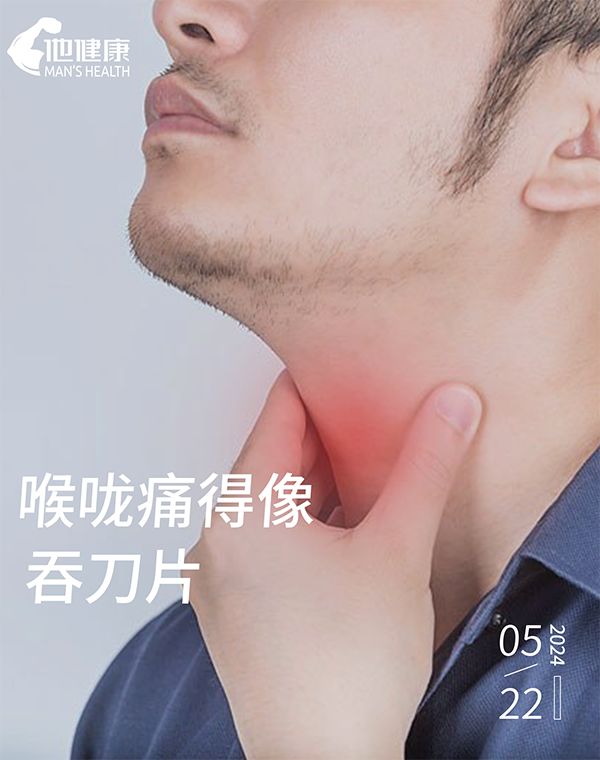
After the May Day holiday, many people suddenly found themselves suffering from pharyngitis again, with the onset process largely the same—basically waking up overnight with a swollen throat.
Seasoned sufferers who have been tormented by pharyngitis multiple times have grown accustomed to viewing throat pain as a signal of viral infection.

◎Pharyngitis strikes again in May. / Image: Screenshot from Weibo
Since the COVID-19 pandemic, viruses seem particularly "fond" of targeting our throats, giving rise to the distinctive phenomenon known as "razor throat." From last year to now, the seemingly ordinary "pharyngitis" has repeatedly trended on social media platforms, closely associated with "razor throat," sparking widespread discussion.
Is the return of razor throat a sign of being "positive" again?
When multiple people around suddenly experience sore throats—especially pain similar to the "razor throat" felt during previous COVID-19 infections—it’s natural to worry: "Am I positive again?"
"I thought it was just tonsillitis at first, but then my whole body ached and I felt weak. My throat swelled up so badly I couldn’t even swallow water..." said Mr. Xu, a 41-year-old car salesman in Guangzhou, who had to take sick leave because the pain made it impossible for him to speak.
He told 39 Deep Breath that two days later, his wife also fell ill, suffering from a sore throat and even a mild fever. Although the couple tested negative using leftover rapid antigen tests from their previous COVID-19 infection, they remained convinced they "probably had it again."
The doctor said the patient's concern is not unfounded, as COVID-19 has become normalized with the virus likely to persist long-term. Antigen tests are most accurate during the acute symptomatic phase. Some people may test negative during early infection due to viral loads being too low to detect, or incorrect testing procedures may also lead to inaccurate results.
To this day, the cunning COVID-19 virus continues to mutate at a speed beyond imagination. Just earlier this month, the World Health Organization officially classified the new KP.2 variant as a "Variant Under Monitoring," while China has also detected the KP.2 variant for the first time in local cases in Guangdong.
KP.2 is a third-generation subvariant of the Omicron JN.1 strain, with this new mutation being more contagious. Medical experts warn that the KP.2 variant is spreading rapidly in countries like Singapore, Canada, the UK, and the US, potentially leading to another small infection wave domestically, emphasizing vigilance against rapid local transmission spikes.
Data indicates that KP.2 infections cause similar symptoms to JN.1, primarily including sore throat, nasal congestion, runny nose, cough, fever, headache, as well as loss of taste and smell.
When the Omicron variant attacks the upper respiratory tract, the virus triggers an interleukin-mediated immune response in the throat. This increases vascular permeability in the throat region, causing swelling as cellular components and tissue fluid leak out. The persistent compression of nerve endings results in throat pain and even hoarseness.

◎ Throat pain like being cut by a knife. / Image: Getty Images
Sore throat and cough are common symptoms of COVID-19 infection, which resemble those of pharyngitis. So how to determine whether a sore throat indicates COVID-19 or ordinary pharyngitis? Doctors suggest that the most accurate method is to undergo nucleic acid testing at a hospital, though preliminary differentiation can also be made based on symptoms.
Feng Cuiling, Director of the Traditional Chinese Medicine Department at Peking University People's Hospital, stated in a media interview that COVID-19-related pain occurs in the palatopharyngeal arch, causing a stabbing or cutting sensation when swallowing that is typically more severe than with ordinary acute pharyngitis or tonsillitis—marking the key difference between these conditions.
Why is COVID-19 "throat pain" more intense? Relevant research explains that the SARS-CoV-2 virus triggers the immune system to release multiple inflammatory mediators. These chemical substances can directly stimulate nerve endings, inducing or exacerbating pain sensations.
Beyond COVID-19, influenza remains highly prevalent in southern provinces.
Sore throat doesn't necessarily mean COVID-19. The pharynx and larynx jointly guard two major passages of the human body - the respiratory and digestive tracts - and there are numerous potential causes of inflammation.
The recent May Day holiday travel crowds provided opportunities not just for COVID-19, but also for the spread of other viruses and bacteria.
Currently, it's believed that 70%-80% of pharyngitis cases are caused by viral infections, with common throat-attacking pathogens including influenza, EB virus, respiratory syncytial virus, adenovirus, and streptococcal infections.
Pharyngitis can also result from bacterial infections, mycoplasma/chlamydia infections, irritants like dust or smoke, or conditions such as allergic rhinitis, sinusitis, and gastroesophageal reflux disease. Even overexertion or consumption of spicy, greasy foods can trigger throat pain symptoms.
It's worth noting that the throat pain caused by influenza viruses can also be extremely agonizing.
Currently, as various regions across the country gradually enter the summer heatwave season, taking Guangdong as an example—despite the scorching weather, respiratory illnesses like influenza continue to account for a significant number of patients in fever clinics at major tertiary hospitals.
The latest monitoring data from the National Influenza Center shows that as of May 12, 2024, while influenza virus positivity rates continue to decline in northern provinces, there has been a slight increase in southern provinces.
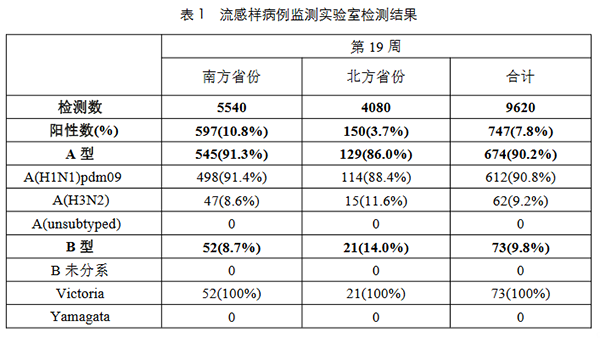
◎ Latest influenza surveillance data. / Image: China National Influenza Center
There's no denying that living in an environment where COVID-19 has become normalized poses a challenge to everyone's immunity. According to the Nanguo Zaobao, a woman in Liuzhou, Guangxi, has been infected with COVID-19 four times within a year. Industry experts point out that individuals who experience repeated COVID-19 infections may develop weaker immune systems, increasing their likelihood of contracting various illnesses.
In other words, during flu season, these individuals are more prone to infection and may experience more pronounced symptoms.
Last year, Germany's Health Minister Karl Lauterbach publicly warned in the media that "multiple infections with COVID-19 can have serious consequences for the immune system."
The impact on children might be even more significant. A study published in the BMJ (British Medical Journal) suggested that long-term immune decline caused by COVID-19 infection may be a major reason for the surge in respiratory syncytial virus (RSV) cases among children.
It is understood that there is still controversy in the academic community regarding whether COVID-19 infection can cause long-term weakening of human immunity.
Zhang Wenhong, Director of the National Medical Center for Infectious Diseases (Shanghai) and Director of the Department of Infectious Diseases at Huashan Hospital Affiliated to Fudan University, responded during this year's Two Sessions that at the end of 2023, the overlap of various respiratory diseases such as Influenza A, Influenza B, COVID-19, and mycoplasma infections made people feel as if their immunity was repeatedly declining. "Currently, there is no data indicating that COVID-19 infection leads to long-term immunodeficiency, resulting in increased incidence of tumors or other infectious diseases."
Oral anti-inflammatory medications see surge in sales
On social media platforms, under the topic #ThroatInflammationSelfHelpGuide#, many patients share their medication and treatment experiences:
Netizen "I Am Grassfield":
Based on last year's pharyngitis experience, I also experienced the "swallowing razor blades" sensation once before. That time, I nearly fainted from breathlessness in the middle of the night. Back then, I took cephalosporin antibiotics and could clearly feel the anti-inflammatory medication working! I felt I could breathe again!
Therefore, my first choice this time was still cephalosporin. However, after taking it three times with little effect, I suspect this isn't inflammation.
That leaves only one possible truth - what's causing this pharyngitis must be a virus!
Although the virus remains incurable, I couldn't just sit back and do nothing. I tried taking one dose of oseltamivir as an experiment, and within just an hour, my sore throat was gone!
If I have severe coughing at night these days, I take the highly effective cough medicine: Suhuang Zhike. Its effect on night-time coughing is truly remarkable!
Internet user "Monkey Dabao":
My throat started hurting as soon as I got to work. The pain felt different from previous sore throats - it was mainly concentrated in the posterior pharyngeal wall without descending lower, suggesting COVID-19 isn't progressing as deeply now. But the pain was still quite severe. Through trial and error, I found an effective method: gargling with Kangfuxin liquid and then spraying Kaihoujian, which resolved it in two days.
Doctors remind everyone to properly identify the cause of throat swelling and pain, and treat accordingly with standardized methods.
There's a major misconception among Chinese people regarding pharyngitis: immediately resorting to anti-inflammatory medication at the first sign of a sore throat.
In this regard, Zhao Zhuxiang, Director of the Infectious Diseases Department at Guangzhou First People's Hospital, explained that when experiencing a sore throat, the first step is to determine whether there is a bacterial infection. The most significant difference from viral infections is that patients with bacterial infections typically exhibit symptoms such as redness, swelling, and pus in the pharyngeal tonsils, along with elevated levels of white blood cells and neutrophils. Diagnosis requires a combination of blood tests, antigen tests, and clinical symptoms for thorough evaluation.
For throat infections caused by bacteria, streptococcal infections are among the most common. The primary treatment for such cases is penicillin-class antibiotics, such as amoxicillin.
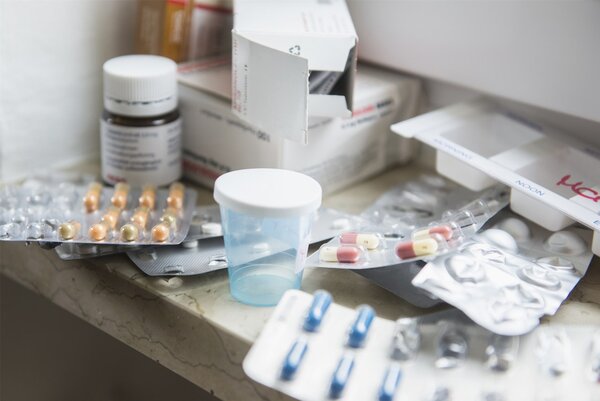
◎ Treatment must target the root cause. / Image: Panoramic Vision
While using antiviral treatments or antibiotic medications, incorporating throat lozenges or oral solutions can help alleviate symptoms and promote recovery.
A 39 Deep Breath survey of multiple pharmacies in Guangzhou found that prominent shelf displays featured products like Pipapo Loquat Syrup, Cough-Relieving Loquat Syrup, Lingshoucao Granules, and Qinghou Liyan Granules. Additionally, common household medicines included Cydiodine Lozenges, Cetylpyridinium Chloride Lozenges, Xiguashuang Powder, and Shuangliao Houfeng Powder.
Wang, a pharmacist at a Guangzhou chain pharmacy, explained: "Recently, there have been numerous cases of chronic pharyngitis flare-ups and laryngitis caused by late nights or excessive internal heat. With the arrival of hot, humid summer weather, throat inflammation patients will increase further, making this the peak sales season for traditional Chinese medicines treating oral inflammation."
According to relevant research data, from January 1 to April 23 this year, oral and throat medications maintained strong sales in the retail drug market, with average daily store sales growing by 23% year-on-year.