Deadly "Flesh-Eating Bacteria" Sweeps Through Japan, Infecting Thousands! Warning: Possible Spread to Domestic Cases
A disease known as "flesh-eating bacteria" infection is rapidly spreading in Japan.
According to Japanese health authorities, cases of "flesh-eating bacteria" infections have surged in Japan this year, exceeding 1,000 and reaching a record high. The disease has a mortality rate of up to 30%, though the exact reasons for the rapid increase in case numbers remain unclear.
Reports indicate that countries like the United States and the United Kingdom have recently seen an increase in cases. So, how significant is the risk of "flesh-eating bacteria" spreading to China?

A major outbreak of "flesh-eating bacteria" has occurred in Japan, with reported cases in less than half a year already exceeding last year's total, setting a new historical record.
The latest statistical data released by Japan's National Institute of Infectious Diseases shows that as of June 9, the cumulative number of reported "flesh-eating bacteria" infection cases in Japan this year has reached 1,019, surpassing last year's total of 941 cases.
"Flesh-eating bacteria" infections affect both children and adults, but the disease predominantly occurs in adults aged 30 and above.


◎ "Flesh-eating bacteria" frequently tops trending searches on social media platforms / Photo: Weibo
As summer travel peaks, experts warn: Those planning trips to Japan should maintain good personal hygiene habits, and individuals with risk factors are strongly advised to avoid non-essential travel to Japan in the near term.
What is the "flesh-eating bacteria" spreading in Japan?
The term "flesh-eating bacteria" may sound terrifying, instantly evoking an atmosphere reminiscent of "Resident Evil."
The so-called "flesh-eating bacteria" infection currently raging in Japan is medically known as streptococcal toxic shock syndrome (STSS), an acute syndrome caused by exotoxins from β-hemolytic streptococcus.
It has an extremely high fatality rate of approximately 30%. When individuals with compromised immune systems develop skin wound infections, the affected tissue becomes necrotic and stiff, appearing as if the flesh has been eaten - hence the pathogen is called "flesh-eating bacteria" in Japan.
According to Japan's National Institute of Infectious Diseases, "flesh-eating bacteria" infections typically progress very rapidly, with symptoms developing into shock and multiple organ failure within just 24 to 48 hours. Early detection and treatment are therefore crucial, though the initial symptoms are often mistaken for common cold.
Initial symptoms generally include sore throat, fever, loss of appetite, diarrhea, vomiting and other gastrointestinal symptoms, as well as hypotension and other septicemia symptoms. As the condition rapidly worsens, patients may develop soft tissue lesions followed by respiratory failure, liver failure, kidney failure and other multiple organ failures.
Dr. Wei Fangfang, Deputy Director of the Department of Infectious Diseases at The Sixth Affiliated Hospital of Sun Yat-sen University and attending physician, explained that the so-called "flesh-eating bacteria" is actually beta-hemolytic streptococcus, a type of Streptococcus pyogenes classified biochemically. "After infection with group A streptococcus, the human body produces anti-M protein antibodies that can persist for years. Streptococcal infection can cause infectious, toxic, and allergic pathological reactions."
Streptococcus is widely distributed in nature and can colonize normal skin, nasopharynx, and intestines, making it one of the primary pathogenic bacteria affecting humans.
Dr. Wei told 39 Health Network that streptococcal infections mainly manifest in two categories: first, direct infectious diseases such as acute tonsillitis, pharyngitis, pneumonia, and septicemia; second, allergic diseases including acute glomerulonephritis and rheumatic heart disease.
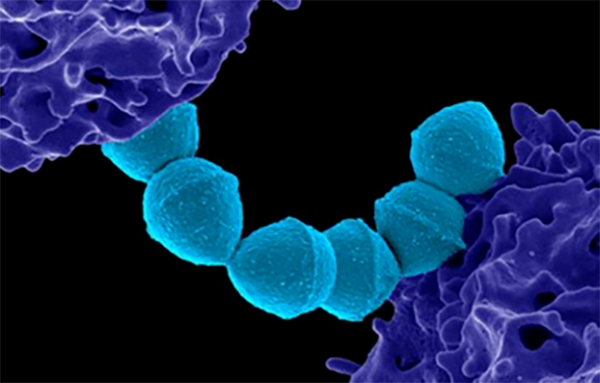
◎ Colorized scanning electron micrograph of Group A Streptococcus. / Image: National Institute of Allergy and Infectious Diseases
Streptococcus pyogenes, also known as group A streptococcus (GAS), can cause various diseases ranging from mild pharyngitis and impetigo to life-threatening streptococcal toxic shock syndrome (STSS) and necrotizing fasciitis. It has been reported and distributed globally.
In fact, it has always been around us, but there was insufficient attention paid to it in the past.
In recent years, the increase in invasive diseases caused by Streptococcus pyogenes has attracted the attention of the scientific and medical communities. "Flesh-eating bacteria are relatively common in clinical practice, and severe cases they cause have a high fatality rate. However, the proportion of severe cases in clinical settings is actually very low, so there's no need for excessive concern," said Wei Fangfang.
With the peak season for outbound travel arriving, the risk of transmission to domestic populations is increasing.
Globally, "flesh-eating bacteria" infections are predominantly concentrated in Japan, which has the highest cumulative number of cases worldwide. The exact reason for this remains unclear to this day.
According to data from Japan's National Institute of Infectious Diseases, the first case of "flesh-eating bacteria" infection was reported in the United States in 1987. Subsequently, cases were also reported in Europe and Asia. Japan first reported a typical case of "flesh-eating bacteria" infection in 1992, and since then, approximately 100 to 200 confirmed cases have been reported annually.
However, starting in 2015, the number of cases in Japan doubled, though the annual count remained under 1,000. Unexpectedly, this year, the number of cases broke records in less than six months and may continue to rise, with no sign of a peak yet.
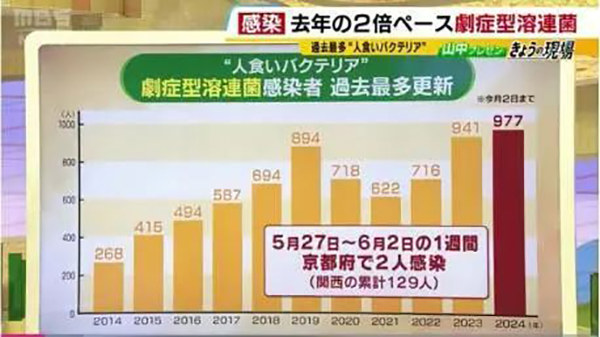
◎ For the past decade, Japan has reported cases of flesh-eating bacteria infections every year. / Image: Screenshot from MBS News Network report.
As a neighboring country, China has not reported any cases related to the "flesh-eating bacteria" so far.
Huang Qin, director of the Infectious Diseases Department at Shanghai Public Health Clinical Center, told media that no cases of "flesh-eating bacteria" infection have been found in China. In fact, Streptococcus pyogenes (Group A Streptococcus) infection can cause not only "flesh-eating bacteria" infection and necrotizing fasciitis but also scarlet fever, which is more common in China.
Recently, the Chinese Center for Disease Control and Prevention issued a reminder that scarlet fever has entered its peak season. It is a category B notifiable infectious disease in China, and there is currently no vaccine available for prevention.
In addition, impetigo (a skin condition), acute pharyngitis, purulent tonsillitis, and puerperal fever can also be caused by Streptococcus pyogenes. Infections from Streptococcus pyogenes may further lead to conditions such as glomerulonephritis (a kidney disease), rheumatic fever, and rheumatic heart disease.
The deadly "flesh-eating bacteria" outbreak is sweeping through Japan, with thousands infected! Warning: It may spread to China_39 Health Network_News As the outbreak of the "flesh-eating bacteria" infection continues to develop in Japan, multiple experts in the field of infectious diseases warn: Currently, there is a certain risk that the epidemic strain prevalent in Japan could spread to China.

◎ "Flesh-Eating Bacteria" Could Reach China / Image: Screenshot from NHK (Japan Broadcasting Association) report
With the arrival of the summer peak travel season, the number of domestic travelers visiting Japan may increase. If personal protective measures are inadequate, there is indeed a higher risk of contracting the "flesh-eating bacteria," particularly for individuals aged 65 and above and those with wounds or skin lesions who are more vulnerable to infection.
Recent cases of "flesh-eating bacteria" infections in Japan show that the majority of severe cases occur among the elderly, and enhanced precautions should be taken.
Why are infection cases particularly high in Japan this year?
The lethality of "flesh-eating bacteria" infections is undoubtedly terrifying, but what has truly drawn significant international attention is the noticeably accelerated spread of the disease, as it could potentially cross borders and become another global pandemic.
Data shows that from January to May, reported cases in Tokyo, Japan, have been increasing at three times the usual annual rate. Furthermore, the number of infected individuals aged 50 and above has risen, with a particularly significant surge in cases among those aged 70 and older compared to previous years.
As a result, Japan has now recorded more cases of "flesh-eating bacteria" infections than in any single year over the past decade.
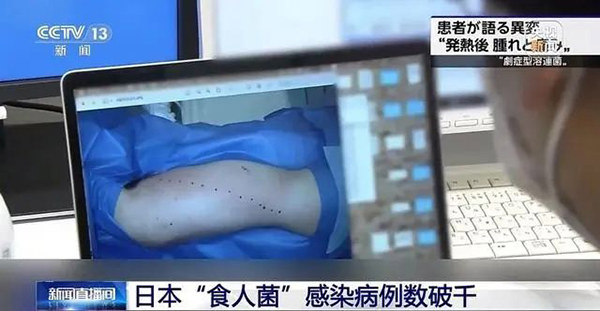
◎ Japan's surge in cannibalistic bacteria infections sparks international concern. / Photo: CCTV News
Why did cases of "flesh-eating bacteria" infections surge in Japan this year?
Japanese experts suspect that the emergence of a new variant of Streptococcus pyogenes called the "M1UK lineage strain," combined with declining public immunity to streptococcus, may be the main reasons for the sharp increase in cases. Additionally, Japan's relaxed COVID-19 prevention measures might also be a contributing factor.
It is currently known that streptococcus primarily spreads through respiratory transmission or direct contact on damaged surfaces (such as skin wounds and surgical trauma).
According to Japan's National Institute of Infectious Diseases, the infection routes of "flesh-eating bacteria" typically include droplet transmission through the nasal cavity and throat mucosa, as well as contact transmission through wounds.
Therefore, individuals with pre-existing ulcerative skin conditions, those who have recently undergone surgery, those recovering from illnesses prone to causing skin ulceration (such as shingles and chickenpox), people with underlying conditions like diabetes, those with alcohol dependency, and frequent users of painkillers or nonsteroidal anti-inflammatory drugs need to exercise extra caution.
Wei Fangfang advises that individuals with the aforementioned risk factors should avoid non-essential travel to Japan in the near future.
If traveling to Japan, one should avoid crowded places, maintain social distancing, and wear masks when necessary. Proper hand hygiene should be observed, and unnecessary contact with high-touch public surfaces should be avoided. Seek immediate medical attention if experiencing fever, sore throat, or rapid disease progression.

◎ Regular handwashing and good hygiene practices like "cough etiquette" remain the best preventive measures / Photo: Panoramic Vision
For healthy individuals without skin wounds or underlying conditions, the actual risk of infection is relatively low. Experts from the Department of Infectious Diseases at Huashan Hospital Affiliated with Fudan University state, "There is no need to restrict travel or stay at home out of concern for streptococcal infection." However, it is advisable to research the infectious disease situation at your destination before traveling abroad and take appropriate preventive measures.
How to Prevent "Flesh-Eating Bacteria" Infection?
1. Maintain good hand hygiene: Wash hands with soap and running water after coughing or sneezing, and before preparing food or eating. Alternatively, use an alcohol-based hand sanitizer.
2. Practice respiratory hygiene: Cover your mouth and nose with a tissue or sleeve when coughing or sneezing. Wear a mask when entering crowded places or poorly ventilated enclosed spaces.
3. Maintain household hygiene: Family members should avoid sharing towels, bedding, and items that may come into contact with saliva, such as drinking glasses, plates, and chopsticks.
4. Maintain environmental hygiene: Ensure cleaning and sanitation of frequently contacted surfaces, with special emphasis on regular disinfection of shared equipment (particularly within hospital settings).