How to Choose the Right Sports Bra for Running? Large-Breasted Women Find the Bouncing Super Embarrassing...
Sometimes, having large breasts isn't such a good thing... For example, when running, girls with bigger chests experience this ↓

#hzh_woman { display: none; }
Female athletes with larger busts literally "bear the weight" of their breasts during exercise—Rong'er can feel the pain through the screen! While this may be a visual "treat" for some onlookers, it's definitely not a pleasant experience for big-breasted women themselves.

Especially when running without a proper sports bra—those unsupported bouncing breasts don't just cause pain and embarrassment, but can actually cause physical damage to breast tissue.
1. The damaging effects of exercising without a sports bra
In terms of breast composition, the structures that play a crucial role in maintaining breast shape include Cooper's ligaments, skin, glandular tissue, and fat.
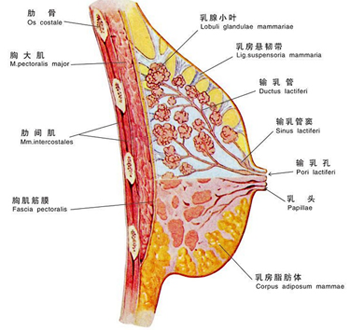
Among these, the suspensory ligaments provide the greatest support to the breasts. Any vigorous breast movement during exercise can stretch and strain these ligament tissues, potentially leading to long-term stretching injury that makes complete restoration of your breasts' original curves difficult.
① Breast ligament strain
During running, female breasts follow a figure-8 motion pattern. Regular bras only prevent vertical breast movement but provide just half the motion control of sports bras. Without proper support, prolonged high-intensity exercise can cause chronic overstretching and injury to the suspensory ligaments - damage that's often irreversible.
②Breast Sagging
When the cumulative damage to the suspensory ligaments reaches a certain degree, it will result in breast sagging.
Research by Dr. Scurr from the University of Portsmouth, UK, shows that for every mile (1609 meters) a person runs, the breasts move 135 meters. Even for 34A cup sizes, breast movement during exercise reaches about 42mm. For women with 36C cups, the vertical movement of the breasts during exercise can be as much as 119mm.
This significant movement causes permanent damage to the elastic fibers within the breast tissue, leading to sagging. Once the breasts sag or loosen due to ligament strain, it becomes very difficult to fully restore them to their previous shape.
So, ladies with fuller busts, to properly protect your pride and joy, you must wear a sports bra when running. Of course, those with smaller busts shouldn't be careless either - even the smallest breasts can sag without proper support.
③ Redness from Friction
The less your bra moves while running, the less friction there will be. However, the larger your breasts are, the more difficult it becomes to prevent movement. If you choose an ill-fitting sports bra, excessive bouncing during running can easily cause friction against delicate skin.
2. Choose the Right Sports Bra for Running
What is a sports bra?
The full English name of a bra is brassiere, referring to undergarments worn beneath daytime outerwear, typically simple styles with thin cotton padding or lining. Thus, a sports bra is, as the name implies, a bra designed for sports.
A sports bra is underwear specifically designed for women's athletic activities, featuring characteristics like lightweight, breathability, comfort, and high elasticity. It supports and stabilizes the breasts to minimize movement during exercise while preventing breast interference with physical activity.
Why do you need a sports bra?
There are two main reasons. First, it's to protect the breasts—ordinary bras can't support bouncing breasts during exercise. Wearing regular bras for sports long-term can lead to breast sagging. Second, it promotes sweat-wicking, as the sweat production and physical impact during exercise far exceed normal levels. Regular bras simply can't provide the necessary protection and comfort required for sports activities.
Although sports bras cannot completely eliminate bounce, high-support bras can reduce the range of movement by approximately half.
How to choose the right sports bra?
When selecting a sports bra, key considerations include your cup size and breast shape, exercise intensity, as well as the fabric design of the sports bra. Let's examine these factors step by step.
Step 1: Determine your cup size
First, confirm your cup size. Women with A or B cups are relatively fortunate as most sports bras provide adequate breast support. However, those with C+ cups will require products offering superior support.
Of course, some sports bras are categorized by sizes S, M, L, XL, rather than being classified based on the underbust and bust measurements of women. So, it's essential to try them on to ensure they fit properly, neither too loose nor too tight.
Step 2: Choose a bra based on exercise intensity
① Low-intensity exercise: Simple support bra (wire-free)
For activities such as cycling, bowling, golf, and walking, where the exercise intensity is relatively low, you can opt for simple fixed sports bras. These bras feature a layer of elastic mesh fabric for stabilization, offering a simple structure and cute appearance.
② Medium-intensity sports: The most widely used bra (wire-free)
Sports such as race walking, stair climbing, and tennis can utilize this most common type of bra. Its design fully considers ergonomics, providing good breast support while maintaining relative comfort.
③ High-intensity sports: High-support bras (with underwire)
For activities like basketball, volleyball, badminton, and running, choose bras with strong support. When trying them on, jump vigorously in the fitting room—the ideal bra should fully cover your breasts without causing any pain.
Step 3: Purchase based on the bra's design
After selecting a few sports bras that catch your interest, you should also consider their fabric and design.
① Fabric: Choose one with good sweat-wicking and breathability
No matter what exercise you're doing, your body's sweat production will generally be higher than normal. Therefore, opt for materials specifically optimized for this, such as polyester fiber (Coolmax). Cotton fiber is not recommended because it dries slowly after absorbing sweat.
Additionally, it's important to understand that fabric breathability and support are generally inversely proportional. This means when engaging in low-intensity exercises, you should opt for low-impact sports bras for optimal comfort.
② Underband: Wider stabilizing band
The bra's underband stabilizing strip should be wider to provide better support.
③ Shoulder straps: Also need to be wider
The shoulder straps should be wide and elastic, not digging into the shoulders, with padded lining preferably at key pressure points. When raising your arms, they should support your breasts without causing bulging or bouncing.
④ Padding: Present but not overly thick
Choose a bra with padding to prevent nipple show, but avoid excessively thick padding as it tends to hinder sweat evaporation.
⑤ Underwire: Should rest above the ribcage
It should sit on your ribs to avoid digging into breast or underarm tissue, preventing discomfort in these areas.
⑥ Straps: Wide and elastic
It should be made of wide elastic material that supports your bust without making your back feel trussed up like a rice dumpling.
With all that said, the most important thing is that you must try it on! Don't be afraid of the trouble or settle for less - trying it on is a crucial step. You should observe your front, back, and side profiles in the mirror while moving around to experience whether the fit feels comfortable and natural.
What to do when a bra can't provide enough support?
If your breasts are overly voluptuous and you can't find a suitable sports bra, experts recommend first wearing a high-impact running bra and then layering a compression sports bra on top to properly secure both breasts.
Speaking of this, we must mention a famous news story from two years ago in the UK. The Daily Mirror once made headlines with: "Madonna wears 3 bras for morning jog in Hyde Park." Though slightly exaggerated, we can see how meticulous she was in protecting her breasts - something every busty woman should learn from!
3. Maintenance Principles for Sports Bras
Similar to regular bras, sports bras require extra care in maintenance. Remove and wash your sports bra immediately after exercise to prevent sweat from seeping into the fabric and causing yellowing or odors. Hand wash only (no machine washing) by soaking in cold water with detergent, then gently rub to remove sweat. Air dry in shade - avoid direct sunlight to preserve elasticity and prevent discoloration.
When you notice cup deformation, loose straps, or inadequate support, it's time for a replacement. Additionally, it's important to experiment more – after several runs, you'll typically determine which brand and style of sports bra best suits your body shape.
4. Must-Know Sports Bra Brands
①Nike Fitness Series
For cup sizes below C, you can freely choose and wear sports bras from brands like Nike and Adidas.
②ENELL
Sports brands specifically designed for women with larger busts... offering excellent support and comfort.
③CW-X series
Reportedly one of the world's best sports bras, representing professional excellence.
④Champion
④ Champion
Established in 1919, this sportswear brand produces bras with durable woven fabric featuring excellent breathability. The dense texture provides superior breast support.
⑤Moving Comfort Juno 女款运动文胸
⑤ Moving Comfort Juno Women's Sports Bra
A renowned American sports bra brand particularly suitable for women with larger busts.
Brands like Nike and Adidas are relatively easy to purchase, and if they have physical stores, it's essential to try them on! For those without physical stores, purchase from the official website and still make sure to try them on! If you find the fit isn't right, replace it promptly. Also, sizes vary between brands—don't assume one size fits all; treat each brand specifically!