What to Do for Hand Burns? Emphasizing Both Repair and Rehabilitation!
The hands are vital working organs and are frequently exposed, making them prone to injuries. Although the surface area of both hands accounts for only 5% of total body surface area (TBSA), their intricate structure means that deep burns often result in deformities and functional impairments. Severe cases may even lead to permanent loss of labor capacity, which is why deep hand burns should always be treated as major burns.
Burns can affect the entire hand, but the dorsal (back) side is more commonly and severely affected. This is related to its frequent exposure and thinner skin. However, contact burns caused by directly gripping high-temperature objects more often occur on the palmar side, typically presenting as localized but deeper and more severe injuries.
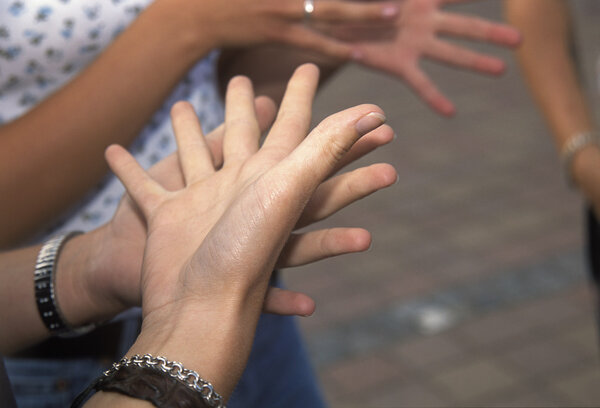
The skin on the dorsal hand is thin, soft, and highly elastic, with approximately 25% more surface area when clenched into a fist compared to when extended. Its sparse subcutaneous tissue consists only of a thin layer of loose connective tissue separating the skin from underlying extensor tendons, joint capsules, and ligaments. These anatomical characteristics make deep dorsal burns prone to damaging underlying structures, particularly the extensor tendons and joint capsules at metacarpophalangeal and proximal interphalangeal joints. Post-healing scarring often leads to severe contracture deformities and functional impairment.
Palmar skin is thick and keratinized with abundant subcutaneous fat partitioned by dense connective tissue septa. These features, combined with the hand's natural tendency to clench during burns, typically result in less severe palmar burns. However, contact burns penetrate deeper here. Due to substantial fat padding and protection by the palmar aponeurosis, flexor tendon injuries are rare except in electrical burns.
Key principles for managing hand burns include: rapid wound closure, edema reduction, maintenance of functional positioning, infection prevention, and early mobilization.
The most fundamental principle in managing hand burns is to eliminate the wound surface as quickly as possible, which is also the essential measure to preserve hand function to the greatest extent.
However, several common issues arise when eliminating wound surfaces, such as leaving the wound exposed for extended periods, allowing granulation tissue to grow unchecked without skin grafting. Prolonged exposure of the wound, especially without removing necrotic tissue in deep burns, will inevitably lead to infection and deepening of the wound. Additionally, the persistent existence of the wound restricts early hand movement, resulting in muscle atrophy and joint stiffness.
So, how can this situation be actively prevented? Priority should be given to treating hand burns. If the patient's overall condition permits, early excision of eschar and skin grafting to cover the wound is advisable. For those unable to undergo early eschar excision, active removal of necrotic tissue and prompt skin grafting—or excision of aged granulation tissue followed by grafting—should be performed.
If the wound surface is eliminated within 3 weeks, functional recovery is generally favorable. However, if treatment exceeds 3 weeks, significant joint dysfunction is likely to occur.
Secondly, to prevent hand dysfunction, it is essential to promptly reduce edema and shorten its duration.
Edema often occurs due to increased capillary permeability after burns, leading to excessive exudation and localized swelling. These exudates typically extend along muscle tendons, depositing in muscles, joint capsules, and surrounding joint areas. Over time, they become organized, causing critical elastic tissues—including delicate tendon sheaths, intrinsic hand muscles, and rigid joint capsules—to become restricted by fibrous tissue. Consequently, this results in joint stiffness, functional impairment, and in severe cases, the development of a "frozen hand." Therefore, reducing the degree of edema and shortening its duration are crucial.
So, how to quickly control edema? This requires patient education emphasizing the importance of early hand rehabilitation therapy. Patients should be instructed to perform early movement and elevate the affected limb, maintaining a "hand-elbow-shoulder" gradient where the hand is higher than the elbow, and the elbow higher than the shoulder. For the forearm, particularly the wrist area, if circular eschar formation compromises hand circulation, escharotomy decompression should be performed. However, note that edema reduction should not rely on tight dressing application. Overly tight bandaging risks circulatory impairment, potentially achieving the opposite effect and contradicting therapeutic goals.
For hand burns, regardless of the cause, it is essential to maintain the affected limb in its functional position.
However, it should be noted that the most common erroneous hand posture consists of wrist flexion, hyperextension of the metacarpophalangeal joints, flexion of the first interphalangeal joints, and thumb adduction. Early correction of this non-functional hand position should be emphasized. Different conditions require different approaches: the wrist should be flexed in cases of simple dorsal hand burns, extended for palmar burns, and maintained in a neutral position for full-thickness hand burns.
For dorsal hand burns, the metacarpophalangeal joints should be flexed to 80°~90° to keep the collateral ligaments at their maximum length; the interphalangeal joints should remain extended or flexed 5~10° to prevent tension and damage to the central slip of the extensor tendon; the thumb should be maintained in an abducted and opposed position.
Burn patients are at higher risk of infection, requiring special attention to infection prevention.
After wound infection occurs, deep second-degree wounds may transform into first-degree, and severe cases can damage tendons or lead to complications such as arthritis. The key to preventing and controlling infection lies in promptly removing necrotic tissue and performing timely skin grafting to close the wound. For deep burns, exposure therapy is preferred as it rapidly dries the eschar, reduces bacterial concentration, and prevents invasive infections. When there is extensive necrotic tissue with severe infection (such as spontaneous eschar liquefaction or sub-eschar pus accumulation), the eschar or scab should be completely removed to ensure adequate drainage.
As mentioned above, early mobilization is particularly important for the prompt recovery of hand function.
In addition to the edema tissue after burns acting like a splint to limit joint movement, eschar formation or wound dressing also impedes mobility. Furthermore, due to patients' fear of pain or concerns about affecting wound healing, early mobilization after hand burns is often restricted. If this situation is not addressed and the hand remains immobilized for an extended period, it will progressively lead to pathological changes in deep tissues: fibrotic organization of edema fluid solidifying all hand structures, muscle atrophy, tendon adhesion, and joint ankylosis, resulting in permanent hand deformities and functional loss. Therefore, patients should be informed of the importance of mobilization and encouraged to engage in early activity.
To facilitate movement, exposed or semi-exposed therapy should be adopted whenever possible. Patients should be encouraged to perform self-care activities, such as eating with a spoon, exercising with stress balls, and wringing towels for facial washing.
In summary, hand burns require not only wound closure and tissue integrity restoration but also functional recovery. Early nursing intervention and functional exercises are essential for hand burn patients to regain hand function, which necessitates collaboration between burn and rehabilitation departments.