t
63-year-old Lao Li was diagnosed with chronic kidney disease a decade ago. Despite having no obvious symptoms, he has consistently taken his prescribed medication and undergone regular check-ups over these years.
However, two years ago, Mr. Li heard that medications could have toxic side effects on the liver and might not only fail to treat kidney disease but also harm the liver. Feeling that he hadn't experienced any discomfort over the years and unsure whether the medicine he took was just a waste of money, he decided to stop the treatment.
More than a year after stopping his medication, Old Li noticed his body showed no adverse reactions, which further confirmed his beliefs. He even shared his experience with the elderly men in the neighborhood yard, convinced that hospitals prescribed medications just to make money.
However, three months ago, Old Li noticed blood in his urine during urination, followed by foamy urine that became increasingly cloudy.
Soon after, swelling appeared in his limbs—his calves grew more puffy, and the itching on his arms worsened, with anti-itch creams providing no relief.
His son, Xiao Li, grew worried and took Old Li to the hospital for examination. To their shock, the final diagnosis was uremia resulting from chronic kidney disease! Only then did Old Li deeply regret his stubborn decision to stop taking his prescribed medication.

1. How far is kidney disease from uremia?
Statistics show that the prevalence of chronic kidney disease in China is about 10.8%, affecting more than 100 million people. This means one in every ten individuals is a chronic kidney disease patient.
Chronic kidney disease results from multiple causes, with common etiologies including diabetic nephropathy, chronic glomerulonephritis, hypertensive nephropathy, polycystic kidney disease, obstructive nephropathy, and lupus nephritis.
Chronic kidney disease progresses slowly, and not all cases will develop into uremia.
However, without timely and appropriate treatment, chronic kidney disease will persistently progress and ultimately lead to end-stage renal failure (uremia).

II. When these 3 skin signs appear, don't delay any longer
Uremia is not a disease caused by a single etiology. In fact, it refers to the most advanced stage of renal failure resulting from all kidney diseases.
This means that once uremia develops, it can cause harm to multiple organs and systems in the human body, including the digestive system, cardiovascular system, respiratory system, and nervous system, affecting virtually all aspects of bodily functions.
Although the kidneys are excretory organs, when kidney function declines, certain changes can also appear on the skin of the body.
1. pigmentation
Many kidney disease patients exhibit noticeable skin discoloration, particularly on palms and toes, where the color appears significantly darker than surrounding skin. This likely results from accumulated metabolic waste products that cannot be properly excreted, depositing on the skin surface.

2. Skin pruritus
Itching is one of the most common manifestations of kidney disease, which can affect patients' sleep and mood. As toxins cannot be eliminated from the body, they circulate through the bloodstream and stimulate cutaneous nerve endings, leading to intense itching.
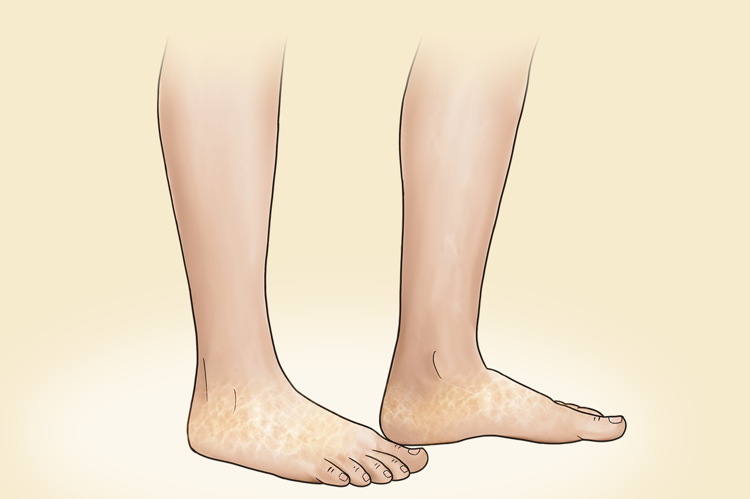
3. Fish-scale-like skin
Patients with uremia often experience dry skin that appears fish-scale-like. This is related to the atrophy of sebaceous glands and reduced moisture content in the epidermal layer of the skin.
Three: People who consistently maintain these 4 habits have very healthy kidneys
The development of uremia is closely related to daily habits. To prevent the disease, these habits should be cultivated:
1. Low-salt diet
Excessively salty diets increase the metabolic burden on the kidneys, disrupting the body's electrolyte balance and making it harder to eliminate excess fluids, thereby further increasing kidney workload.
2. Avoid excessive intake of health supplements
Modern people often have blind faith in health supplements, but some contain unknown ingredients, particularly herbal medicines with unclear compositions. Taking excessive amounts or using them under contraindicated conditions can severely impair kidney function.

3. Maintain a regular sleep schedule
It's best to start winding down and maintain regular sleep by 11 PM. Adequate sleep can boost immunity, improve blood circulation, and consequently help strengthen kidney function.
4. Regular health check-ups
Patients with diabetes, hypertension, individuals over 60 years old, and those who are overweight are considered high-risk groups for kidney disease. They should undergo regular urine tests, and if they notice changes in urination habits or bodily swelling, they should promptly get a urine test to screen for kidney disease at an early stage.

Early-stage kidney disease patients have more treatment options and opportunities—don't wait until kidney failure develops to regret not making changes sooner.