Blowing your nose too hard and your ear makes a "pop" sound? Don't ignore it!
At the moment of blowing your nose, you suddenly hear a light "pop" in your ear, as if something has burst; afterward you feel ear fullness, your hearing seems to have decreased slightly, and you may even occasionally experience tinnitus...
If you have experienced this, immediately stop blowing your nose so forcefully! This very likely means your eardrum has ruptured.
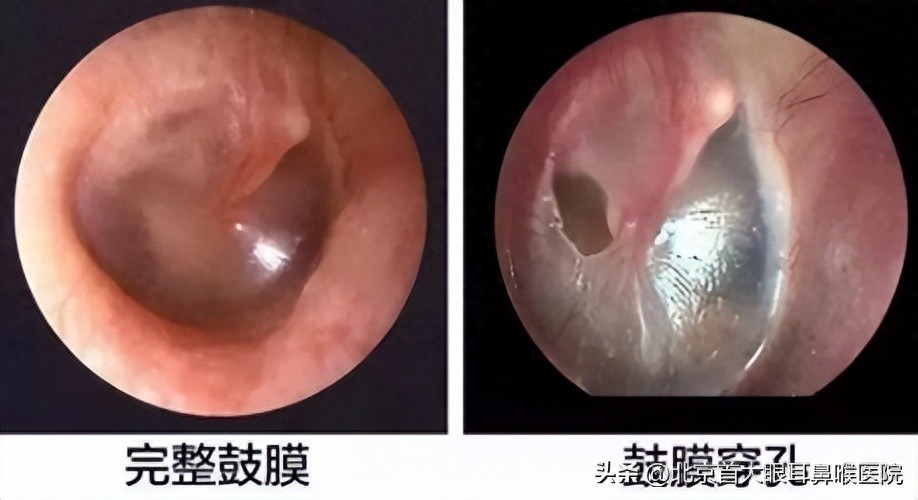
The eardrum is a delicate, soft membrane only 0.1 millimeters thick. When the internal pressure suddenly exceeds what it can withstand, it can be ruptured.
Not all eardrum perforations cause excruciating pain, especially during a cold when attention may be diverted by nasal symptoms. Aside from that popping sound, you should also watch for the following symptoms:
Hearing loss and a feeling of fullness in the ear: This is the most common symptom. It’s like hearing through a membrane; the world suddenly seems muffled and distant.
Tinnitus: A persistent buzzing, hissing, or whooshing sound in the ear.
Bleeding or discharge from the ear: If the perforation is large or accompanied by infection, a small amount of blood or purulent fluid may drain from the ear canal.
Sensation of dizziness: In rare cases, a strong air pressure stimulus to the inner ear may cause a brief spinning sensation (vertigo).
My eardrum is perforated—what should I do? The tympanic membrane has some capacity for self-repair. But the prerequisite is that you must take the correct measures:
Keep the ear dry and clean: Gently plug the external auditory canal with a sterile cotton ball, and strictly avoid allowing any water droplets to enter the ear. Be especially careful when washing your hair, washing your face, or swimming in the near term.
Do not instill medication by yourself: before a clear diagnosis has been made, never purchase or use any ear drops on your own; some medications may pass through the perforation and damage the inner ear, causing irreversible injury.
Avoid any ear probing behaviors: do not use any instruments (including cotton swabs) to probe or pick the ear, to prevent secondary injury.
[Conditions that require medical attention] Please promptly visit the otorhinolaryngology (ENT) department of a hospital:
For small perforations: most small traumatic perforations have the opportunity to heal spontaneously within a few weeks if kept dry and infection is prevented. The doctor may prescribe some medications to prevent infection.
For large perforations or those that cannot heal on their own: If the perforation is large or has not healed after a period of time, tympanoplasty may be required; this is a minimally invasive surgery intended to help the tympanic membrane restore integrity.
Do not do the following:
❌ Pinch both nostrils shut while forcefully blowing your nose.
❌ Close off the oropharynx while blowing your nose so that the pressure has nowhere to escape.
Protect your hearing by blowing your nose correctly. Quickly share this article with the family member or friend who “violently” blows their nose every time they catch a cold! Maybe one share from you can help them avoid an unnecessary injury.