Unilateral nasal congestion, blood-tinged nasal discharge? These signals deserve your close attention
Washing your nose in the morning and finding blood streaks in the water; one nostril always feels blocked and you assume it’s just an unresolved cold… Are these details you often overlook?
Some seemingly ordinary nasal symptoms do warrant closer attention, especially when they are unilateral and persistent.
Common colds or allergic rhinitis usually cause discomfort in both sides of the nose. But if the sensation of blockage is persistently fixed on one side, it warrants increased vigilance.
This may be due to a space-occupying lesion within the nasal cavity, such as:
Benign polyps or cysts: slowly growing and obstructing the passage.
Structural problems: such as severe nasal septal deviation.
Neoplasm requiring high attention: a tumor may begin growing from one side of the sinus or nasopharynx, gradually obstructing the nasal cavity.
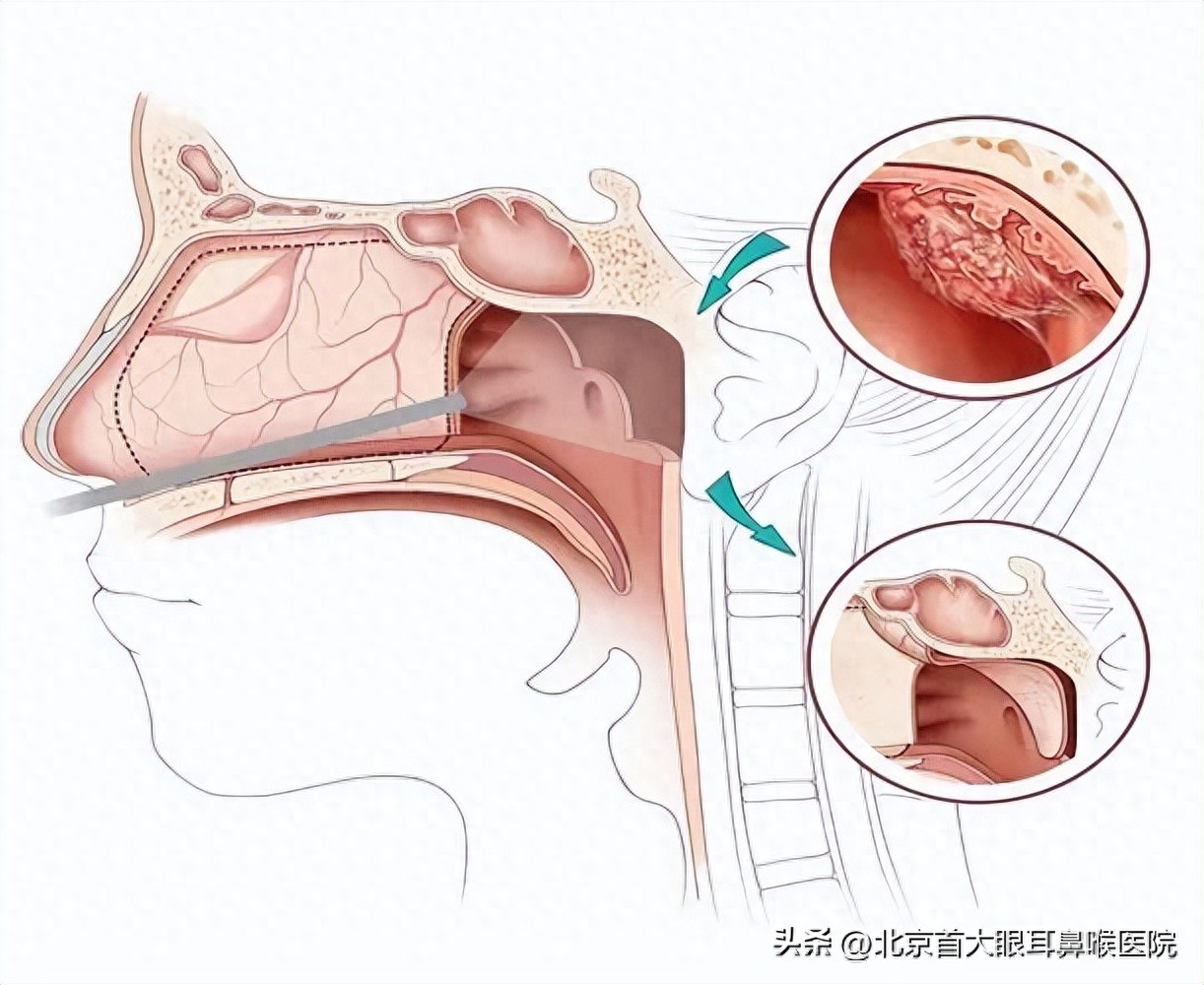
Nasopharyngeal mass
If unilateral nasal obstruction persists for several weeks without improvement, or even gradually worsens, you should see a doctor promptly.
Additionally, nasal discharge with a bit of blood is common in the dry autumn and winter. However, the following situations of blood-tinged nasal discharge also warrant attention:
Blood in postnasal secretions when inhaled back: Especially upon waking in the morning, when secretions sucked back from the posterior nasal cavity into the mouth and then expectorated contain streaks of blood or small clots. This is a relatively characteristic sign of lesion in the nasopharynx.
Recurrent bleeding without pain or itching: There is no nose-picking and no trauma, yet bleeding recurs; the amount is small but it is persistent.
Occurs with unilateral symptoms: Appearing together with unilateral nasal obstruction, unilateral tinnitus, unilateral headache, etc.
If the problem is located in the nasopharynx or similar sites, the symptoms that usually occur include:
Unilateral ear fullness or hearing loss: because the tumor may be compressing the opening of the eustachian tube leading to the middle ear.
Migraine-like headache: especially persistent pain located in the forehead, temples, or occipital region.
Painless neck mass: enlarged cervical lymph nodes that are firm, nonmobile, and not painful.
Double vision or blurred vision: if the tumor grows toward the cranial cavity, it may affect the nerves that control the eyeballs.