A hot tip: your nose and ears are actually connected
When you have a cold with nasal congestion, do your ears also feel like they’re covered by a layer, making sounds muffled?
After forcefully blowing your nose, do your ears suddenly make a “buzz” sound, or do you experience a brief episode of tinnitus?
I cough while drinking water and it feels like the water can come out through my nose? (Although it feels very strange)
。
When we have a cold, rhinitis, or sinusitis, the mucosa of the nasopharynx becomes congested and swollen, secreting a large amount of mucus. This easily affects the opening of the Eustachian tube, causing this already narrow tunnel to become blocked or narrowed.
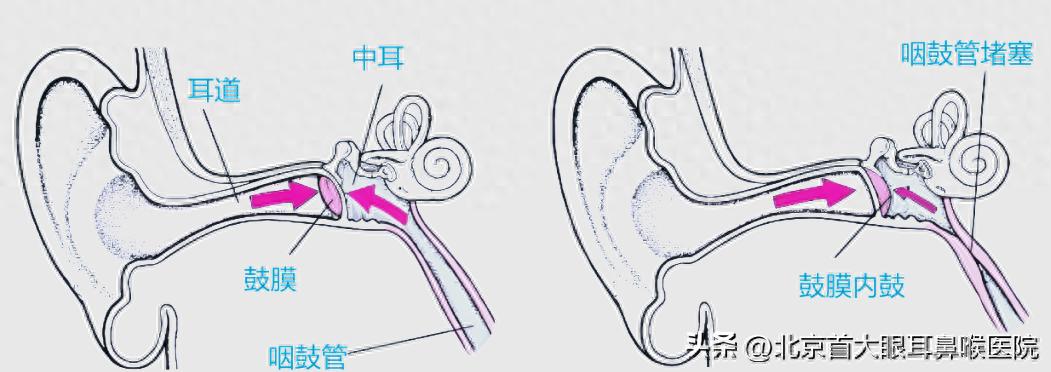
Thus, the trouble begins:
Tunnel blockage → air cannot enter → negative pressure forms in the middle ear → you will feel ear fullness and reduced hearing, as if you are hearing sounds through a layer of water.
Negative pressure persists → vascular fluid in the middle ear seeps out → "secretory otitis media" forms.
Bacteria/viruses take the opportunity to travel "upstream" through the tunnel → trigger acute "suppurative otitis media", causing severe pain and purulent discharge.
Some seemingly ordinary habits are actually very dangerous:
⚠️ 1: Pinching both nostrils shut while forcefully blowing your nose!
This action will cause the pressure in the nasopharynx to rise sharply in an instant, and mucus carrying large amounts of bacteria and viruses may be "whooshed" into the eustachian tube, rushing into the middle ear and easily triggering acute otitis media.
✅ Correct approach: Lean the body slightly forward, press one nostril closed with a finger, gently blow the other nostril, then switch sides. The motion must be gentle.
⚠️ 2: Ignoring a child’s cold and rhinitis!
A child’s eustachian tube is shorter, flatter, and wider than an adult’s — like a broad road, allowing bacteria and viruses to travel from the nose to the ear virtually “unimpeded.” Therefore, children are much more likely than adults to develop otitis media after a cold. If a child says their ear hurts, has difficulty hearing, or frequently pulls at their ear, be sure to seek medical attention promptly.
⚠️ 3: Inadequate protection when swimming/drowning
Contaminated water entering the nasopharynx through the nasal cavity can likewise travel via the Eustachian tube and cause middle ear infection.
Now, do you have a whole new understanding of your body? This quietly working "Eustachian tube," though invisible and intangible, constantly affects our hearing and health.
This article is intended for health education and cannot replace professional medical advice. If you have specific symptoms, please seek care at a qualified hospital promptly.