Stage 4 Lung Cancer Without Wheezing or Coughing, Is It Healed?
Mr. Liu just retired. One day, due to coughing and wheezing, his family accompanied him to the hospital for an examination. The results came back as lung cancer, and his family did not dare to tell him, fearing he could not bear it. The doctor said, "It has already reached an advanced stage; treatment must begin promptly."
However, once the chemotherapy started, Mr. Liu became aware. He has always had relatively poor psychological resilience, so his family was extremely worried.
Later, the family heard that traditional Chinese medicine could also treat lung cancer and came to me for help. Based on his condition, I prescribed Mr. Liu some Chinese herbal medicine and advised his family that radiotherapy and chemotherapy should be initiated as soon as possible, and combining them with Chinese medicine could help reduce the side effects. Relying solely on the power of Chinese medicine would not be enough to suppress the tumor.
After two weeks, Mr. Liu’s son came and said to me, "After taking the medicine, he no longer has shortness of breath or coughing, and he has more energy. Is he getting better?"
The staging of lung cancer now generally follows the TNM staging system, and what we often refer to as advanced stage usually means stages after T3N2. Mr. Liu’s tumor is already quite large, and there is significant lymph node metastasis, which we classify as locally advanced. At this stage, conventional treatment methods rarely lead to a complete cure.
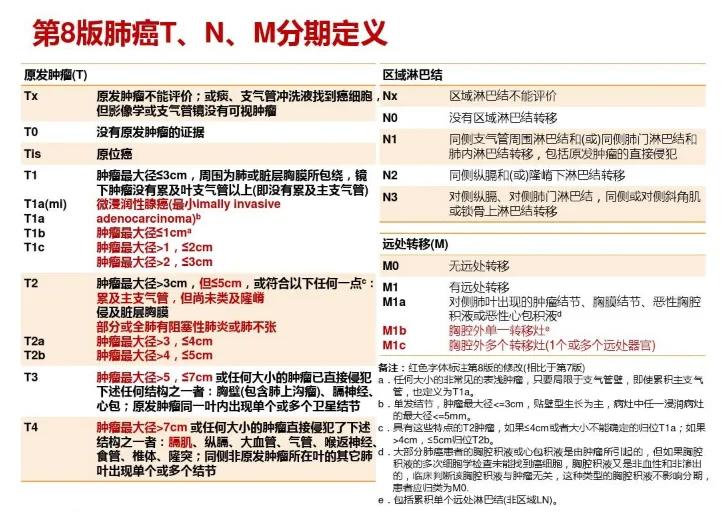
For advanced lung cancer, current treatment typically advocates a comprehensive approach, combining radiotherapy, chemotherapy, immunotherapy, targeted therapy, and traditional Chinese medicine. Using traditional Chinese medicine alone can alleviate patients' symptoms but cannot completely control tumor progression. Mr. Liu's improvement in coughing and shortness of breath is a manifestation of the effect of traditional Chinese medicine; however, symptom improvement does not indicate that the lung cancer is getting better.
Our criteria for judging tumor improvement are not based on symptoms but on examination results, especially imaging findings. For lung cancer, CT scan results are primarily used. If the CT scan shows tumor shrinkage, we consider the disease to be improving. If the results show tumor growth, regardless of whether the symptoms have improved, we consider the disease to be progressing.
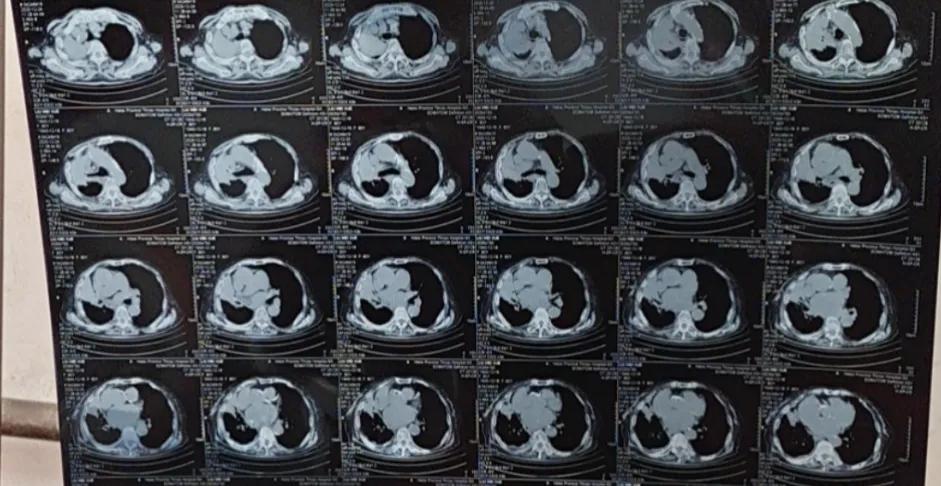
Does symptom improvement hold no significance for lung cancer? Not exactly. Improvement in symptoms indicates that the body and immunity are in a relatively good state, typically reflecting a more stable phase of the disease. During this time, the body's tolerance is better, allowing for more aggressive treatments such as surgery, chemotherapy, and radiotherapy.
If symptoms do not improve or even worsen, it indicates poor physical condition, limiting the applicability of many treatments. In such cases, only relatively milder treatments like immunotherapy, targeted therapy, or traditional Chinese medicine can be pursued. Some patients are extremely weak and cannot even tolerate immunotherapy or targeted therapy, leaving traditional Chinese medicine as the only option.
However, traditional Chinese medicine treatment alone is only temporary; once the body shows improvement, it is still necessary to combine Chinese and Western medicine for treatment.

After Mr. Liu's son arrived, I explained in detail the relationship between the symptoms and the disease, telling him that taking advantage of Mr. Liu's relatively good physical condition to start radiotherapy and chemotherapy early could yield better results.
After Mr. Liu's son returned, he managed to bring his father to the hospital for chemotherapy through persuasion and some coaxing. After two cycles of chemotherapy, a follow-up CT scan showed that the tumor had significantly shrunk, the tumor was under control, and his physical condition had not deteriorated.
Through this incident, we realized that the improvement of symptoms does not have a completely definitive relationship with the overall state of the disease. To determine whether lung cancer has improved, it is still necessary to undergo detailed examinations.