What exactly is "phlegm" in traditional Chinese medicine? Why is not expectorating phlegm also called "phlegm-dampness"?
Generally, we consider phlegm to be the fluid coughed up from the respiratory tract, which is the modern understanding of phlegm.
Actually, in traditional Chinese medicine, "phlegm" is a special term that not only refers to the sputum we cough up but also represents a pathological product within our bodies.
In Traditional Chinese Medicine, "phlegm" is considered a pathological product formed due to impaired water metabolism in the body.
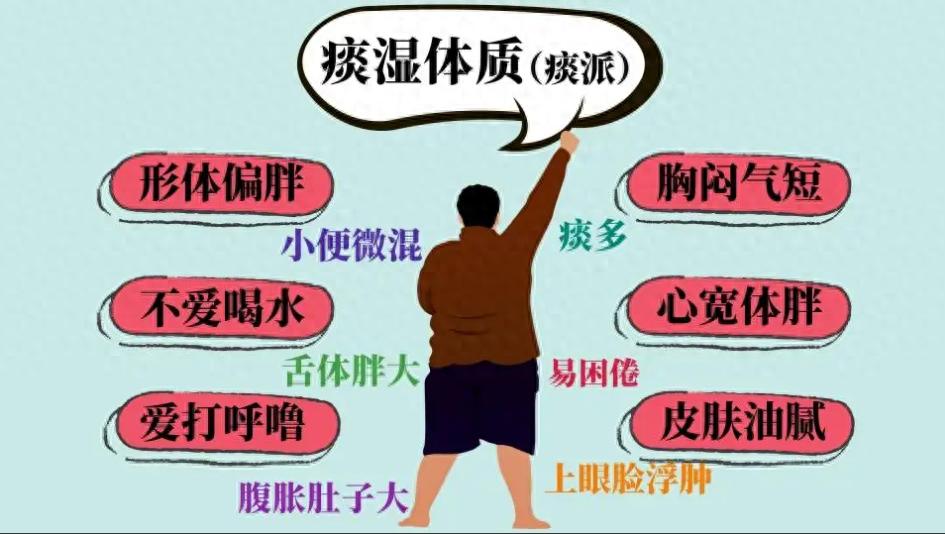
We often hear the term "phlegm-dampness." Both "phlegm" and "dampness" are actually caused by the imbalance of water metabolism in our body. Besides "phlegm-dampness," there are two other pathological products: "water" and "retention."
When our body's water metabolism is imbalanced, fluids cannot circulate properly and accumulate in certain areas, leading to the formation of "dampness." The coagulation of dampness results in "water," the accumulation of water leads to "retention," and prolonged retention can condense into "phlegm."
The fundamental cause of phlegm formation is the dysfunction of water metabolism in the body, which is closely related to the lungs, spleen, kidneys, and the triple energizer.
The lungs govern dispersion and descent, with the function of distributing body fluids and regulating water passages; the spleen governs the transportation and transformation of dampness, serving as a key organ for absorbing and transmitting fluids.
The kidneys, on the other hand, govern the steaming and transformation of water and fluids. After being utilized by the viscera and tissues, fluids descend through the triple burner to return to the kidneys, where they are divided into clear and turbid portions through the steaming and qi-transforming action of kidney yang. The clear portion rises again through the triple burner, returning to the lungs to be distributed throughout the body; the turbid portion becomes urine, which is conveyed downward to the bladder and excreted from the body through the urethra, thus completing a continuous cycle.
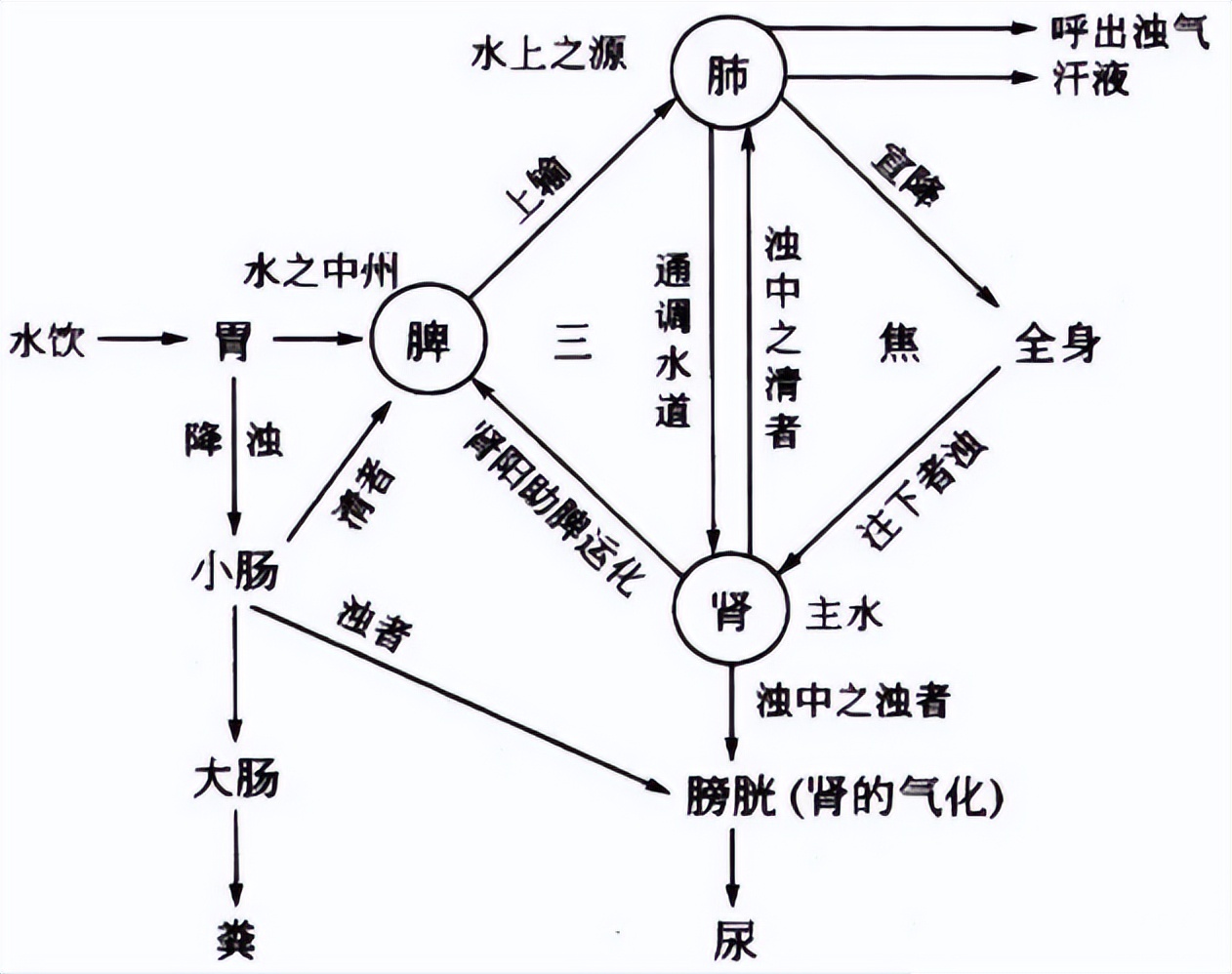
Therefore, dysfunction of the lungs, spleen, kidneys, or triple burner can all lead to the accumulation of dampness and the formation of phlegm. Once formed, phlegm follows the movement of qi, ascending and descending; internally, it can lodge within the viscera, and externally, it can reach the sinews, bones, skin, and flesh, spreading unrestrictedly and reaching any part of the body.
Thus, phlegm can occur anywhere in the organism.
Then some may ask, are all these phlegms visible?
Of course not. Phlegm can be categorized into tangible phlegm and intangible phlegm.
Tangible phlegm refers to substantive phlegm-turbidity that is visible to the eye, palpable to the touch, and audible to the ear, such as phlegm that we cough up or vomit.
Intangible phlegm refers to the specific symptoms and signs caused by phlegm, where the manifestations are evident but the form is not visible. When phlegm affects the human body, it can present symptoms such as dizziness and blurred vision, palpitations and shortness of breath, nausea and vomiting, mental confusion and delirium, etc. It is often characterized clinically by a greasy tongue coating and a slippery pulse.
So many people don't actually spit up phlegm, but there is still "phlegm" in their bodies.