Should Women Also Nourish Yang Energy?
It is often said, "Men are of yang nature, women are of yin nature" and "Men often have yang deficiency, women often have yin deficiency." Is this really the case?
The theory of yin and yang in Traditional Chinese Medicine is a dialectical theory based on the "monism of qi." According to the theory of yin and yang, all things in the universe exist in a state of unity of opposites between yin and yang. The occurrence, development, and changes of all things are the result of the unity of opposites between yin and yang.
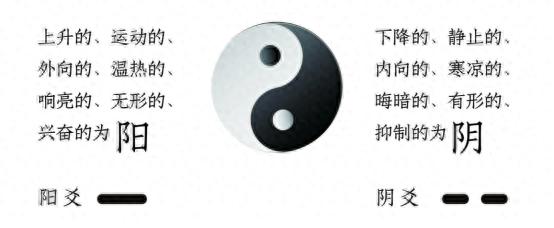
Why is it said that "men belong to yang, women belong to yin"?
According to the theory of yin and yang, attributes that lean toward upward, outward, and active tendencies belong to yang, while those that lean toward downward, inward, and static tendencies belong to yin.
Since the patriarchal society, women have long been in a disadvantaged position, often exhibiting introverted personalities and quieter behaviors, along with physiological characteristics such as menstruation, leukorrhea, pregnancy, and childbirth. Compared to men, women's attributes lean more toward yin.
Clinically, we can observe that most diseases in women exhibit a phenomenon of "yin deficiency," so the majority of female ailments require nourishing yin.
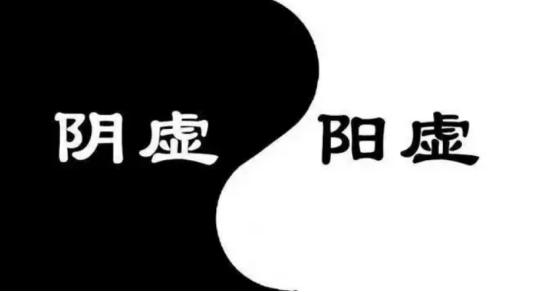
However, the attributes of yin and yang exist in all things. Although women are considered yin, this is relative to men. In terms of women themselves, there is also a distinction between yin and yang. For example, the back is yang while the abdomen is yin, and the skin is yang while the internal organs are yin.
Women themselves also possess yang qi, which serves as the body’s first line of defense against external pathogens. The protective qi distributed across the body’s surface is one form of yang qi. If yang qi is insufficient, the defensive function weakens, making the body more susceptible to various diseases.
In clinical practice, doctors often supplement yang qi in women. On one hand, women can also experience yang qi deficiency. On the other hand, “those skilled in supplementing yin must seek yang within yin.” When supplementing yin, the addition of yang-supplementing herbs is often necessary to achieve better results.
What are the signs of yang qi deficiency in women?
When the yang energy in the body is insufficient, it leads to a state of "coldness," often manifesting as symptoms like fear of cold and cold limbs. Without yang energy, it's akin to cooking without fire; thus, digestion tends to be poor, and sometimes undigested food may be visible in the stool. A deficiency of yang energy weakens vital activities, resulting in mental lethargy.
Additional symptoms may include soreness and weakness in the lower back and knees, clear and copious urine, palpitations, dizziness, poor appetite, reduced menstrual flow, infertility, decreased sexual function, dysmenorrhea, and metrorrhagia, among others.
Thus, tonifying yang is also a crucial aspect of treating female ailments. Women should not blindly focus on nourishing yin; they must also recognize the aspect of yang deficiency in women.

What does "those who excel at nourishing yin do so by seeking yang within yin" mean?
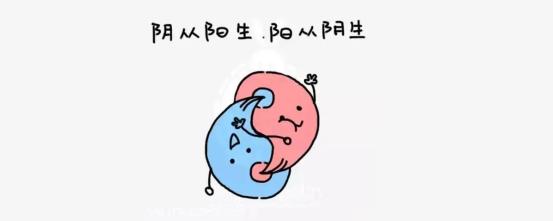
According to the theory of yin and yang, yin and yang have a mutually rooted and interdependent relationship. Neither yin nor yang can exist independently of the other; they are mutually dependent. Therefore, when yin is deficient, yang is also insufficient.
Moreover, yin and yang can transform into each other. The *Complete Book of Jingyue* states: "Those skilled at tonifying yang must seek yang within yin, so that yang is aided by yin and generates endlessly; those skilled at tonifying yin must seek yin within yang, so that yin rises with yang and its source never depletes." With the assistance of yang, yin can be continuously replenished.
Which behaviors can lead to insufficient yang energy in women?
1. Preference for cold foods
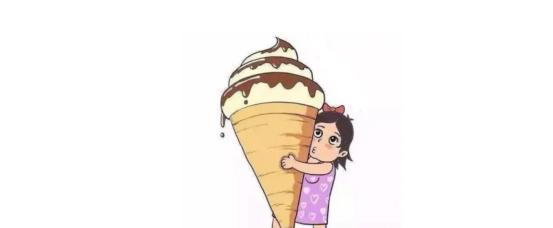
For example, ice-cold sodas, ice cream, etc. These foods have very low temperatures. Consuming them frequently can harm the body's yang energy.
2. Preference for wearing short or revealing clothing
Many women prioritize aesthetics and enjoy wearing short or revealing clothing, such as crop tops and knee-exposing outfits. Areas like the abdomen, knees, and ankles are particularly susceptible to invasion by cold pathogens. During hot summer weather, wearing such clothing may not cause significant issues. However, as the weather gradually cools, continuing to wear these clothes can expose the body to cold pathogens, damaging yang energy.

3. Chronic Sleep Deprivation
Throughout the day, yang qi prevails during daylight hours, while yin qi prevails at night. Human circadian rhythms naturally align with the day-night cycles of the natural world. Nighttime, when yin qi is dominant, is when the body's yang qi retreats inward and yin qi circulates outward, which naturally induces sleep. However, if one does not sleep at night, yang qi fails to retreat properly, leading to accelerated depletion.

4、Lack of physical activity
Yang energy is characterized by upward movement, outward expansion, and vitality. Regular exercise promotes blood circulation and helps maintain abundant Yang energy. If physical activity is insufficient, Yang energy cannot be adequately replenished.