Why Should Cancer Patients Use Caution with Blood-Activating and Stasis-Resolving Drugs?
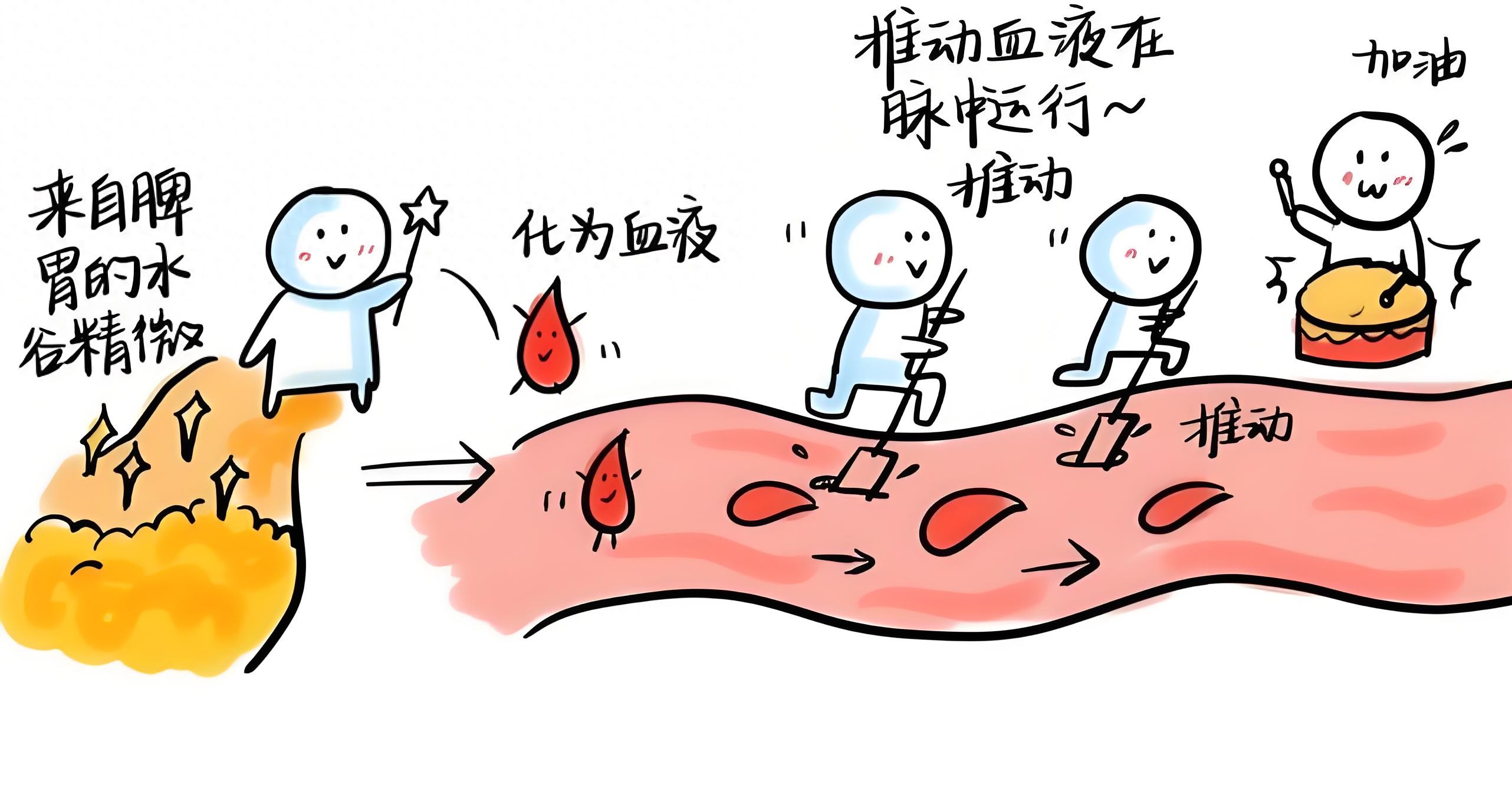
The blood-activating and stasis-resolving method is a commonly used clinical treatment approach in Traditional Chinese Medicine. However, in the treatment of malignant tumors, there has long been a saying that "blood-activating and stasis-resolving drugs can promote the metastasis of cancer cells."
Previous studies suggested that the blood-activating and stasis-resolving method can improve the hypercoagulable state in cancer patients, prevent the formation of tumor emboli, and directly or indirectly inhibit and kill the primary tumors as well as tumor cells that have entered the bloodstream.
However, some researchers believe that blood-activating and stasis-removing medications may promote the metastasis of tumor cells and are not beneficial for cancer treatment.
A small number of animal studies have shown that certain single-ingredient traditional Chinese medicines can promote tumor metastasis in experimental mice. However, most experimental results indicate that blood-activating and stasis-removing medications have no significant effect on tumor metastasis.
What causes the discrepancies in the experimental results? Do blood-activating and stasis-removing medications truly affect tumor metastasis?
In fact, current research on blood-activating and stasis-removing medications is limited to single-ingredient studies, whereas the unique advantage of traditional Chinese medicine lies in syndrome differentiation and treatment, as well as the principle of "monarch, minister, assistant, and envoy."
According to syndrome differentiation and treatment, "if there is a syndrome, then use the corresponding medicine." This means that blood-activating and stasis-resolving medicines should only be applied when there is a blood stasis syndrome. If a patient does not have blood stasis but is given blood-activating and stasis-resolving medicines, it will damage the patient's qi and blood, which is not worth the loss.
Monarch, minister, assistant, and envoy are the compatibility principles of traditional Chinese medicine prescriptions, emphasizing the combination of medicines. For example, in the commonly used Taohong Siwu Decoction for treating blood stasis syndrome, peach kernel and safflower serve as the primary herbs to activate blood and resolve stasis. They are combined with cooked rehmannia root, Chinese angelica, peony root, and Szechuan lovage rhizome to nourish yin and blood, regulate and smooth the flow of qi, thereby removing stagnant blood and generating new blood, eliminating pathogenic factors without harming healthy qi.
Blood-activating and stasis-resolving is one of the methods to eliminate pathogenic factors. Traditional Chinese medicine places great emphasis on the combination of strengthening the body's resistance and eliminating pathogenic factors in treatment. When deficiency of healthy qi is evident, immunity is low, and tumor metastasis and recurrence are prone to occur. At this time, the use of blood-activating and stasis-resolving medicines should be reduced, and the application of tonifying and deficiency-correcting medicines should be increased. When healthy qi is strong, immunity is relatively high, and tumor recurrence and metastasis are less likely to occur. If the patient has blood stasis syndrome, blood-activating and stasis-resolving medicines can be boldly applied to attack the pathogenic factors while healthy qi is abundant.
Typically, when a disease persists for a long time without cure, blood stasis syndrome often occurs due to factors such as weakness of qi and blood, phlegm-dampness obstruction, etc., especially in the late stages of the disease. At this time, qi and blood are weak, and their pushing force is insufficient, making it easy for blood stasis obstruction to occur. In such cases, we can appropriately apply blood-activating and stasis-resolving medicines to promote the circulation of qi and blood. However, this should be done on the basis of prioritizing the strengthening of healthy qi, and excessive use must be avoided.
Clinical application of blood-activating and stasis-resolving medicines also involves certain experience. For instance, drugs like peach kernel, angelica, and motherwort have immunosuppressive effects and should be avoided as single agents or avoided altogether; zedoary and spatholobus stem do not reduce immunity and may even enhance it, while also possessing anti-tumor properties, making them more widely used in clinical practice. Additionally, blood-activating and stasis-resolving medicines are often combined with qi-tonifying drugs, such as astragalus, ginseng, and pseudostellaria root, to enhance efficacy and prevent damage to qi and blood.
The method of activating blood circulation and resolving stasis is one of the commonly used treatment approaches for tumors. It should be approached rationally—neither discarded nor applied arbitrarily.