Why Do People Develop Breast Hyperplasia? How Is Breast Hyperplasia Treated?
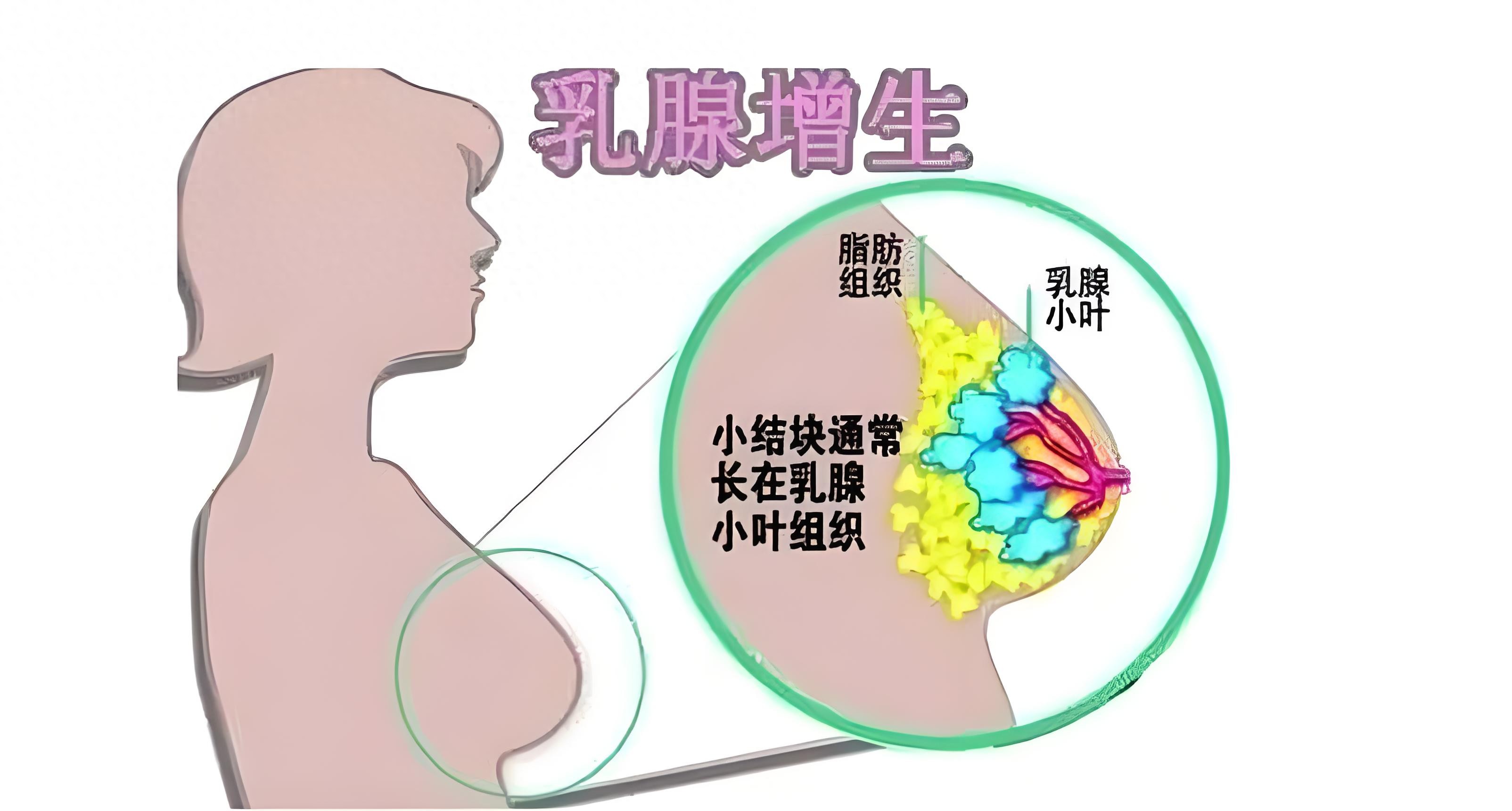
Modern medicine suggests that the occurrence of breast hyperplasia is related to endocrine disorders, primarily influenced by hormones such as estrogen, progesterone, and prolactin. In traditional Chinese medicine (TCM), there is no concept of breast hyperplasia. Ancient doctors referred to similar conditions collectively as "rǔpǐ" (breast mass). As described in Gao Bingjun's *Experience Collection of Ulcerology* from the Qing Dynasty: "There are masses in the breasts, shaped like pills or eggs, without pain, without fever or chills, and without changes in skin color. The masses grow or shrink with emotional fluctuations, and this is called rǔpǐ."
Typical symptoms of rǔpǐ include breast lumps, breast pain, breast distension, and pain, especially around the menstrual cycle when symptoms may worsen. Additionally, it may be accompanied by systemic symptoms such as mood swings, chest tightness, and hypochondriac pain.
1. Etiology and Pathogenesis
Traditional Chinese Medicine (TCM) holds that the formation of breast lumps (Ru Pi) is associated with factors such as liver qi stagnation, qi and blood stasis, and phlegm-dampness accumulation. It primarily includes the following points:
1. Liver Qi Stagnation
The liver governs free-flowing discharge and is responsible for regulating the movement of qi in the body. When emotional fluctuations occur, especially negative emotions such as anxiety, depression, and anger, the liver fails to properly discharge and regulate qi, leading to liver qi stagnation. This, in turn, disrupts the normal circulation of qi and blood. The breast is an area traversed by the liver meridian, so liver qi stagnation can easily cause qi stagnation in the breast region, leading to the formation of lumps.
2. Qi and Blood Stagnation
Liver qi stagnation can lead to poor circulation of qi, which in turn causes blood stasis. In the breast area, this stasis may manifest as lumps, pain, and other symptoms.
3. Phlegm-Dampness Congealing
The spleen governs the transportation and transformation of water-dampness. Spleen qi deficiency may cause internal retention of water-dampness, transforming into phlegm-dampness. When phlegm-dampness congeals in the breast area, it can also lead to the formation of breast nodules.
4. Disharmony of the Chong and Ren Meridians
The Chong Meridian originates from the uterus, ascends along the anterior chest to the face, and regulates the qi and blood of the meridians as well as the ascending and descending movement of qi. Similarly, the Ren Meridian also originates from the uterus, ascends along the midline of the anterior body to the face, and governs yin qi and menstruation. Disharmony of the Chong and Ren Meridians leads to abnormal qi and blood flow in the meridians, imbalance of yin and yang, and stagnation of qi movement. This not only affects women’s menstruation and reproduction but also disrupts the physiological function of the breasts, resulting in the occurrence of mammary hyperplasia.
5. Deficiency of Kidney Essence
The kidneys store essence, and essence and blood share a common source. Deficiency of kidney essence leads to insufficient essence and blood, causing the breasts to lose nourishment and potentially resulting in mammary hyperplasia.
6. Other
Poor dietary habits: Excessive consumption of spicy, greasy, or cold foods can impair the spleen and stomach's transformation and transportation functions, leading to internal dampness and phlegm, which in turn affects the flow of qi and blood.
Lifestyle habits: Chronic poor lifestyle habits such as staying up late, overexertion, and lack of exercise can deplete the body's vital energy, resulting in weakened qi and disrupted blood flow.
External pathogen invasion: External pathogens such as wind, cold, or dampness invading the body and lingering without being expelled can also obstruct the smooth flow of qi and blood.
Emotional Internal Injury: Long-term emotional suppression, mental tension, etc., can lead to internal emotional injuries, affecting the free flow of liver qi.
II. Treatment
Traditional Chinese medicine offers a variety of methods for treating breast lumps, primarily based on the principle of syndrome differentiation and treatment, tailored to the patient's specific constitution and condition. The main principles are to soothe the liver and relieve depression, promote blood circulation and remove stasis, resolve phlegm and dissipate nodules. Here are some common TCM methods for treating breast lumps:
1. Soothe the Liver and Relieve Depression
Liver qi stagnation is the most common etiology and pathogenesis in patients with mammary hyperplasia. Common herbs for soothing the liver and relieving depression include Bupleurum, Curcuma, and Ligusticum chuanxiong, while commonly used formulas include Xiaoyao Powder, Chaihu Shugan Powder, and Sini Powder.
2. Activating Blood Circulation and Resolving Stasis
The occurrence of mammary hyperplasia is related to blood stasis to some extent. The longer the duration of mammary hyperplasia, the more pronounced the blood stasis becomes. Therefore, activating blood circulation and resolving stasis is also a common treatment method for mammary hyperplasia, particularly effective in alleviating pain. Commonly used herbs include Salvia miltiorrhiza, peach kernel, and safflower, while commonly used formulas include Taohong Siwu Decoction, Xuefu Zhuyu Decoction, and Guizhi Fuling Pill.
3. Resolving Phlegm and Dissipating Nodules
Resolving phlegm and dispersing masses is an important therapeutic approach for treating breast masses and a crucial method for promoting their dissipation. Commonly used herbs include Banxia (Pinellia ternata), Beimu (Fritillaria thunbergii), and Haizao (Sargassum). Commonly prescribed formulas include Erchen Tang, Haizao Yuhu Tang, and Loubei Xiaoyao San.
4. Strengthening the Spleen and Tonifying the Kidney
For patients with a weaker constitution or those who are elderly and physically debilitated, appropriate tonifying treatments can yield better results. The commonly used tonifying methods primarily involve tonifying the kidney and strengthening the spleen. Commonly used herbs include Baizhu (Atractylodes macrocephala), Fuling (Poria cocos), Dangshen (Codonopsis pilosula), Shudi (Rehmannia glutinosa praeparata), Gouqizi (Lycium barbarum), and Shanyao (Dioscorea opposita). Commonly prescribed formulas include Sijunzi Tang, Shenling Baizhu San, Buzhong Yiqi Tang, Liuwei Dihuang Wan, Wuzi Yanzong Wan, and Shenqi Wan.
5. Other
In addition to Chinese herbal medicine, various treatment methods such as acupuncture, massage, and dietary therapy can also be combined to enhance therapeutic effects.
Dietary therapy: Consume foods that have the effects of soothing the liver, relieving depression, regulating qi, and dispersing nodules, such as roses, hawthorn, wood ear mushrooms, kelp, and seaweed.
Acupuncture: Acupuncture is also one of the important therapeutic methods in traditional Chinese medicine. Commonly used acupoints for treating breast nodules include Ganshu (BL 18), Qimen (LR 14), Zusanli (ST 36), Sanyinjiao (SP 6), Taichong (LR 3), Zhongchong (PC 9), Guanyuan (CV 4), and Qihai (CV 6). Moxibustion is more suitable for breast nodules of the cold coagulation and blood stasis type.
Massage and Tuina Therapy: Through professional manual massage techniques, blood and qi circulation can be promoted, pain can be alleviated, and this is beneficial for the treatment of mammary hyperplasia.
Topical Medications: Some Chinese herbal topical medications can also be used to treat mammary hyperplasia, such as Yanghe Jiening Ointment, Rupixiao Plaster, Heituixiao, and others.
III. Lifestyle Regulation
Lifestyle Habits: Maintaining good lifestyle habits, such as following a regular daily routine, engaging in moderate exercise, and avoiding staying up late, plays a positive role in both preventing and treating mammary hyperplasia.
Emotional regulation: Emotional internal injury is one of the significant causes of breast masses, and maintaining a positive emotional state while avoiding excessive mood swings is crucial for the treatment of breast masses.
Music therapy: Soothing music helps to regulate emotions and stabilize disordered qi.
Exercise: Moderate exercise can promote the circulation of qi and blood. Some forms of exercise also have health-preserving and therapeutic effects, such as Baduanjin, Tai Chi, Wuqinxi, and Qigong.