Doctors Discover: One Year Before Breast Cancer Diagnosis, the Body Generally Exhibits 7 Early Warning Signs
Ms. Wang is 45 years old. A year ago, while bathing, she accidentally felt a small, painless, non-itching lump in her breast. Due to her busy work schedule and no physical discomfort, she didn't pay attention to it.
It wasn't until recently that she noticed the lump seemed to have grown larger, and the skin above it appeared slightly sunken. Only then did she rush to see a doctor, and was diagnosed with mid-stage breast cancer, missing the optimal window for early treatment. Such stories are not uncommon in the oncology clinic.
Breast cancer is the most common malignant tumor among Chinese women, but its occurrence is not silent.
Through summarizing a large number of clinical cases, doctors have found that a year or even earlier before diagnosis, many patients' bodies had already sent out clear "distress signals." Recognizing these signals is key to seizing the golden period of treatment.

Sign 1: Painless Breast Lump, the Most Easily Overlooked "Rock"
This is the most common and typical early sign of breast cancer. Approximately 80% of breast cancer patients present with a breast lump as the initial symptom.
This type of lump typically feels hard to the touch, with irregular edges and an uneven surface. Crucially, it often lacks significant pain.
This "painless and non-itchy" characteristic causes many people to lower their guard, mistakenly thinking "if it doesn't hurt, it's not serious," thereby delaying diagnosis and treatment.

Sign 2: Breast Skin Develops "Dimpling" or "Peau d'Orange" (Orange Peel) Changes
When a tumor invades the ligaments connecting the breast skin to the deeper pectoral muscle fascia, it causes the ligaments to shorten and lose elasticity, leading to depressions on the skin surface, much like a small dimple. This is known as the "dimple sign."
If cancer cells block the lymphatic vessels, lymphatic drainage of the breast skin is obstructed, resulting in skin edema. As the skin at the hair follicle openings is pulled, it exhibits dense, point-like depressions, resembling the texture of an orange peel. These two skin changes are important signs of breast cancer progression.
Sign 3: Nipple and Areola Abnormalities, the Quietly Occurring "Metamorphosis"
It is crucial to closely monitor whether the nipple appears retracted, fixed, or deviated to one side.
Additionally, the skin in the nipple-areola area may develop recurring eczema, erosion, crusting, and desquamation that persist and fail to heal. This could be a manifestation of a specific type of breast cancer and should not be mistaken for a common skin issue.
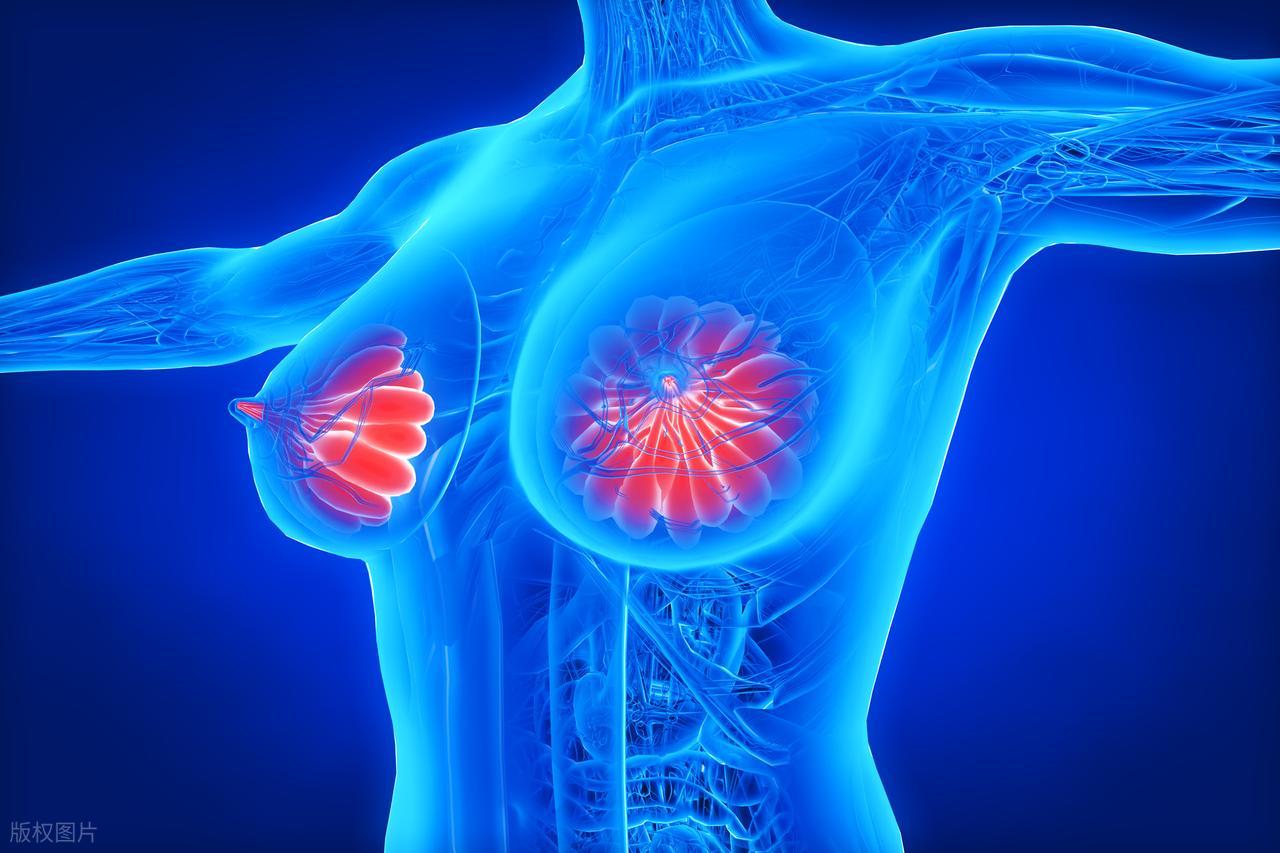
Signal 4: Nipple discharge of "bloody" or coffee-colored fluid
During periods outside of pregnancy and lactation, spontaneous discharge of blood, serous fluid, or coffee-colored secretion from the nipple warrants high suspicion.
This may indicate an intraductal lesion, such as an intraductal papilloma or intraductal carcinoma. Particularly, bloody discharge from a single breast and a single duct is associated with a higher risk.
Signal Five: Unexplained "Lumps" Felt in the Armpit
The breast has a rich lymphatic network, and its lymphatic drainage first reaches the axillary lymph nodes. Therefore, when breast cancer metastasizes to the lymph nodes, the ipsilateral axillary lymph nodes are usually the earliest affected area.
If you feel hard, swollen, or even clustered lymph nodes in the armpit—even if no distinct lump is detected in the breast itself—a comprehensive breast examination is necessary.

Signal Six: Subtle Changes in Breast Size or Shape
Pay attention to whether both breasts suddenly become asymmetrical, or if the contour or curvature of one breast changes, with localized bulging or dimpling. This overall change in shape can sometimes appear earlier than feeling an isolated lump.
Signal Seven: A Persistent, Unexplained Sense of Discomfort
A few patients may not develop a definite lump but will experience persistent, localized dull pain, a pulling sensation, or discomfort in one breast. This discomfort is unrelated to the menstrual cycle and remains fixed in one location. It is a deep sensation that is easily overlooked.

Recommendation
Monthly breast self-examination: It is recommended to perform it one week after menstruation ends, when the breasts are softest. Use the "look and feel" method: observe both breasts in front of a mirror and perform a palpation check by lying down and using the pads of your fingers to press.
Annual Professional Check-ups: For women under 40, it is recommended to undergo a breast ultrasound annually. For women over 40, a combined screening of "breast ultrasound + mammogram" is advised each year. These two methods complement each other and can significantly increase the early detection rate.
Avoid Complacency: If you notice any of the above signs, the most appropriate action is to seek immediate consultation at a reputable hospital's breast surgery or thyroid and breast surgery department. Do not delay, wait, or resort to unverified remedies.

Conclusion
Our bodies are intricate systems, and when internal abnormalities occur, they will always find ways to send us warnings. For breast cancer, the cure rate can exceed 90% when detected early.
Every woman should take primary responsibility for her own health by learning to listen to her body’s subtle signals and recognizing these crucial warning signs. This helps to eradicate the threat of cancer in its earliest stages.