How Long Can Women Live? Look at Their Breasts to Know? 4 Abnormalities in Breasts Mean No Hope for Longevity? This Article Explains Clearly
An alarming claim circulating online suggests, "How long a woman will live can be told by looking at her breasts," causing many women to feel immense anxiety at the slightest change in their breast health.
This statement is undoubtedly too absolute and sensational, but it also reveals a medically recognized fact: breast health serves as an important window reflecting a woman's overall health. Certain specific breast abnormalities may indeed be associated with an increased risk of systemic diseases.
We need to examine this issue with a scientific attitude—neither inducing panic nor ignoring the important signals the body sends.
The following four abnormalities in the breasts do not directly signify "no hope for longevity," but rather serve as clear warning signs that require our special attention to health and prompt action.

Abnormality One: Immovable Hard Mass
During breast self-examination or a medical check-up, if you feel a lump that is hard in texture, irregular in shape, rough on the surface, and deeply embedded in the tissue like roots—making it difficult to move—this warrants high vigilance.
This is typically the most classic sign of breast cancer. Breast cancer itself is a clear risk factor affecting women's lifespan, especially when detected late or after metastasis occurs. However, the key lies in "early detection."
The five-year survival rate for early-stage breast cancer can exceed 90%. Many patients, after undergoing standardized treatment, can live long and healthy lives with minimal impact on their life expectancy.
The appearance of this hard lump is not predicting lifespan, but rather giving you an opportunity—a chance to actively pursue longevity through timely medical consultation.

Abnormality Two: "Orange Peel" or "Dimple" Changes in Breast Skin
When breast skin becomes bumpy and uneven like orange peel, or develops a local dimpling, forming a small pit similar to a dimple, this is usually not a simple skin problem.
This often indicates that the tumor has invaded the surrounding ligaments or lymphatic vessels. The "orange peel" appearance is caused by edema resulting from cancer cells blocking the skin's lymphatic vessels;
the "dimple sign" occurs when the tumor invades the ligaments connecting the gland and skin, causing them to shorten and contract. Both signs typically suggest that breast cancer may no longer be at a very early stage, requiring immediate intervention to prevent it from further affecting overall health.
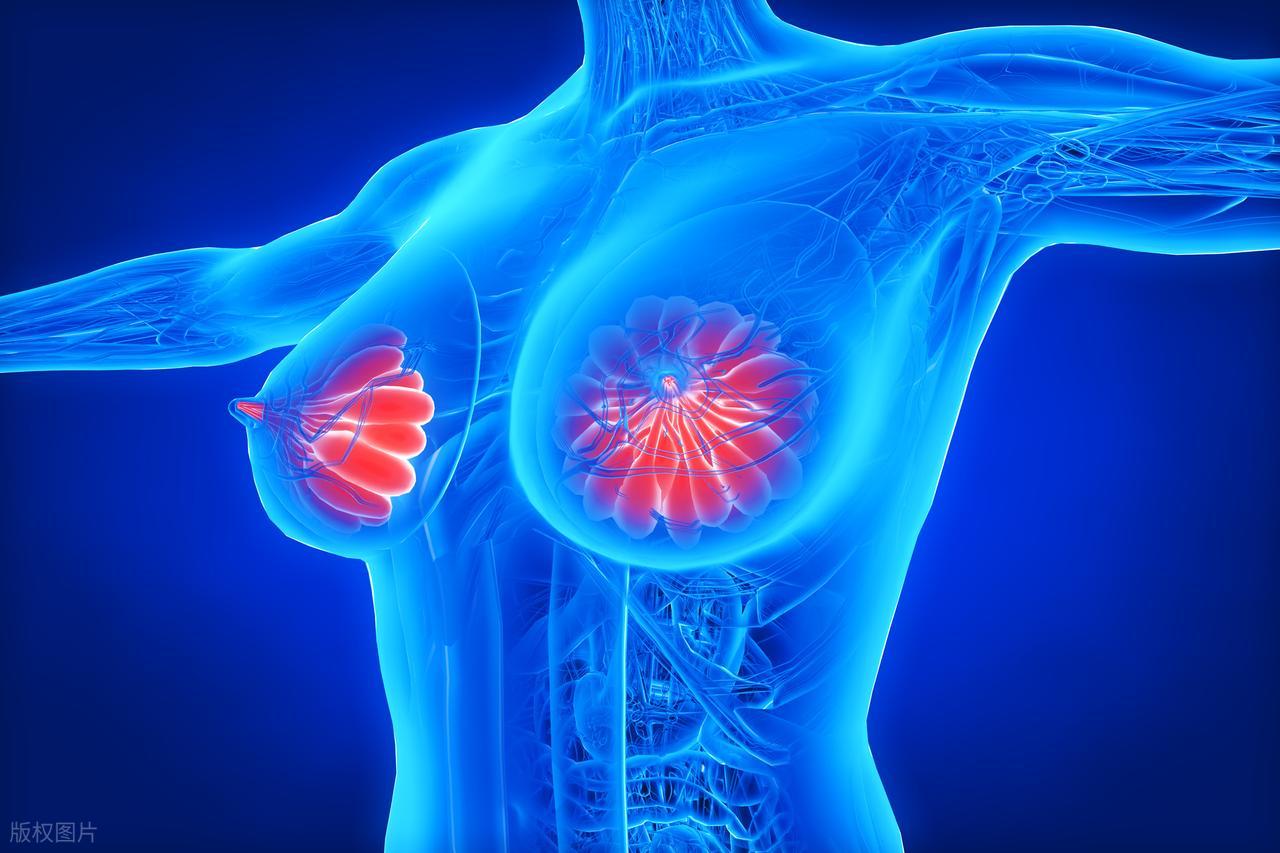
Abnormality Three: Abnormal Nipple Discharge, Especially Bloody Fluid
Nipple discharge unrelated to breastfeeding, particularly spontaneous discharge of blood, coffee-colored, or rusty fluid from a single duct in one breast, is a warning sign that should not be ignored.
This may be a manifestation of intraductal papilloma or intraductal carcinoma. Although many cases of nipple discharge are benign, bloody discharge is more strongly associated with malignant tumors.
This internal "red alert" signals that cells in the lining of the breast ducts may have undergone cancerous changes. Promptly identifying the cause is a critical step in halting disease progression and safeguarding long-term health.
Abnormality Four: Painless, Firm Lymph Nodes Palpable in the Armpit
The breast has a rich lymphatic network, and its lymph fluid primarily drains to the axillary lymph nodes. Therefore, when breast cancer metastasizes, the axillary lymph nodes are the first stop.
If you feel enlarged, firm, poorly mobile, or even clustered lymph nodes in the armpit, even if no distinct lump is palpable in the breast itself, a comprehensive breast examination is essential.
This could be a sign that breast cancer is spreading to regional lymph nodes, and the status of lymph node metastasis is an important basis for assessing prognosis and developing treatment plans.

A Scientific Perspective: The True Relationship Between Breast Abnormalities and Lifespan
We must clearly recognize that breast abnormalities ≠ shortened lifespan. Between these two, there lies a crucial variable—whether they are handled promptly and properly.
These abnormal signals are like warning lights flashing on a car's dashboard. They aren't telling you that the car is about to break down completely, but rather reminding you that a certain component is malfunctioning and requires immediate attention.
If you ignore it and continue to drive dangerously, a minor issue may eventually lead to a serious accident. However, if you promptly take it to the repair shop, replace the parts, and maintain it carefully, the car can still run safely for many years.

The secret to longevity lies not in never getting sick but in having a keen awareness of health, controlling diseases in their early stages. These abnormalities in the breasts are precisely the tools that the body has given you for this keen awareness.
Please discard the fatalistic notion that "breasts determine lifespan." Your future does not depend on whether breast issues arise but on how you respond to them.
Transform anxiety into action. Integrate self-examinations and screenings into your life, and face every bodily signal with knowledge and courage. This is the most reliable path to health and longevity.