Study Reveals: People Who Have Difficulty Getting Pregnant Typically Have These 5 Characteristics, Do You Have Them?
"We've been trying to conceive for over a year now, why is it still not happening?" In the consultation room of the reproductive medicine department, behind this question lies the anxiety and hope of countless families. Pregnancy is a natural physiological process, but for some, it has become a challenging journey.
Extensive clinical investigations and data analysis have revealed that women or couples who face greater challenges on their journey to conception often share certain common characteristics.
These characteristics are not absolute "verdicts," but rather "signal lights" that remind us of areas requiring focused attention and intervention. Understanding these traits is not meant to induce panic, but to help us identify potential issues earlier and seek assistance more effectively.

Characteristic One: Irregular Menstrual Cycles, Like an Unreliable "Weather Forecast"
A regular menstrual cycle is an external indicator of the normal functioning of a woman's reproductive endocrine system. An ideal menstrual cycle is around 28 days, with variations of up to 7 days earlier or later generally considered within the normal range.
However, if your menstrual cycle is highly irregular, sometimes occurring every twenty days and other times being absent for two to three months, this requires serious attention.
Irregular menstrual cycles often indicate ovulatory disorders or anovulation. Common causes include polycystic ovary syndrome (PCOS), hyperprolactinemia, thyroid dysfunction, or early ovarian insufficiency.
Without the release of healthy, mature eggs, fertilization cannot naturally occur. This is akin to the sowing season arriving, but the seeds are not produced as expected, making conception impossible.

Characteristic Two: Being overweight or underweight, disrupting the body's "energy balance."
There is a U-shaped relationship between body weight and fertility, where being either overweight or underweight can negatively impact reproductive ability.
For women who are overweight or obese (typically defined as BMI ≥ 25), excess fat cells secrete too much estrogen and exacerbate insulin resistance. This disrupts the delicate command system of the hypothalamus-pituitary-ovarian axis, leading to infrequent ovulation or anovulation.
Furthermore, obesity also affects egg quality and endometrial receptivity. On the other hand, being underweight (typically defined as BMI < 18.5) means the body lacks sufficient fat to produce adequate levels of estrogen.
The body perceives this as a state of "famine," which is unsuitable for supporting a new life. As a result, it automatically "shuts down" reproductive functions, leading to infrequent menstruation or even amenorrhea.

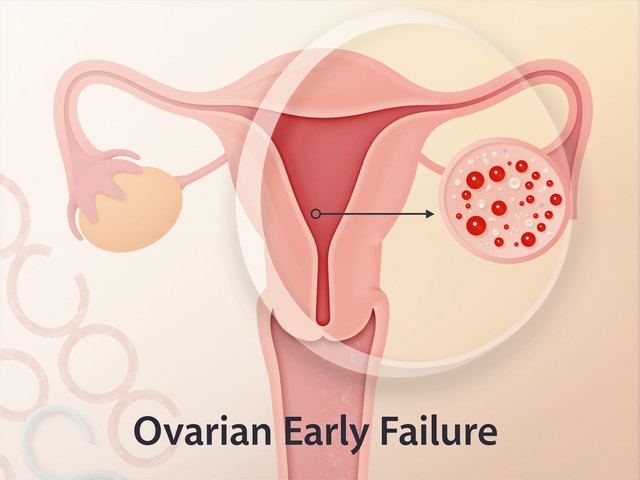
Characteristic Three: Over the Age of 35, Facing a Natural Decline in "Ovarian Reserve"
Age is an independent and irreversible factor affecting female fertility. The optimal childbearing age for women is typically between 25 and 29 years old. Starting at age 30, fertility gradually declines, and after age 35, this decline becomes significantly steeper.
This is primarily because the number of eggs a woman has is fixed from birth. As she ages, not only does the egg count decrease irreversibly, but the quality of the remaining eggs also declines due to an increased probability of chromosomal abnormalities.
Women aged 35 and older have a significantly lower chance of conceiving naturally, and the risk of miscarriage and fetal chromosomal abnormalities also increases noticeably.
Characteristic Four: History of Pelvic Surgery or Inflammation, Potentially Leading to "Traffic Jams"
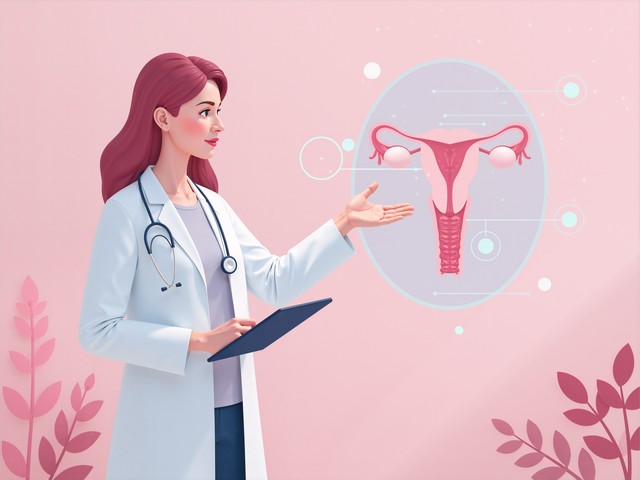
The pelvis is the "home" of the uterus, ovaries, and fallopian tubes. If severe infections, such as pelvic inflammatory disease (PID), have occurred in this "home," or if surgeries have been performed for conditions like ectopic pregnancy, ovarian cysts, or endometriosis, sequelae may remain.
Pelvic inflammation and surgeries can cause adhesions, twisting, or blockages in the fallopian tubes, the "life passage," preventing sperm and eggs from meeting. Even if fertilization occurs, the fertilized egg may not be transported to the uterine cavity for implantation, leading to infertility or dangerous ectopic pregnancy.
Endometriosis acts like a "wrecker" by implanting and bleeding within the pelvic cavity, causing severe inflammation and adhesions that interfere with fertility in multiple ways.
Trait Five: Long-term High-Stress States, Putting the Body into "Fight Mode"
The fast pace and high pressure of modern life are silently eroding our fertility.
Prolonged mental stress, anxiety, and depression can affect the "command center" (hypothalamus-pituitary) in the brain that regulates reproductive hormones, leading to functional disturbances.
Under high stress, the body secretes more cortisol, which inhibits the pulsatile secretion of gonadotropin-releasing hormone (GnRH), thereby affecting follicular development, growth, and ovulation, resulting in menstrual irregularities.
Many workplace women who unexpectedly become pregnant after setting aside work and taking a break to relax precisely illustrate the significant impact of mental stress on fertility.

[Action Guide for Those Trying to Conceive]
If you find yourself matching one or more of the above characteristics, please do not become overly anxious. This is merely a risk indicator, not a definitive diagnosis.
Scientific Assessment: If a couple has been living together and not using contraception for over a year (or six months if the woman is aged 35 or older) without achieving pregnancy, both partners should visit a formal hospital's reproductive medicine or infertility department for a comprehensive check-up.
Lifestyle Adjustments: This is the most fundamental and effective step. Achieve and maintain a normal weight range through a balanced diet and moderate exercise, and manage stress by learning mindfulness techniques, practicing meditation, or cultivating personal interests.
Targeted Treatment: Depending on the physician's diagnosis, achieving pregnancy may require methods such as medication for ovulation induction, laparoscopic surgery to unblock fallopian tubes, or assisted reproductive technologies like in vitro fertilization (IVF).
Fertility is a mirror reflecting a woman's overall health.
Recognizing these characteristics is not about labeling oneself with "infertility," but about listening to the body's signals earlier and more proactively embracing the possibilities of life.
The journey to conception may be full of unknowns, but scientific awareness and proactive actions will always be the brightest lighthouse illuminating the path ahead.