How Long Must Menopause Last to Be Considered "True Menopause"? Doctor: It's Not Just About "Stopping"!
"I haven't had my period for almost half a year now. Does that mean I've reached menopause and can finally relax?" This is one of the most frequently asked questions by perimenopausal women in gynecology clinics.

Many women believe that as long as their periods have stopped for several consecutive months, it signals the end of their menopausal journey, allowing them to rest easy from then on. However, from a medical perspective, this notion represents a significant cognitive misconception and may even pose health risks.
In medicine, "menopause" is defined with utmost clarity and strictness—it is by no means simply "stopping and that's it." Accurately understanding what constitutes true menopause is crucial for determining one's current stage, assessing health risks, and adopting appropriate coping strategies.
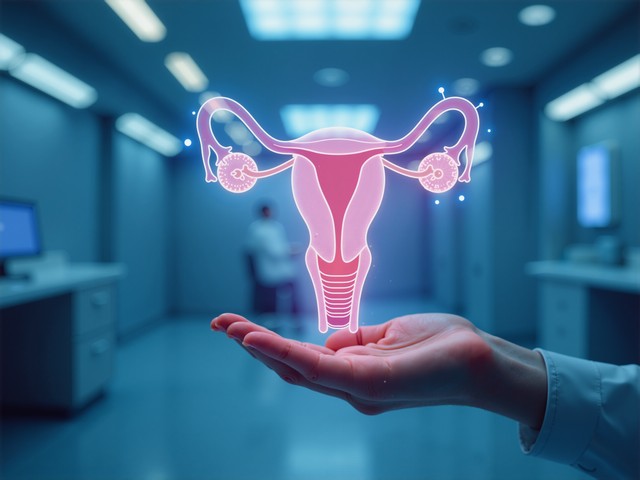
The Gold Standard for "True Menopause": 12 Consecutive Months Without a Period
The answer provided by gynecologists is: It can only be retrospectively confirmed and clinically diagnosed as menopause when a full 12 months (i.e., one entire year) have passed since the last menstrual period, with no recurrence of menstruation during that time.
This one-year "observation window" is important because menopause is a lengthy transition process known as "perimenopause." During this period, ovarian function does not shut down instantly but rather fluctuates and declines erratically, much like a lightbulb with unstable voltage.

Why Wait 12 Months? The Key Lies in the Unpredictability of the Ovaries
During perimenopause, a woman's ovarian function is in an unstable state. It may fail to ovulate in a given month due to follicular depletion, leading to the cessation of menstruation; the following month, a follicle might unexpectedly develop and ovulate, causing menstruation to return.
If you find your period returning after three to five months of absence, this is not uncommon and is, in fact, a typical characteristic of perimenopause.
If you simply assume that six months without menstruation means you have reached menopause and let your guard down, two issues are likely to occur: first, unexpected pregnancy, as there is still a possibility of occasional ovulation at this stage.
Second, misinterpreting abnormal uterine bleeding caused by certain diseases as a normal menstrual return, thereby delaying diagnosis.

The nature of menopause
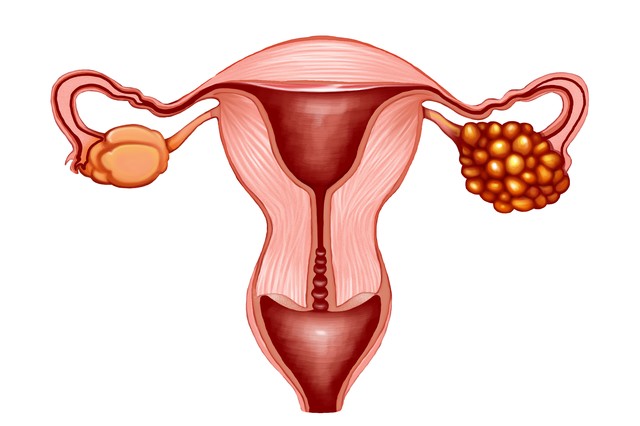
The hallmark of menopause, superficially marked by the cessation of menstrual cycles, is fundamentally the decline of ovarian function. The ovaries no longer secrete adequate amounts of estrogen, and the depletion of the follicular reserve means there is no longer maturation and release of eggs.
The reason we define menopause so rigorously is that from the final menstrual period (medically termed the "final menstrual period," or FMP), a woman's health management enters an entirely new phase.
This serves as the "starting gun" for initiating a series of long-term health strategies, particularly for maintaining cardiovascular and bone health.

During the waiting period for "true menopause," what should you pay attention to?
During this period of uncertainty, women need to become careful self-observers.
The primary task is to practice strict contraception.
As long as the diagnostic criteria for menopause have not been met, the possibility of pregnancy cannot be ruled out. For older women, the risks and challenges associated with unintended pregnancy are even greater.
Secondly, it is important to learn to identify abnormal bleeding.
If there is a sudden increase in menstrual flow, prolonged periods, persistent spotting, or bleeding outside the menstrual cycle, it should never be assumed to be "menopausal menstrual irregularities." Instead, seek medical attention immediately to rule out organic conditions such as endometrial polyps, endometrial hyperplasia, or even endometrial cancer.
Finally, accept the fluctuations of your body with equanimity.
Symptoms such as hot flashes, night sweats, insomnia, and mood swings may be most noticeable during this stage. Understanding that these are normal responses as your body adjusts to hormonal fluctuations can help you cope with a calmer mindset and know when to seek medical assistance.
Menopause is not a chaotic situation that needs to be hastily escaped from, but rather a life stage that requires clear understanding and scientific management.
Using a 12-month period to confirm true menopause is not a rigid medical approach but a rigorous and responsible measure for your long-term health.
Please patiently keep track of your menstrual cycles, maintain communication with your gynecologist, and smoothly navigate through this transition period to lay a solid foundation for a healthy and vibrant second half of your life.