Premature Ovarian Failure: A Single Herbal Medicine Penetrates Deeply to Soak Ovaries in Thermal Spring, Raising AMH Levels
Throughout my many years of medical practice, I've encountered countless patients and observed a very common phenomenon:
Most women have only superficial understanding of gynecological diseases, leading to numerous detours in treatment and excessive wasted expenditures. However, gynecological conditions aren't necessarily curable by spending more money - many recurrent gynecological diseases are classified by modern medicine within the scope of difficult and complicated disorders.
I still remember my first few years working as a doctor when living conditions were relatively poor and medical resources weren't as advanced as they are now. When people fell ill, seeking medical treatment was quite troublesome. Fortunately, medications were precisely prescribed to treat the root cause, and diseases could be quickly cured.
But now, news reports about "difficult access to healthcare" keep emerging endlessly. This makes me sigh with emotion: A doctor's original intention should be benevolent compassion to heal and save lives. If patients' illnesses are merely treated as business opportunities, this path won't lead far.
One patient left a particularly deep impression on me: a 42-year-old female who had experienced menstrual disorders for half a year, with progressively decreasing flow, blackish menstrual blood containing clots, cold hands and feet, sore and weak lower back and knees, swelling and pain in both legs, and a consistently irritable temperament with frequent angry outbursts that took long to subside. At night, she couldn't sleep due to dwelling on daytime matters. Examinations revealed an AMH value below 0.01.
Comprehensive diagnosis identified this as spleen-kidney yang deficiency type premature ovarian failure.
Prescription: Codonopsis pilosula, Atractylodes macrocephala, Magnolia officinalis, Rehmannia glutinosa, Epimedium, Lycium barbarum, Rubus chingii, Morinda officinalis, Angelica sinensis, Citrus aurantium, Curculigo orchioides, Schisandra chinensis, Cyathula officinalis.
Ovarian function decline typically manifests in two scenarios:
First, the ovaries gradually deteriorate with age, similar to machinery wearing out over prolonged operation. The patient, aged 42, experiences diminished ovarian function and menstrual irregularities, which correlate to some degree with her age.
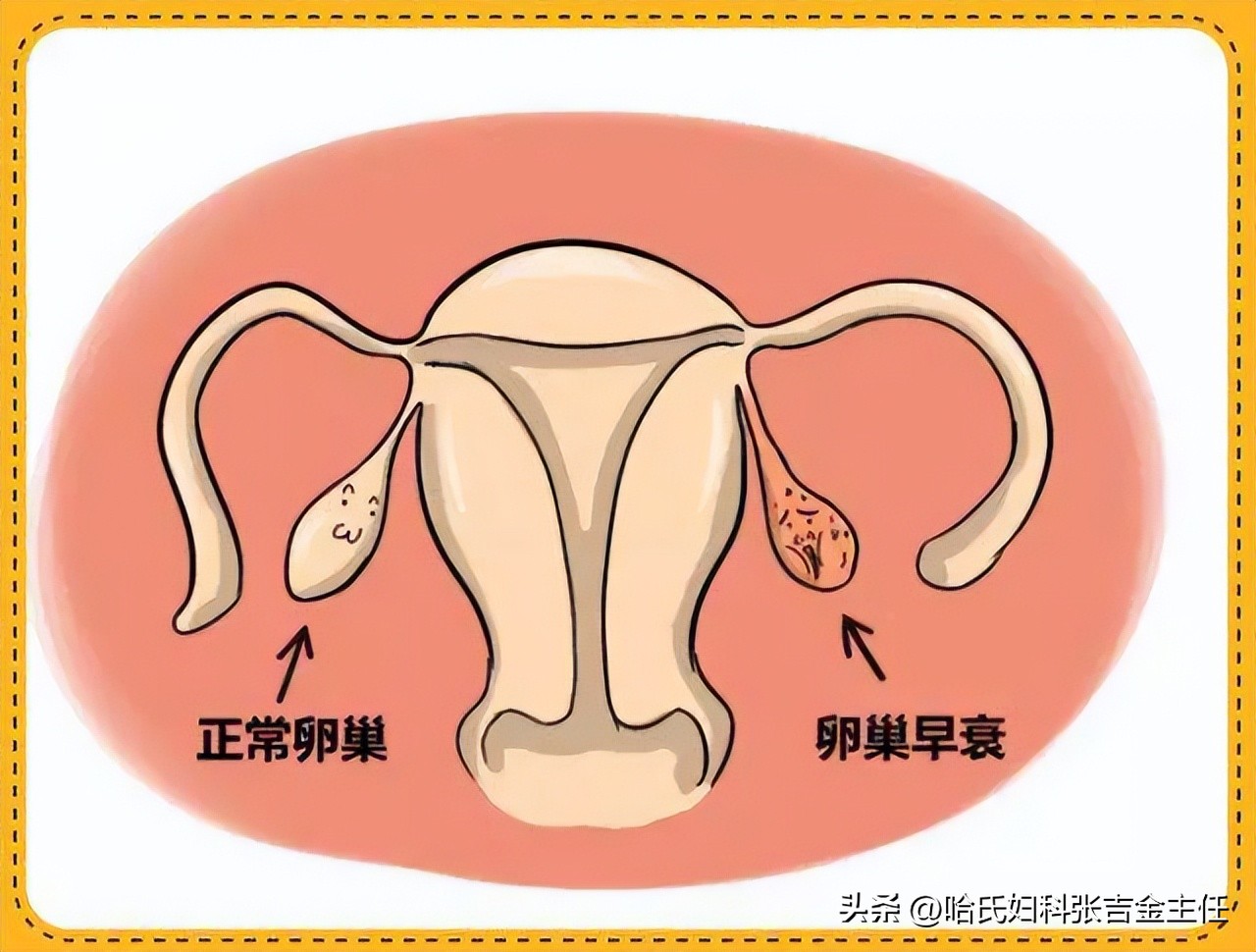
Second, premature ovarian aging. Despite not having reached menopause, many ovaries prematurely enter a state of senescence. This primarily stems from liver-kidney deficiency, insufficient liver blood and kidney essence, leading to qi-blood deficiency that fails to nourish the ovaries. The ovaries become like flowers deprived of water—gradually withering—resulting in symptoms such as reduced menstruation, sallow complexion, premature aging, insomnia, and irritability: manifestations resembling "menopausal syndrome."
In treatment, I use herbs that nourish the liver and kidneys, regulate and replenish qi and blood to "activate" these vital energies, unblock the meridians, and ensure the qi and blood reach the uterus. This allows the ovaries to receive ample nourishment, much like soaking in a hot spring—completely relaxed and revitalized from within.
After half a month of herbal regulation, the patient's dark menstrual blood turned bright red, clots decreased, hands and feet began to warm, physical discomforts disappeared, and she could finally sleep well at night. During a recent follow-up visit, all estrogen test results were normal.
Note: The above content is for reference only. Traditional Chinese medicine emphasizes individualized prescriptions. Consult a doctor promptly if symptoms persist.