When the ovaries age one year, a woman ages ten years—a rejuvenating formula for ovarian health, dedicated to our fellow women
Many women experience amenorrhea at a young age or have extremely scanty menstrual flow, and upon hospital examination are diagnosed with premature ovarian failure.
The most severe consequence of premature ovarian failure is infertility. For women who have not yet had children, learning they have premature ovarian failure can be devastating as they confront this harsh reality.

Of course, if left untreated for a long time, women with premature ovarian failure age quickly. There's a saying: when the ovaries age one year, a woman ages ten years.
Therefore, premature ovarian failure poses a threat to both women's health and appearance.
Western medicine claims premature ovarian failure is incurable and can only be controlled with hormones, but hormonal effects are too significant—while this condition isn't cured, other diseases may be induced.
Should we simply leave premature ovarian failure untreated then? Allow the ovaries to continue aging? No.
In traditional Chinese medicine (TCM), premature ovarian failure is not considered irreversible. While Western medicine has limited solutions for this chronic condition, TCM holds distinct advantages.
Through comprehensive TCM conditioning methods that reinforce healthy qi while eliminating pathogens, and strengthen fundamental vitality, a woman's ovaries can regain youth and restore fertility.
So how exactly does TCM approach the conditioning of premature ovarian failure?
After careful research, we've developed a formula that strengthens ovaries through multiple mechanisms, restoring their youth and vitality - dedicated to all women struggling with premature ovarian failure.
This formula is called: Warm Nest Decoction.
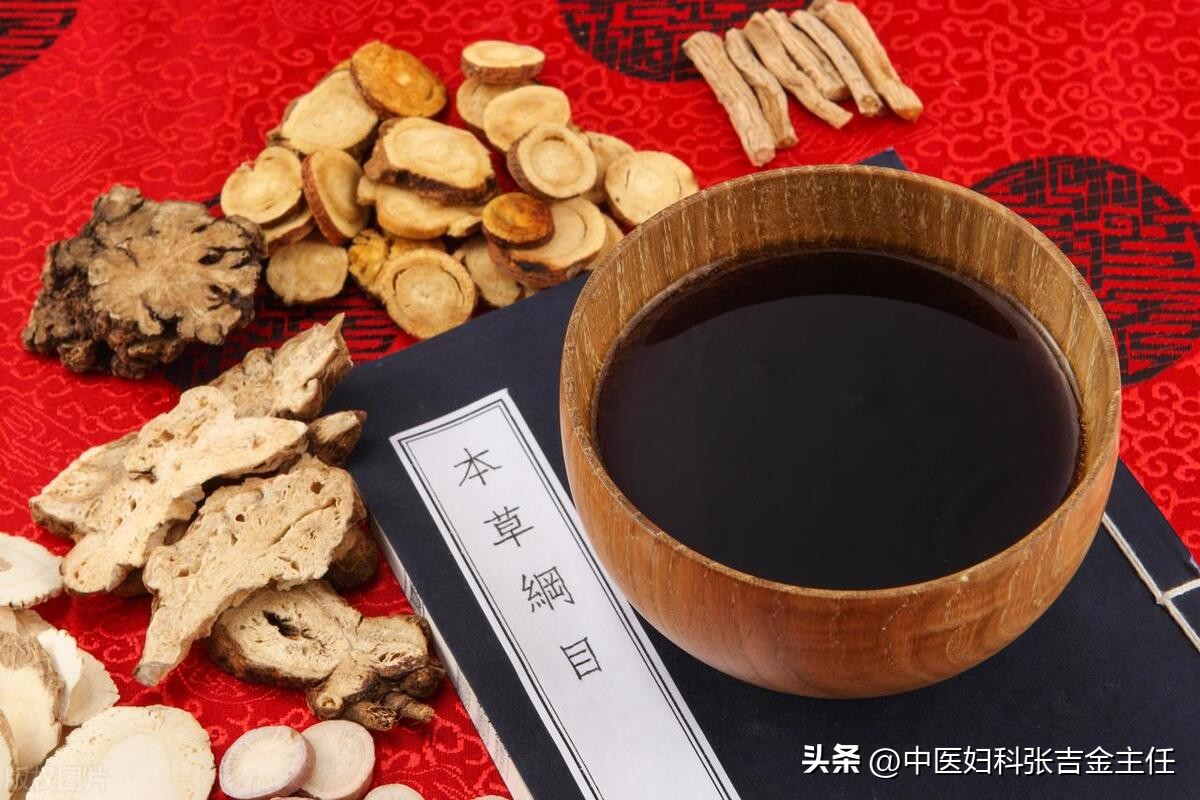
The Warm Nest Decoction formula is as follows:
30g of prepared rehmannia root, 20g of oyster shell,
15g of stir-fried white atractylodes rhizome, 15g of poria, 15g of astragalus root, 15g of Chinese yam
Cinnamon Twig 9g, Peach Kernel 9g, Licorice Root 6g
Chinese Angelica 9g, Bupleurum Root 9g, White Peony Root 9g
The Warm Nest Decoction, as the name suggests, is designed to warm a woman's ovaries and restore them to a spring-like state of vitality. Spring represents warmth and is the season brimming with life energy—only when a woman's ovaries return to this spring-like condition can they remain youthful.
Why do many women experience premature ovarian failure? Because their ovaries remain in a perpetual state of harsh winter—barren and devoid of vitality.
Now, let's analyze this prescription together to learn Traditional Chinese Medicine methods for treating premature ovarian failure.
First, treating premature ovarian failure must involve regulating the kidneys.
Why? Because the ovaries are reproductive organs—which organ governs reproduction among the five viscera? It's the kidneys, of course. The kidneys dominate reproduction.
One could say the kidneys are the supreme commander of the ovaries—if we compare the ovaries to an employee, then the kidneys would be the chairman of the company.
Therefore, to maintain healthy ovaries, one must first strengthen the kidneys—nourish and invigorate kidney function.
There are numerous kidney-tonifying herbs, such as deer antler, goji berries, cynomorium, and epimedium—an overwhelming array that can confuse the eyes. Among countless options, this guide selects only one essential: prepared rehmannia root.
Prepared rehmannia root reigns as the king of kidney tonics. Other kidney-nourishing herbs pale in comparison—it stands unsurpassed as the fundamental choice.
Moreover, cooked Rehmannia nourishes kidney essence. The kidneys store essence, and a woman's eggs and a man's sperm are both derived from kidney essence.
What does it mean that Rehmannia glutinosa tonifies kidney essence? It means that whether you have kidney yin deficiency or kidney yang deficiency doesn't matter - you can use Rehmannia glutinosa because it replenishes both yin and yang.
Therefore, among numerous kidney-tonifying herbs, selecting just Rehmannia glutinosa alone is sufficient. Then we use oyster shell to seal the essence of the kidneys. Rehmannia glutinosa replenishes kidney essence fully, while oyster shell serves to store and preserve it - oyster shell is like the lid of a bottle. When the lid is properly closed and tightened, the essence won't leak out. Otherwise, if we tonify kidney essence on one hand but let it leak out on the other, our efforts would be wasted.
After regulating the kidneys, we then strengthen the spleen and stomach.
Here we employ four powerful herbs to strengthen the spleen and stomach - all top-class experts in this field. They are: Atractylodes macrocephala, Poria cocos, Astragalus membranaceus, and Chinese yam.
These four key herbs all have the effect of strengthening the spleen and stomach, but each has its own focus: Atractylodes macrocephala (Bai Zhu) is the sacred remedy for fortifying the spleen—no spleen deficiency condition can be addressed without it; Poria cocos (Fu Ling) is the sacred remedy for dispelling dampness, being the mildest and least damaging to yang qi—no spleen dampness condition can be treated without it; Astragalus (Huang Qi) is the sacred remedy for replenishing qi, excelling at tonifying qi throughout the body, and when paired with Atractylodes macrocephala (Bai Zhu), it specifically supplements spleen qi; and Chinese yam (Huai Shan Yao) greatly nourishes the spleen and stomach, replenishes spleen blood, and tonifies both yin and yang.
Why such extensive measures to strengthen the spleen and stomach? Because the spleen and kidneys have a special relationship.
The kidneys are the foundation of innate constitution, while the spleen is the foundation of acquired constitution.
The spleen derives certain primal qi from the kidneys to transform food, producing qi and blood, which in turn nourish the kidneys. In this way, the spleen and stomach serve as the "logistics minister" for the kidneys, continuously supplying them with nourishment.
Therefore, when the congenital foundation—the kidneys—become diseased, recovery should not rely solely on the kidneys themselves. More importantly, it depends on the postnatal foundation—the spleen and stomach—to help restore the kidneys' vitality. Thus, the focus here is on strengthening the spleen and stomach, indirectly regulating ovarian function from the perspective of the digestive system.
When the spleen and stomach function well, qi and blood become abundant, and the kidneys receive ample vitality. With healthy kidneys, the ovaries naturally thrive as well.
Alright, after regulating the kidney—the foundation of our innate constitution—and improving the spleen and stomach—the foundation of our acquired constitution—the next step is to warm the ovaries. Temperature dictates life, aging, and disease. So how can we warm a woman's ovaries? Naturally, it relies on yang energy.
All things grow by the sun; without it, there would be no life. In the human body, what serves as the equivalent of the sun? Naturally, it is the heart, which reigns supreme.
The heart is the monarch of the organs, like the sun, radiating its light across the earth, bringing warmth and sunlight to every corner of the five zang organs, six fu organs, and the entire body.
Once the heart's yang energy is compromised, the body will suffer from yang deficiency. Where yang energy is insufficient, cold dampness will invade, leading to withering vitality and lifelessness.
Thus, wherever yang energy fails to reach, disease arises. Preserving health means nurturing yang energy—abundant yang energy ensures longevity and dispels all illnesses.
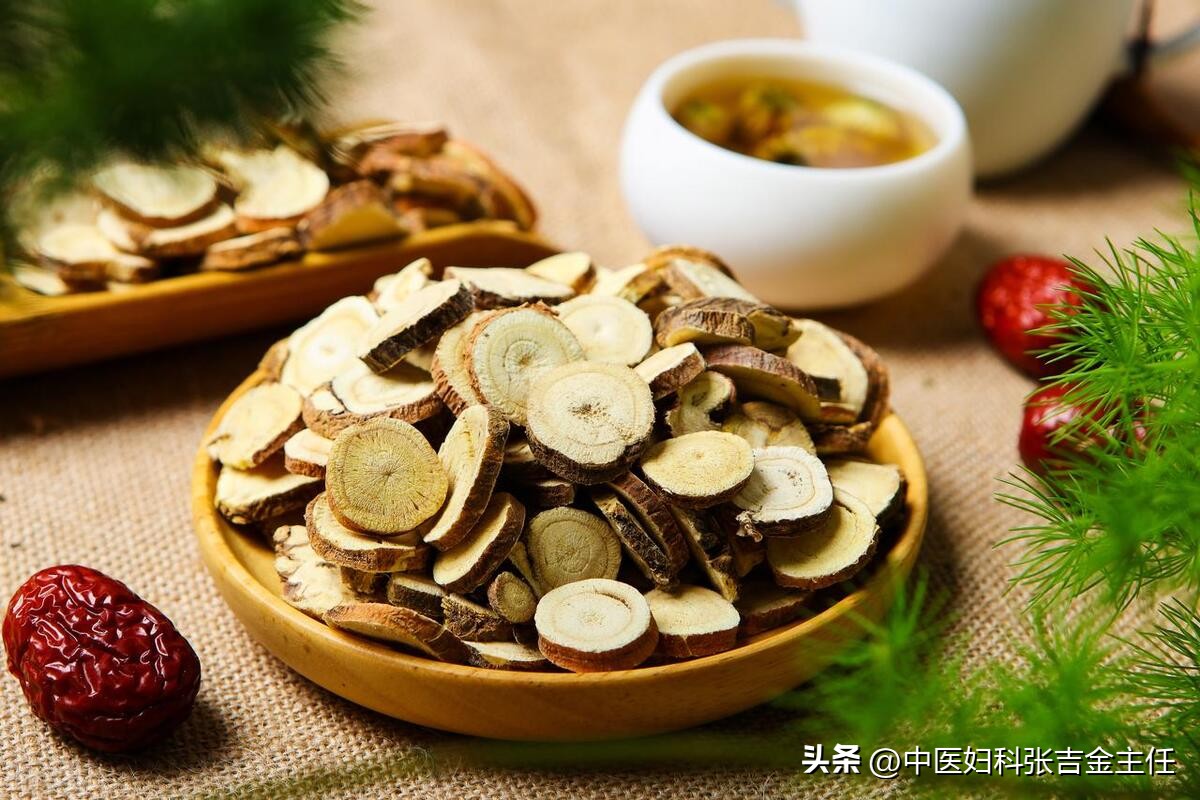
Therefore, to bring sunlight and warmth to the ovaries, it is essential to strengthen the heart and invigorate heart yang.
Here, the combination of cinnamon twig (Guizhi) and licorice root (Gancao) is used to strengthen the heart. Guizhi has a pungent and warm nature, with its red color entering the heart. The tender branches from the top of the cinnamon tree, vibrant and flourishing, receive the most sunlight and possess the strongest generative power. Guizhi is pungent, while Gancao is sweet. Traditional Chinese Medicine states that the combination of pungent and sweet promotes dispersion and generates yang energy—meaning the pairing of Guizhi and Gancao continuously infuses the body with yang qi.
While infusing yang qi with Guizhi and Gancao, peach kernel (Taoren) is added to dissolve stasis in the ovaries. This way, the ovaries are freed from pathogenic factors, allowing qi and blood to flow more smoothly and facilitating their recovery and regeneration.
Finally, we address the liver to regulate it.
Why regulate the liver? First, the liver governs free coursing. If a woman's liver qi becomes constrained and fails to circulate smoothly, its ability to disperse becomes impaired, making it difficult to remove stagnation from the ovaries. This leads to the accumulation of cold-damp pathogenic factors in the ovaries, which then compete for the ovary's qi and blood, ultimately affecting their supply. Additionally, the liver meridian itself passes through the ovaries, and the liver is closely related to women's reproductive health.
Because women rely on the liver as their congenital foundation and blood as their essential nourishment, and since the liver stores blood, how can the ovaries function properly if blood is deficient?
Thus, we first use Dang Gui (当归) to replenish liver blood, then Chai Hu (柴胡) to regulate the liver, allowing it to work smoothly. Bai Shao (白芍) is added to soften the liver—it can moderate Dang Gui's drying properties while working synergistically with Chai Hu—one ascending, one descending. Chai Hu disperses liver qi, Dang Gui nourishes the liver, and Bai Shao softens the liver, ultimately strengthening its function comprehensively.
Another purpose of adding liver-regulating herbs here is to address women's emotional state. Once a woman's mood declines—manifesting as depression, melancholy, or emotional stagnation—liver qi easily becomes constrained. When liver qi stagnates, so do the uterus and ovaries, leading to qi stagnation and blood stasis. If qi fails to circulate and blood stasis develops in the ovaries, various pathological growths may form. How can such ovaries not age prematurely?
So, maintaining a good mood is one of the secrets to regulating premature ovarian failure. How many women's premature ovarian decline is caused by long-term emotional distress!
Well, this is the Warm Nest Decoction created for our female companions. This is a basic formula—each person's specific condition varies, and we can't tailor it for every individual. Specific adjustments should be made by consulting a professional doctor.
This formula focuses primarily on replenishment, so it can be taken with confidence. It is recommended to take it for 21 days, one dose per day.
For dietary therapy, we recommend consuming nine-steamed nine-sun-dried black sesame pills. Sesame—what's concentrated is the essence, which is kidney essence. Replenishing essence means nourishing a woman's ovaries.