A Brief Century-Long History of the Rise and Fall of Diabetes Medications
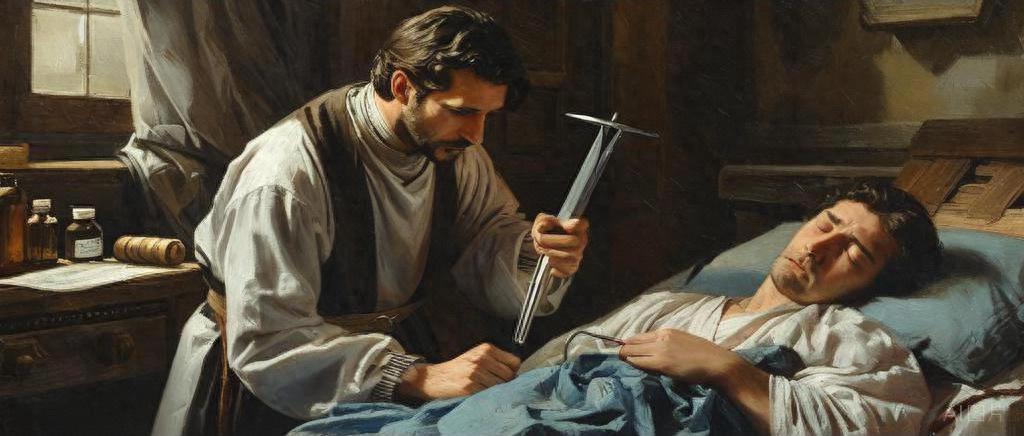
Civilization's Struggle Against the Sweet Curse
In 1500 BC, ancient Egyptian papyri documented a peculiar illness described as "urinating like a gushing spring and wasting away like withered wood," with patients' urine attracting swarms of ants—the earliest medical record of diabetes.
Three thousand years later, Canadian doctor Banting extracted insulin from the whimpers of stray dogs, initiating humanity's epic quest to tame the "sweet curse."
Over the past century, from the pungent extracts of animal pancreases to precise gene-editing therapies, from the desperation of starvation treatments to the foresight of organ protection, every milestone in this battle has been steeped in the solitary courage of scientists, the blood and tears of patients, and the reflections of civilization.
Insulin: A Dual Epic of Redemption and Dilemma
1.1 Banting's Laboratory: 92 Dogs and a Dollar's Redemption
In the attic laboratory of the University of Toronto in 1920, 30-year-old Banting faced the darkest moment of his life. His bankrupt surgical clinic, his departed fiancée, and his dust-covered medical textbooks drove him to stake his last hope. Inspired by a paper stating that "ligating the pancreatic duct could preserve islet cells," he sold his car to buy 90 stray dogs.
Amid the scorching heat, he and his assistant Best dissected 92 dogs until the 93rd diabetic dog, when its blood sugar plummeted after an injection of the extract. "It actually stood up shakily!" The ink in Best's diary was smudged with tears.
On January 11, 1922, 14-year-old Leonard Thompson, dying of diabetes, became the first human to receive an insulin injection. The next day, he was able to sit up and eat, with his blood sugar dropping from 28.9 mmol/L to 6.7 mmol/L. However, little known is that the first batch of insulin extract was as murky as mud, causing Leonard's body to break out in abscesses. Banting's team worked through the night to refine the process, using alcohol precipitation to purify the extract, ultimately giving the boy a new lease on life.

1.2 The Patent Battle: The Clash Between Idealism and the Iron Law of Capital
When a company sold insulin at $5 per vial, Banting angrily transferred the patent to the University of Toronto for just $1, vowing that "no patient should lose their life due to poverty."
But reality brutally slapped idealism in the face: in 1923, the daily wage of an American worker was only $2, while one vial of insulin cost half a month's earnings. In New York slums, mothers resorted to distributing black-market insulin in recycled penicillin bottles, each milliliter teeming with 20 bacteria.
This scene became the most biting irony in medical history—scientific breakthroughs always outpace ethical maturity.

The Counterattack of Oral Medications: Poisonous Herbs, Misunderstandings, and a Savior for the Common People
2.1 The Curse of Galega: From Pasture Killer to Diabetes Champion
In 1918, on the slopes of Provence, France, a flock of livestock was poisoned by Galega officinalis. Botanist Tanret isolated guanidine compounds from the plant, but this discovery was overshadowed by insulin and forgotten for half a century.
In 1957, diabetologist Lavon discovered the unique mechanism by which metformin improves insulin resistance. However, in the 1970s, its "cousin" phenformin was withdrawn from the market due to lactic acidosis, inadvertently causing metformin to fall out of favor.
The turning point came in 1994 when the UKPDS study from the UK confirmed its cardiovascular protective effects. This "scientific orphan" ultimately rose to become a first-line medication with an annual consumption of 40,000 tons, carrying a daily cost of merely 1 yuan.
2.2 The Rise and Fall of Sulfonylureas: A Warning Against Flogging a Dead Horse
In 1942, French physician Janbon discovered that typhoid patients developed sudden hypoglycemia after taking sulfonamides, accidentally opening the door to insulin secretagogues.
Tolbutamide was marketed in 1955 but revealed a fatal flaw - excessive β-cell stimulation leading to functional exhaustion.
The 1998 UKPDS study showed that after 10 years of sulfonylurea treatment, β-cell function loss reached 92%, akin to endlessly whipping an exhausted horse.
This discovery forced the medical community to reflect: violent stimulation will ultimately exhaust the essence of life.

Philosophy of Treatment Revolution: From Conquest to Dialogue
3.1 The Awakening of Incretin: Underestimated Physiological Wisdom
In 1964, scientists discovered that oral glucose stimulated insulin secretion more effectively than intravenous injection, but the academic community dismissed it with skepticism: "How could the intestine possibly command the pancreas?"
It wasn't until 1987 when the laboratories of Habener and Holst identified GLP-1—this gut hormone with a mere 2-minute half-life turned out to be an exquisite blood glucose commander.
Novo Nordisk researcher Knudsen accomplished 137 molecular modifications in an abandoned laboratory, ultimately extending GLP-1's half-life to 13 hours using a fatty acid side chain. Facing 质疑 of potential carcinogenicity in animals, she stood firm against opposition, declaring: "The human body is not simply an enlarged rodent model!"
This battle marked a philosophical leap in medicine from "forced regulation" to "physiological simulation."
3.2 The Renal Revolution: A Strategic Pivot Through Retreat
The 2015 EMPA-REG study shocked academia: the SGLT-2 inhibitor empagliflozin reduced cardiovascular death risk by 38% through glycosuria. This overturned the traditional belief that "blood glucose control must preserve glucose."
Japanese scientists modified the phlorizin molecule discovered in 1886 to develop the first SGLT-2 inhibitor, dapagliflozin. A kidney disease patient wrote on social media: "My urine glucose test strips are always purple, but this purple is ten thousand times lovelier than dialysis machine tubes."
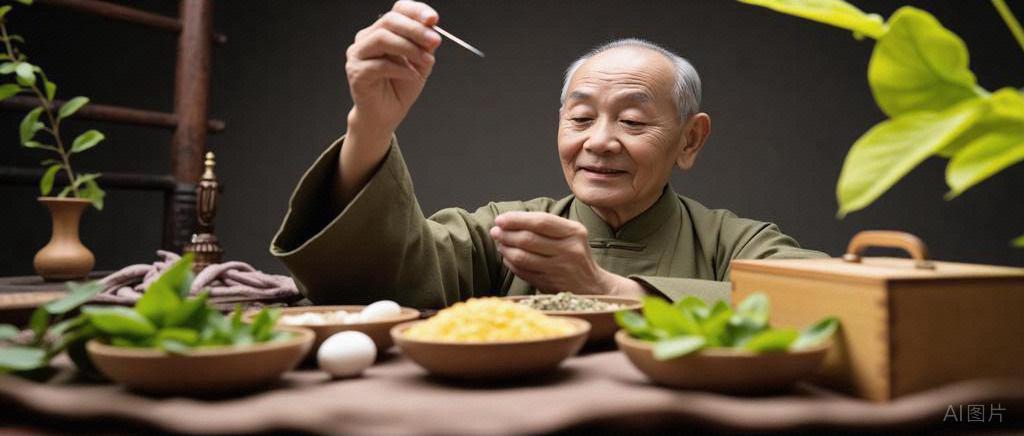
Oriental Wisdom: The Modern Breakthrough of Acupuncture and Herbal Medicine
4.1 Li Wenrui's "Sour-Bitter Suppresses Sweetness" Method
In February 2025, Traditional Chinese Medicine master Li Wenrui passed away in Beijing at the age of 97. His theory of "using sour-bitter herbs to clear heat and sweet-mild herbs to nourish yin" once reduced blood glucose by 40% in insulin-resistant model rats.
He combined the bitter-cold blood sugar-lowering properties of Coptis chinensis with the sour-astringent yin-nourishing effects of Fructus Mume to develop Shen Di Jiang Tang granules. Until his final days, he was still revising the "Integrated Traditional Chinese and Western Medicine Clinical Guidelines for Diabetes," emphasizing that "Western medicine sees beta cells, while Chinese medicine sees heaven, earth, and man."
4.2 Acupuncture Activates the "Second Pancreas"
In 2023, a groundbreaking study published in Nature Metabolism revealed that electroacupuncture at the Zusanli acupoint could triple GLP-1 secretion by intestinal L cells. This discovery provides molecular biological evidence for the efficacy of "Zusanli for treating diabetes" as documented in the Yellow Emperor's Inner Canon.
A research team from Shanghai University of Traditional Chinese Medicine used infrared thermal imaging to demonstrate a 0.8℃ temperature increase in the pancreatic islet region after acupuncture, suggesting improved microcirculation.

The Ongoing Battle: Cost, Prejudice, and Hope
5.1 Lives Erased by Data
In 2010, Belizean ethnography documented two forgotten lives:
Mr. J, who passed away at age 21, frequently reduced his insulin doses due to affordability issues and experienced convulsive seizures before his death;
Ms. C, who passed away at age 36, died from insulin allergy after delayed treatment due to misdiagnosis as type 2 diabetes.
Though their deaths weren't included in global statistics, they reflect the reality that 50% of patients in low- and middle-income countries cannot use insulin regularly.
5.2 Stem Cell Dawn: The Ultimate Fantasy of Cure
In 2024, Vertex Pharmaceuticals announced successful transplantation of stem cell-derived islet cells, reducing type 1 diabetes patient Sarah Johnson's insulin requirement by 91%. She posted on social media: "It used to be 4 injections daily - now immunosuppressants have become my new shackles."
CRISPR technology is now targeting insulin gene repair, successfully editing mutation sites in macaque experiments. Scientist Housten admits: "We are creating life forms that have never existed in nature."

Paradigm Shift: From Obsession with Numbers to Holistic Patient Care
6.1 The Bloody Warning from the ACCORD Study
In 2008, the ACCORD trial aggressively lowered HbA1c to 6.4% in 25,000 patients, yet mortality increased by 22%.
This $300 million study shattered the myth that "the lower the blood sugar, the better." Lead investigator Professor Gerstein reflected: "We chased blood glucose levels like pursuing GDP, forgetting that the essence of medicine is extending quality life."
6.2 The Dawn of Personalized Medicine
In 2024, Ruijin Hospital launched an AI-powered diabetes diagnosis and treatment system that predicts drug responses using 2,000 biomarkers. Patient Mr. Wang remarked, "Trying different medications used to feel like buying lottery tickets. Now the computer tells me semaglutide plus metformin is the best fit." This system has boosted HbA1c control rates to 78% while reducing hypoglycemia risks by 63%.

Epilogue: The Three Realms of a Century of Diabetes Medication History-
Technological Frontier: From Meat Grinders Pulverizing Pig Pancreas to CRISPR Gene Editing, Scientific Breakthroughs Continually Reshape Treatment Boundaries;
Philosophical Frontier: From "Glucose-Centrism" to Cardio-Renal-Metabolic Integrated Management, Treatment Paradigms Undergo Revolutionary Transformation;
The Realm of Humanity: When Stem Cell Therapy Meets Healthcare Inequality, Science Must Ultimately Answer Banting's Original Aspiration—How to Enable Every Life to Touch Hope Equally.
At the historical milestone marking a century since the discovery of insulin, humanity has never truly conquered diabetes. Yet in this perpetual struggle, medicine has transcended its own limitations.
As the eternal "Flame of Hope" in the University of Toronto square symbolizes: true victory lies not in eradicating disease, but in enabling every struggling soul to live with dignity.